Home Blog Page 153

Vivo Y83 with notch launched in India: Price, Specifications and Alternatives

The Vivo X83 features a notch up front

Vivo, the Chinese smartphone manufacturer has launched another smartphone in India, the Vivo Y83. The company is planning to expand its portfolio and also trying to take on the budget segment which is currently being dominated by Xiaomi. The Vivo Y83 is priced at Rs. 14,990 and will be available via online as well as offline markets.

Commenting on the launch in India, Jerome Chen, CMO, Vivo India said, "We are pleased to introduce the Vivo Y83 in our Y series product portfolio with an outstanding performance and superior camera capabilities at an ideal price point."

Specifications

As far as the specifications are concerned, the Vivo X83 features a 6.22-inch HD+ IPS LCD display with a notch. The smartphone is powered by the MediaTek Helio P20 processor. The device packs in 4GB of RAM and 32GB of onboard storage. The smartphone runs on Android 8.0 Oreo-based FunTouch OS 4.0 out of the box. Under the hood, there is a 3,260mAh battery powering up everything.

In the camera department, the Vivo X83 features a 13-megapixel rear camera with a f/2.2 aperture and a LED flash. Up front, there is an 8-megapixel selfie shooter.

In case the Vivo X83 failed to impress you, here are some alternatives you can buy in India right now.

Xiaomi Redmi Note 5 Pro

Xiaomi Redmi Note 5 Pro
Xiaomi Redmi Note 5 Pro features a dual-camera setup at the back

The Vivo X83 directly challenges the Xiaomi Redmi Note 5 Pro which also makes it for a great alternative. The Redmi Note 5 Pro features a 5.99-inch Full HD+ IPS LCD display. The smartphone is powered by the Qualcomm Snapdragon 636 SoC coupled with 4GB or 6GB of RAM. The smartphone comes with 64GB of onboard storage which is further expandable using a microSD card. The Redmi Note 5 Pro currently starts at a price of Rs. 14,999.

Asus ZenFone Max Pro M1

Asus ZenFone Max Pro M1 runs on Android 8.1 Oreo

Asus recently launched the ZenFone Max Pro M1. The smartphone features a 5.99-inch Full HD+ IPS LCD display. The dual-SIM handset is powered by the Qualcomm Snapdragon 636 SoC. The ZenFone Max Pro M1 comes in 3GB+32GB and 4GB+64GB variants. The smartphone is priced at Rs. 10,999 for the 32GB variant while the 64GB variant retails for Rs. 12,999.

Samsung Galaxy J7 Pro

Samsung Galaxy J7 Pro
Samsung Galaxy J7 Pro features an Always-on Display

When compared to the Vivo Y83, the Samsung Galaxy J7 Pro is slightly expensive. However, by paying an extra Rs. 2,000 you get a much better display from a teir one brand. The Galaxy J7 Pro features a 5.5-inch Full HD Super AMOLED display. The smartphone is currently available at a price of Rs. 16,900.

Samsung Galaxy J7 Pro gets a price cut in India: Here's what you need to know

Samsung Galaxy J7 Pro
Samsung Galaxy J7 Pro features an Always-on Display

Samsung's one of the most popular mid-range smartphone, the Galaxy J7 Pro gets a price cut in India. The price cut was confirmed via the official Twitter handle of Mahesh Telecom, a Mumbai-based retailer. The Samsung Galaxy J7 Pro is now available with a price tag of Rs. 16,900.

Samsung Galaxy J7 Pro is getting a price cut for the second time. The latter smartphone was launched in India at a price of Rs. 20,900. Samsung slashed the price of the smartphone by Rs. 2,000 bringing it down to Rs. 18,900 back in March. Now, the smartphone has again got a price cut of Rs. 2,000. However, the price cut is currently applicable to the retail stores and Flipkart while the device is listed at Rs. 17,400 on Amazon India.

Also Read: Xiaomi Mi 8, Mi 8 Explorer Edition and Mi 8 SE launched: Price, Specifications and Alternatives

Specifications

As far as the specifications are concerned, the Samsung Galaxy J7 Pro features a 5.5-inch Super AMOLED display with a resolution of 1080x1920 pixels. The smartphone is powered by the Qualcomm Snapdragon 7870 SoC. The device packs in 3GB of RAM coupled with 64GB of onboard storage which is further expandable using a microSD card. The smartphone runs on Android 7.0 Nougat out of the box. Under the hood, there is a 3,600mAh battery powering up the internals.

On the optics front, the Samsung Galaxy J7 Pro sports a 13-megapixel rear camera with a f/1.7 aperture. Up front, there is a 13-megapixel selfie shooter with f/1.9 aperture.

How to install MIUI 10 Beta on your Xiaomi smartphones

Xiaomi Mi Mix 2 is eligible for the MIUI 10 Beta program

Xiaomi recently hosted an event in Shanghai, China where they unveiled the much awaited MIUI 10 alongside the Mi 8 series. The MIUI 10 brings a whole new UI to the table alongside a bunch of new features, optimisations and modifications. The MIUI 10 is now available for a few Xiaomi devices as a part of Beta program.

Xiaomi has rolled out the Chinese MIUI 10 Beta ROMs for the eligible Xiaomi devices. If you are not ready to wait for a few months until the company releases a stale version, here's a guide on how to get the Beta version. However, we would highly recommend you not to try this on a primary/daily driver as it is highly unstable. And if you are willing to make the sacrifice, then make sure you take a complete backup of your smartphone.

Currently, the Beta ROM is available only for the Xiaomi Mi Mix 2, Mi 5, Mi 6 and the Redmi Note 5 Pro.

Download the necessary files

First of all, you need a custom recovery. In this case, we will opt-in for the TWRP Recovery which can be found in the links given below

You also need to download the MIUI 10 Beta ROM for your smartphone from the links given below

How to Instal MIUI 10 Beta

  1. Power off your smartphone by holding down the power button. Now, hold the Power Button+Volume Down key until you see anything on the screen. Now your device is in Fastboot mode.
  2. Connect your smartphone to your computer using the USB cable provided.
  3. Fire up Command Prompt by going to Start>Command Prompt.
  4. Type in the command: fastboot flash recovery C:/TWRP Mix 2.img
    (Here you have to change the location or make sure your file is in the C drive and the name is replaced accordingly.)
  5. Just like the above command, your next command will be: fastboot boot C:/TWRP Mix 2.img
  6. Now on your smartphone, the TWRP recovery will show up. Here you have to go to Wipe>Format Data and select Yes. Once the process is completed, head over to Reboot>Recovery.
  7. Once rebooted, head over to Wipe>Advanced Wipe and then select Dalvik / ART Cache, Cache and System partitions. Now swipe to confirm the wipe.
  8. Now connect your smartphone to the computer and transfer the ROM.
  9. Tap on Install and then select the ROM. Swipe to confirm flash and then tap on Wipe Cache/Dalvik.
  10. Once done, tap on Reboot and you will be greeted with the all-new MIUI 10.

Xiaomi MIUI 10 released: Here are the Top 5 features

MIUI 10 brings in a redesigned UI

The Chinese tech giant, Xiaomi hosted an event recently where they unveiled the much-awaited Mi 8 series. Xiaomi also introduced the MIUI 10 which will soon be available to the masses. Currently, Xiaomi users can download the MIUI 10 Developer ROM for the eligible devices.

The MIUI 10 brings a lot of new features and improvements to the UI. Here are the Top 5 features:

Redesigned UI

One of the biggest changes you will notice when you first boot into MIUI 10 is the whole new redesigned UI. It looks like Xiaomi has given its software a new thought and has focused on improving consumer experience as well as enhancing features. The MIUI 10 now has a redesigned notification panel and it is optimised for the new aspect ratios like 18:9 and 19:9.

New Recents

Just like the new UI, with the MIUI 10, Xiaomi has given a new thought to its Recents tab. The new recents tab maximises the screen space and allows full-screen display gestures. Now users can swipe to delete tasks and long press to see more options.

AI Portrait

The all-new MIUI 10 focuses mainly on the AI side of things. The MIUI 10 brings in AI features like AI Portrait and AI Preload. AI Portrait uses some software algorithms to allow Xiaomi phones without dual-cameras to capture pictures with the bokeh effect.

AI Preload

As far as the AI Preload is concerned, it reduces the load times for apps and other UI functions. AI Preload will use some AI algorithms to detect which the user's daily usage partners and will keep apps open in the background accordingly.

Car Mode

Xiaomi has also introduced a new Car Mode in the MIUI 10. Enabling the car mode will change the UI into an easily accessible UI while driving. The car mode also enables voice commands for answering calls, replying to text messages and change the navigation route.

Top five Xiaomi Mi Band 3 alternatives available in India

Xiaomi Mi Band 3 are more comfortable to wear when compared to the Mi Band 2

Xiaomi, the Chinese tech giant recently hosted an event in their home country where they unveiled a slew of new products including the Xiaomi Mi 8 series of smartphones and the much awaited Mi Band 3. The Xiaomi Mi Band 3 is the successor to extremely popular Mi Band 2. Now, the brand has launched the new product in the Indian market for Rs. 2,000.

Xiaomi Mi Band 3 features a larger 0.78-inch OLED display with a resolution of 128x80 pixels. When compared to the Mi Band 2, the battery life on the Mi Band 3 has been improved by 50% using a 110mAh battery. The fitness tracker's waterproofing has now been increased to 50 meters.

Xiaomi Mi Band 3 is launched with a price tag of CNY 169 which roughly converts to Rs. 1,800. There is also an NFC variant of the same that retails for CNY 199 (roughly Rs. 2,100).

The Xiaomi Mi Band 3 might make its way to India but we do not have any official dates yet. However, if you are looking for a new fitness tracker you can check out these alternatives.

Xiaomi Mi Band 2

Mi Band 2

The predecessor of the Mi Band 3, the Mi Band 2 is still a great fitness tracker on a budget. The Xiaomi Mi Band 2 features an OLED display which can display time, heart rate, steps and much more. The fitness tracker can be connected via Bluetooth and controlled using the Mi-Fit application. The Mi Band 2 is currently available at Rs. 1,799.

Xiaomi Mi Band HRX Edition

Mi Band 2

Xiaomi introduced the Mi Band HRX Edition in collaboration with Hrithik Roshan's brand HRX. The Mi Band HRX Edition looks very similar to the Mi Band 2 and has a lot of similar functions too. However, where the fitness trackers vary are at price and battery life. The Mi Band HRX Edition promises a 23-day battery life and an Improved tracking algorithm. The Xiaomi Mi Band HRX Edition comes with a price tag of Rs. 1,299.

Honor Band A2

Huawei's sub-brand Honor also has a fitness tracker available at a similar price range. The Honor Band A2 features a large multi-touch display. The fitness tracker can count your steps as well as the amount of sleep you get. The Honor Band A2 is currently priced at Rs. 2,249.

Moov Now

Moov Now

Moov Now is currently one of the cheapest fitness tracker available in India. The fitness tracker does not have a screen which explains why it is cheaper than its alternatives. However, the company promises a six-months-long battery life. The Moov Now retails at around Rs. 1,200.

iVoomi Fitme

iVOOMi Fitness Band- FitMe (1)

iVoomi recently launched their first fitness tracker. The iVoomi Fitme has one feature which makes it better than the Mi Band 3 and other options. The iVoomi Fitme features a Pollution Tracker which uses Air Quality Index to determine the level of pollution around you. The Fitme band is available at a price of Rs. 1,999.

Xiaomi Mi 8, Mi 8 Explorer Edition and Mi 8 SE launched: Price, Specifications and Alternatives

Xiaomi Mi 8 is the latest flagship offering by the company

Xiaomi has finally unveiled the much awaited Xiaomi Mi 8 in China. The Chinese smartphone manufacturer also launched the Mi 8 Explorer Edition and Mi 8 SE in the country. The Mi 8 is the latest flagship offering from the company while the Mi 8 SE is a toned down version of the same.

Xiaomi Mi 8 and Mi 8 Explorer Edition

As far as the specifications are concerned, the Mi 8 and Mi 8 Explorer Edition share similar internal specifications. Both the smartphones are powered by the latest Qualcomm Snapdragon 845 SoC. The smartphones feature a 6.21-inch AMOLED display with a resolution of 2248×1080 pixels and a 19:9 aspect ratio resulting in a notch.

Xiaomi Mi 8 packs in 6GB of RAM coupled with 64GB/128GB/256GB of internal storage. The Mi 8 Explorer Edition, on the other hand, comes only in an 8GB+128GB variant. Both the smartphones run on Android 8.1 Oreo with MIUI 10. Under the hood, both the handsets have a 3,400mAh battery with Quick Charge 4.0+ support.

Mi 8 Explorer Edition features an in-display fingerprint scanner

Xiaomi Mi 8 Explorer Edition comes with a translucent back showing off its internals clearly. The smartphone also sports an in-display fingerprint scanner which the Mi 8 does not have.

As for the optics, the Mi 8 and Mi 8 Explorer Edition, both feature a 12-megapixel dual-camera setup at the back. The smartphones come with a 20-megapixel front camera for selfies and video calling.

Xiaomi Mi 8 SE

The Xiaomi Mi 8 SE is a much affordable version of the flagship Mi 8. The Mi 8 features a 5.88-inch AMOLED display with a resolution of 2244×1080 pixels. The smartphone is powered by the Qualcomm Snapdragon 710 SoC. The device packs in 4GB or 6GB of RAM coupled with 64GB of onboard storage. The dual-SIM handset runs on Android 8.1 Oreo and it is backed by a 3,120mAh battery.

Also Read: Meizu 6T launched: Here are the Top 3 alternatives that you can get in India right now

The Mi 8, Mi 8 Explorer Edition and Mi 8 SE are not making their way to India any time soon. However, here are the alternatives to these smartphones that are available in India right now.

OnePlus 6: An Alternative to Mi 8

OnePlus 6

OnePlus 6 is the perfect alternative to the Mi 8 as they both offer flagship specifications at much lower prices than Samsung, Apple and Google. The OnePlus 6 is powered by the Qualcomm Snapdragon 845 SoC coupled with 6GB or 8GB of RAM. The smartphone comes in 64GB, 128GB and 256GB storage options. The smartphone is available in India at a starting price of Rs. 34,999.

Vivo X21: An Alternative to Mi 8 Explorer Edition

If you are impressed by the in-display fingerprint scanner on the Mi 8 Explorer Edition, you can opt-in for the Vivo X21. The Vivo X21 is powered by the Qualcomm Snapdragon 660 processor. The smartphone features a 6.28-inch Super AMOLED display with an in-display fingerprint scanner. The device packs in 6GB of RAM and 128GB of onboard storage. The Vivo X21 is priced at Rs. 35,990.

Nokia 7 Plus: An Alternative to Mi 8 SE

The Nokia 7 Plus is powered by the Qualcomm Snapdragon 660 SoC. The smartphone features a 6-inch IPS LCD display with a resolution of 1080x2160 pixels and an 18:9 aspect ratio. The dual-SIM handset packs in 4GB of RAM and 64GB of onboard storage. The smartphone runs on Android 8.1 Oreo out of the box. The Nokia 7 Plus is available with a price tag of Rs. 25,999.

LG V35 ThinQ launched: Here are the Top 5 alternatives you can buy right now

LG V35 ThinQ looks very similar to the V30s ThinQ

LG, the South Korean tech giant, has finally launched a successor to the LG V30, the V35 ThinQ. The new naming from LG includes ThinQ which is a new AI platform by the company. LG recently launched the G7 ThinQ and now we have the LG V35 and V35+ ThinQ. The smartphones come with AI-based camera features and much more.

As far as the specifications are concerned, the LG V35 ThinQ features a 6-inch OLED display with a resolution of 1440x2880 pixels and an 18:9 aspect ratio. The smartphone is powered by the Qualcomm Snapdragon 845 chipset. The V35 ThinQ packs in 6GB of RAM and 64GB of storage whereas the V35+ ThinQ comes with 128GB of internal storage. The smartphone runs on Android 8.0 Oreo layered with LG UX 6.0+ out of the box. Under the hood, there is a 3,300mAh battery.

Also Read: LG V30+ Hands-on Review: Will this smartphone be able to turn the tides for LG?

In terms of optics, the LG V35 ThinQ sports a 16-megapixel dual-camera setup at the back with a LED flash. Up front, there is an 8-megapixel selfie shooter with f/1.9 aperture.

The LG V35 ThinQ and V35+ ThinQ have not yet launched in India. However, here are a bunch of alternatives that are available in India right now.

OnePlus 6

OnePlus 6
OnePlus 6 also features a dual-camera setup at the back

OnePlus recently launched their 2018 flagship, the OnePlus 6. The OnePlus 6 is powered by the Qualcomm Snapdragon 845 making it the perfect alternative for the LG V30 ThinQ. Though the smartphone does not have many AI features, it does come with up to 8GB of RAM and 256GB of onboard storage. The OnePlus 6 is currently available in India at a starting price of Rs. 34,999.

Samsung Galaxy S9/S9+

Samsung Galaxy S9+ Back
Samsung Galaxy S9 and S9+ are currently available with PayTM cashback offers

Samsung launched the Galaxy S8 and S8+ successors recently. The Galaxy S9 and S9+ are powered by the Exynos 9810 octa-core chipset. Both the smartphone feature a QuadHD+ Super AMOLED display. The S9 comes with 4GB of RAM while the S9+ has 6GB of RAM. The smartphones run on Android 8.0 Oreo and come with features like SuperSlowMo, Samsung Pay and much more.

Samsung Galaxy Note 8

Samsung Galaxy Note 8 S pen
Samsung Galaxy Note 8 comes with an S-Pen

Though the Galaxy Note 8 was launched last year and we have already started seeing the rumours for Note 9, the Galaxy Note 8 is still a great smartphone. Samsung Galaxy Note 8 was one of the best smartphones of 2017 and still performs a lot better than most of the phones out there. It sports a QuadHD+ Super AMOLED display and packs in 6GB of RAM. The Galaxy Note 8 can be grabbed for around Rs. 59,900 using PayTM cashback offers.

LG V30+

LG V30+
LG V30+ features a glass back design

LG V35 ThinQ is a successor to the V30. However, the LG V30 and V30+ still offer a great price to performance ratio. The LG V30+ features a 6-inch QuadHD+ OLED display and it is powered by the Qualcomm Snapdragon 835 SoC. The V30+ packs in 4GB of RAM and 128GB of onboard storage. The LG V30+ is currently available in India with a price tag of Rs. 44,990.

Google Pixel 2/Pixel 2 XL

Google Pixel 2017

Google Pixel and Pixel 2 XL were launched last year. However, they still have one of the best cameras on any smartphone. The Pixel 2 and Pixel 2 XL are powered by the last year's Qualcomm Snapdragon 835 chipset and run on stock Android out of the box. These will be one of the first smartphones to get the Android P update.

Apple WWDC 2018 to kick off on June 4: Here's what to expect

Apple iPhone X
Apple iPhone X was unveiled in September last year

Apple is all set to kick off their one of the biggest events of the year, WWDC 2018. The World Wide Developers Conference (WWDC) is targeted towards all the developers and this is where the company announces their next version of iOS and MacOS. This time, however, there is a lot to expect from WWDC 2018 and here's everything you need to know about the upcoming event.

iOS 12

One of the much-anticipated things at the WWDC 2018 will be the update to iOS 11, the iOS 12. With the iOS 12, Apple is focusing on enhancing the NFC features on their devices. Apple will now allow you to unlock your car, office and house doors just by using your iPhone.

Further, Apple will be redesigning some of the stock applications within the OS. It is also being said that the company will improve the Facetime experience by introducing Animoji and group video calling.

WatchOS 5

Apple Watch

Apple introduced their smartwatches a few years ago and they have seen a lot of success. However, it is their responsibility to keep the watches up to date in order to provide a seamless experience to the users. The WatchOS 5 will bring in a lot of customization options alongside some improved health-tracking features.

AppleTV OS 12

Apple recently pushed the tvOS 11.4 update for their Apple TVs making their devices ready for the next big update. The tvOS 11.4 brought in support for the much awaited AirPlay 2. We currently don't know what Apple is planning to bring with the next update, however, we can expect redesigned UI, more features and much more.

MacOS 10.14

macbook
Their might be new MacBooks as well at the WWDC 2018

Coming to the laptops side, the MacBook will also get a new refreshed and updated the operating system. The MacOS 10.14 will bring in more stability and extra features which will include improvements to the voice assistant, Siri.

iPhone SE 2

iPhone SE 2 leaks

Now coming to the hardware side, rumours suggest that Apple is planning to unveil a successor to the iPhone SE. The smartphone will be powered by the A10 Fusion chipset coupled with 2GB of RAM. Few rumours suggest that the iPhone SE 2 will carry the same design as seen on the iPhone SE and 5S. While other rumours suggest that the iPhone SE 2 will sport a glass back and a notch up front.

Meizu 6T launched: Here are the Top 3 alternatives that you can get in India right now

Meizu 6T is a new entry-level Android smartphone launched in China

Meizu, the Chinese smartphone manufacturer has launched another entry-level smartphone in China. The Meizu 6T comes with an 18:9 display, dual-camera setup at the back and more. There is no word as to when the smartphone will make its way to the other markets.

Specifications

As far as the specifications are concerned, the Meizu 6T features a 5.7-inch IPS LCD display with a resolution of 720x1440 pixels and an 18:9 aspect ratio. The smartphone is powered by the MediaTek MT6750 SoC. The device packs in either 3GB or 4GB of RAM coupled with 32GB of onboard storage. There is also a 4GB+64GB variant of the device available. The dual-SIM handset runs on Android 7.1.1 Nougat and it is backed by a 3,300mAh battery.

On the optics front, the Meizu 6T sports a dual-camera setup at the back consisting of a 13-megapixel primary and a 2-megapixel secondary sensor. Up front, there is an 8-megapixel selfie shooter.

The Meizu 6T is not available in India. So, here are some alternatives that you can buy in India right now.

10.or G

10.or G Back 2
10.or G sports a dual-camera setup at the back

10.or G is a much better option when compared to the Meizu 6T if you don't care about having an 18:9 display or not. 10.or G features a 5.5-inch display with a resolution of 1920x1080 pixels. The smartphone is powered by the Qualcomm Snapdragon 625 SoC coupled with either 3GB or 4GB of RAM. The 10.or G is currently available at a starting price of Rs. 7,999.

Xiaomi Redmi 5

Xiaomi Redmi 5 is one of the first smartphones that comes to our mind when thinking of budget handsets. The Xiaomi Redmi 5 features a 5.7-inch HD+ IPS LCD display with an 18:9 aspect ratio. The smartphone is powered by the Qualcomm Snapdragon 450 SoC. The Redmi 5 is currently available in India at a starting price of Rs. 7,999.

Xiaomi Redmi Note 5

Xiaomi Redmi Note 5

If you are willing to spend a little bit more, then you can opt-in for the Xiaomi Redmi Note 5. The Redmi Note 5 features a 5.99-inch Full HD+ display with an 18:9 aspect ratio. The smartphone is backed by a Qualcomm Snapdragon 625 SoC. The device runs on Android 8.0 Oreo out of the box. Xiaomi Redmi Note 5 starts at a price of Rs. 9,999.

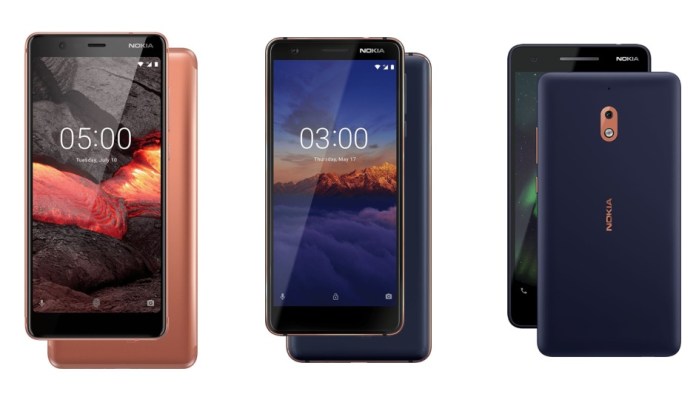
Nokia 5.1, Nokia 3.1 and Nokia 2.1 launched: Here’s what’s new with these smartphones

All these smartphones come running stock Android

HMD Global has unveiled three smartphones today., these smartphones are incremental upgrades to its entry and mid-range smartphones. The Nokia 5.1 and 3.1 will come under the Android One initiative by Google whereas the Nokia 2.1 will be an Android Go edition smartphone. The finish company has guaranteed that the Android One edition smartphones will receive software updates for two years and security updates for three years. This is a bit shocking to hear as this is a guarantee that most companies give to their flagship devices.

Nokia 5.1

The Nokia 5.1 successor to the 5 will sport a 5.5-inch FHD+ display with an aspect ratio of 18:9 protected by Corning’s 2.5D Gorilla Glass and will be powered by a 40 percent faster processor. Similar to its predecessor it will be made out of a single block of 6000-series of anodised aluminium and the fingerprint sensor is now moved to the back of the device. It will come in two variants 2GB RAM/16GB internal storage and 3GB RAM/32GB internal storage. All of this will be backed by a 2,970mAh battery.

Also Read: Xiaomi to launch the Mi Band 3 alongside the Mi 8: Here’s what you need to know

As for the camera, it features a 16-megapixel camera sensor on the back along with an 8-megapixel camera on the front for taking selfies. They will be priced at €189 for the 2GB RAM variant and $219 for the 3GB RAM variant.

Nokia 3.1

Nokia 3 was one of the most successful smartphones from its initial lineup as per the company. With the new Nokia 3.1, the company has resorted to making a number of improvements. The first one being the 5.2-inch HD+ display which is taller compared to the earlier model. It just like its predecessor is made out of an anodised metal chassis with a polycarbonate back. It is powered by the MediaTek 6750 chipset and now there are two RAM variants - 2GB and 3GB.

As for the camera, the Nokia 3.1 features a 13-megapixel primary shooter along with an 8-megapixel selfie camera. The device will be sold for starting €139.

Nokia 2.1

The Nokia 2.1 is the company’s Android Go Edition smartphone which will start at €99. The company has enlarged its screen to 5.5-inches with a resolution of 720p. The device is powered by the Qualcomm Snapdragon 425 SoC along with 1GB of RAM and 8GB off internal storage. It sports a 4,000mAh battery which the company claims will be able to run a total of 2-days before dying off.

As for the camera, the Nokia 2.1 sports an 8-megapixel primary camera. Along with a 5-megapixel secondary camera.