iVoomi, a smartphone giant known especially for its budget smartphone offerings has launched another smartphone. The company's flagship iVoomi i1s has received a couple of changes and the Anniversary Edition is here. The iVoomi i1s Anniversary Edition is pretty much the same smartphone launched a few weeks ago. However, the new edition comes with Facial Recognition and a whole new UI.
Commenting on the same, Mr. Ashwin Bhandari, CEO, iVOOMi, India says, “iVOOMi has had an enthralling journey in the Indian smartphone market, with unbeatable ‘Value for money’ products launched throughout the year. Now that we have discovered the product/market fit and gained traction, we are setting out on a path of execution. The untapped demand in the lower-tier cities is one of the key areas that the company is now focusing on”
“All iVOOMi products are backed by innovation as we aim to bring world-class technology in all our offerings, and our latest smartphone, the Anniversary Edition i1s with facial recognition is another feather to the cap since we are the first to offer face-unlock feature under the 8k price segment”, he further added.
Specifications
As far as the specifications are concerned, the iVoomi i1s sports a 5.45 inch IPS LCD display with an 18:9 aspect ratio. The smartphone is powered by the MediaTek 6737v processor which is a quad-core chipset. The device packs in 3GB of RAM and 32GB of onboard storage. Storage on the device is expandable up to 128GB using a microSD card. The Anniversary Edition i1s runs on the new Smart Me 2.0 OS based on Android 7.0 Nougat. Under the hood, there is a 3,000mAh battery powering up the internals.
On the optics front, the iVoomi i1s Anniversary Edition features a dual camera setup at the back. The rear camera setup consists of a 13-megapixel and a 2-megapixel sensor. Up front, there is an 8-megapixel selfie shooter.
Price and Availability
The iVoomi i1s Anniversary Edition is priced at Rs. 7,499. The smartphone is exclusively available via the e-commerce website Flipkart. The device is available on in the Classic Black colour variant. Under the Jio's football offer, users can get Rs.2200 instant cashback. The Jio offer will bring down the smartphone's effective price to Rs. 5,299.
Oppo, the Chinese smartphone manufacturer is currently working on bringing another smartphone. The company is about to unveil the much awaited Oppo R15. There have been a lot of leaks and rumours about the upcoming smartphone lately. The smartphone was earlier spotted on TENAA and now the there are some official renders of the upcoming smartphone.
According to the leaked renders, the Oppo R15 will sport a notch up top. The notch will house the camera, the earpiece and a couple of sensors. Oppo is expected to launch two smartphones on March 12, the Oppo R15 alongside the Oppo R15 Dream Mirror edition. Both the smartphones will feature a 6.28-inch display with an unusual 19:9 aspect ratio.
The official website also listed the colour variants of the upcoming smartphone. As per the website, the Oppo R15 will be available in Heat Red, Starry Purple, Snow White and Mirror Red colour options. The renders also show that the smartphone sports a fingerprint scanner at the back followed by the Oppo branding. The whole back on the R15 resembles a lot to the last year's Oppo R11.
Further, the Oppo R15 is expected to come with a dual camera setup at the back. The dual camera setup will include a 16MP and 5MP sensor on the R15 while the R15 Dream Mirror edition will come with a 20MP and 16MP sensor at the back. Both the smartphones will pack in 6GB of RAM and 128GB of onboard storage. Under the hood, there will be a 3,300mAh battery for powering up the internals.
Google's Android operating system needs no introduction. Every six months, Google updates the operating system to meet latest standards, for utmost performance. Google, in a move to surprise everyone, launched the Android P developer preview a week earlier. The developer preview build gives users and developers first look. You can check out the more detailed features in our other post.
If you are a developer or an enthusiast looking at trying out the Android P, don't sweat. We have a way for you to do it. However, the Android P developer build is currently available for the Google Pixel, Pixel XL, Pixel 2, Pixel 2 XL. If you have one of these devices, you can install Android P developer build on your device.
Disclaimer: We are not responsible for bricked devices, dead SD cards, thermonuclear war, or you getting fired because the alarm app failed. Please do some research on custom ROM flashing and side-loading ROMS. YOU are choosing to make these modifications and any result positive or negative, you will be responsible.
Warning: If you are running any Substratum themes on your device. We strongly recommend you to disable them before taking the Android P developer build update. Those themes were designed for Android 8.0 Oreo and may cause mismatches in the Android P. So disabling them will ensure a smooth update. Also, backup all your data in advance, as your data can be wiped out during the update.
To update the devices using the OTA images above, you need the latest adb tool. ADB(Android Debug Bridge) comes bundled with the Android SDK Platform-Tools package, which you can download here.
Don't forget to either add adb to your PATH environment variable or change into the directory containing the executable. Also, make sure, you have enabled USB debugging for your device, and it is ready to receive data using ADB. You can learn how to do it from here.
To apply an OTA update image:
Make sure that there is no pending OTA update, by going toSettings > About phone > System updates, which should say "Your system is up to date".
Download the appropriate update image for your device.
Verify the checksum of the image: the OTA mechanism has a built-in validation feature, but verifying will save you some time if the file is incomplete. The last portion of the filename is the first 8 digits of its SHA-256 checksum; the full SHA-256 checksum is also shown next to the download link.
With the device powered on and USB debugging enabled, execute.
adb reboot recovery
If you're unable to use adb to reboot into recovery, you can do it manually using the key configuration for your device instead. And then select the Recovery option from the bootloader menu. The device is now in recovery mode and an Android logo with red exclamation mark should appear on screen.
Hold the Power button and press Volume Up once, and a menu will appear. Select the option Apply update from ADB.
Run the following command.
adb devices
And check that your device shows up with "sideload" next to its name.
Run the following command.
adb sideload ota_file.zip
Where ota_file.zip is the name of the file you have downloaded and verified
Once the update finishes, reboot the phone by choosing Reboot system now.
For Non-Rooted Devices via Factory Images
The method is Similar to the method for Rooted Devices via Factory Images, so we will explain that in detail later. You will need the Factory Image File corresponding to your device. you can find the links n the table above. So go ahead and download it now.
For Rooted Devices via Factory Images
If you are using a Rooted device, may it be a Pixel/Pixel XL/Pixel 2/Pixel 2 XL things will be a little tough for you. If you have rooted the device using Magisk, and you haven't in installed TWRP and not modified any /system and /vendor directly devices, you can directly use the OTA images. However, to minimize risks, it's better to use the Factory images.
Download the latest P Developer Preview factory image from one of the links in the table above.
Extract the factory image zip file.
In the folder, you will see several files: a bootloader image, a radio image, and another zip file that contains the system, boot, vendor, and other partitions that will be updated. You will also see a flash-all.bat and a flash-all.sh.
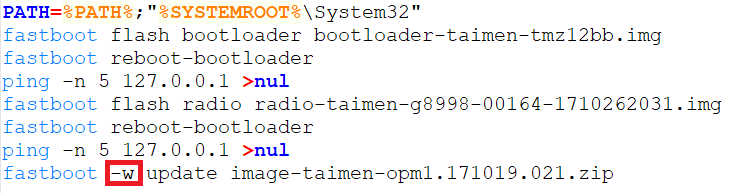
Windows:Right-click on flash-all.bat and click edit. Find the "fastboot -w update" line. Remove the -w from this line and save the file. This will allow you to flash a factory image without wiping data. If you are running a custom ROM and want to update, then you must leave the -w in the command. I repeat, yo must leave the -w in the commnd.
Windows:Double-click on flash-all.bat and let it run. It will flash each partition one at a time. This will take a few minutes so let it run.
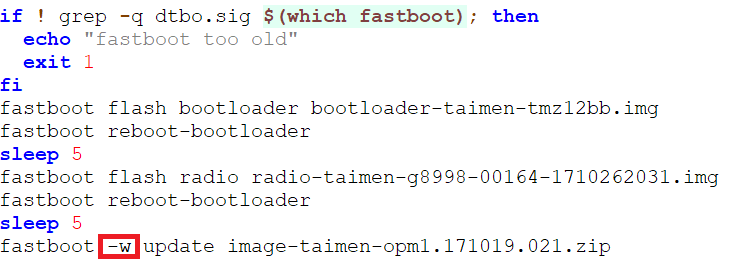
Mac/Linux: Edit the flash-all.sh script in a text editor and remove the -w from the "fastboot -w update" line. Save the file. This allows you to flash the factory image without losing data. However, if you are running a custom ROM, then you must leave the -w in the command.
Mac/Linux:Open a terminal in the same directory as the flash-all.sh script, and make it executable by entering chmod +775 flash-all.sh
Mac/Linux:Run the script by entering ./flash-all.sh in terminal. It’ll take some time as each partition is overwritten, so just let it sit and do its thing.
Google's Android operating system needs no introduction. Every six months, Google updates the operating system to meet latest standards, for utmost performance. Google, in a move to surprise everyone, launched the Android P developer preview a week earlier. The developer preview build gives users and developers first look. This is done to give them a first look at the design changes, improvements, and features that Google could introduce with Android P. Since, its an early developer build, so none of the features are final. Although Google can add or delete new features, its pretty much final. However, if you are looking to update, it is only available on Pixel devices as of now.
From the first developer preview builds, we can expect some visual changes to the UI. This can include changes to the quick settings, notifications, settings menu among others. Also, it is expected to bring new screenshot management tools and media controls. The biggest and most noticeable change, however, is the inclusion of the notch support. This means Google is embracing the Notch, and the Notch is here to stay. Here is a more detailed look at the new features.
Android P Embraces the Notch
Android P will bring native support for the Notch. This means Google will bring design overhauls to provide support for the Notch natively, without any extra third manufacturer code. The developer preview adds settings to emulate notches like narrow display cutout, tall display cutout, and wide display cutout. this accordingly updates the UI with a notch on the top of the display of the same sort. This will help the developers modify their apps to support Notches on the new Android Phones. The shape of the Notch can be adjusted from iPhone X styled to Essential Phone styled.
One of the most noticeable changes in the UI to support the Notch is moving the clock to the right on the status bar. Notifications will appear next to the notch and the clock on the right and the rest f the icons, such as wifi, and the battery will remain on the left. This will keep the status bar balanced in all situations with the Notch at the centre.
So like it or not, the Notch is here to stay. However, if the manufacturer decides to not include a notch, like the latest Samsung Galaxy S9 series, no one will complain.
Changes to quick settings and settings menu
Several small and big visual changes have been made to quick settings. It now shows rounded icons, which turn blue when enabled. The icons in the settings menu are now coloured, just like on the iOS. Although this makes the UI a little more visually appealing it also makes it look a lot mix match of colours.
Updated Notifications
Notifications will also be changed. They will now show the full set of unread messages, instead of few messages. Apart from that, stickers and images will also be shown completely in the notification bar.
ScreenShot directly from Power button menu
Long pressing the power button will now bring the option to take a screenshot along with the power off and reboot. This will enable easy screenshotting of web pages and messages when and where required.
Volume Slider Relocated
Google has also relocated to the volume slider. It has now found its home on the right of the display. Also, now the media volume is the new default volume control. Also, there is a Calls/Ring button below the slider. However, the best addition is it will let the user switch between ring, vibrate and silent easily.
Summary
Apart from these major overhauls, there are also many small changes. Here is a bullet point list for reference
New UI for settings/quick settings
Updated notification style for messages
New transition/notification expansion animations
Updated Pixel Launcher with voice search icon and more prominent dock
Battery saver no longer shows orange warning
Always on display shows battery info and centres notifications
New Easter Egg
About phone screen now shows additional info in a popup window
Built-in screenshot editor
Screenshot button in power menu
Text selection zoom (like iOS)
Battery saver can now be scheduled.
Do Not Disturb has been simplified down to a single mod
Volume buttons now control media volume by default
Adaptive Brightness is now much more useful as it actually changes the base brightness level
Hotspot can be turned off automatically if no devices are connected
Rotation can be locked to landscape mode
Multi-Bluetooth HFP/A2DP support
Individual Wi-Fi networks can now be set to metered/unmetered
Private DNS (DNS-over-TLS)
Vibration controls in Accessibility Settings
Accessibility option to disable all animations
SysTrace tool is now built-in
Recently posted notifications are now shown in notification settings
Xiaomi is expanding its portfolio in India especially when it comes to the budget smartphones. The company is now planning to bring the much awaited Xiaomi Redmi 5 to India. Xiaomi might not bring the Redmi5 Pro as the smartphone already exists with the name Redmi Note 5 in India.
Xiaomi held a launch for the Mi TV 4A in India which was also live streamed. At the end of the live stream, the company left a small hint for an upcoming smartphone. The teaser claims that there is a new smartphone launch set for March 14. The company is really serious about expanding the whole Mi mobiles business in India as it keeps on bringing something new.
Specifications
Xiaomi Redmi 5 is powered by the Qualcomm Snapdragon 450 SoC coupled with Adreno 506 GPU. The smartphone features a 5.7-inch display with a resolution of 720x1440 pixels and an 18:9 aspect ratio. The device comes in 2GB+16GB, 3GB+32GB and 4GB+32GB variants. However, we will have to wait for the official launch to know which variants are making their way to India. Storage on all the variants is expandable up to 128GB using a microSD card.
Xiaomi Redmi 5 runs on Android 7.1.2 Nougat based MIUI 9.1 out of the box. Under the hood, the device packs in a 3,300mAh battery.
For connectivity, the smartphone supports 4G LTE, Wi-Fi 802.11 b/g/n, Bluetooth 4.2, A-GPS, GLONASS, BDS, Infrared port and a microUSB port. The smartphone also features a fingerprint sensor at the back.
On the optics front, the Redmi 5 sports a 12-megapixel camera at the back. The rear camera comes with f/2.2 aperture, PDAF and a LED flash. Up front, there is a 5-megapixel selfie snapper.
HMD Global's much popular mid-range device Nokia 6 finally gets a price cut in India. The smartphone was initially launched in India with a price tag of Rs. 14,999 for the 32GB variant. The price point was considered a bit overpriced for what the smartphone carried under the hood. Now the company has finally decided to bring down the price of the Nokia 6. The price drop will now make the competition tougher with the likes of Xiaomi Mi A1 and Redmi Note 5 Pro.
Nokia 6 is now priced at Rs. 13,499 which is Rs. 1,500 less than the earlier Rs. 14,999 price tag. The price drop is however only applicable to the 3GB+32GB variant of the smartphone. HMD Global has also launched the 4GB+64Gb variant of the Nokia 6 which is still priced at Rs. 16,999. The 32GB variant can be purchased via Amazon India while the 64GB variant is available at Flipkart.
HMD Global recently launched the Nokia 6 (2018) Android One version at the MWC 2018. The price drop of the current Nokia 6 might mean that the company is planning to bring the 2018 Android One version to India soon.
As far as the specifications are concerned, the Nokia 6 is powered by the Qualcomm Snapdragon 430 SoC. The smartphone features a 5.5-inch display with a resolution of 1920x1080 pixels. The device packs in 4GB of RAM and 32GB of onboard storage. Storage on the device is further expandable up to 256GB using a microSD card. The smartphone runs on Android 7.1.1 Nougat and will soon be updated to Android Oreo. Under the hood, there is a 3,000mAh battery powering up the internals.
In terms of optics, the Nokia 6 sports a 16-megapixel camera at the back with a LED flash. Up front, there is an 8-megapixel selfie shooter.
Xiaomi has been all over the news lately due to the flying rumours about the upcoming Xiaomi Mi Mix 2S. The Xioami Mi Mix 2S is said to be the successor to Mi Mix 2 with some improvements made to the smartphone here and there. The company has posted another image on Weibo for the launch of the much-awaited smartphone. As per the image, the launch is set to take place at Shanghai on March 27.
Last month, the Xiaomi Mi Mix 2S was spotted on AnTuTu, a benchmarking website. According to the website, the smartphone was able to achieve an AnTuTu score of 273,741. As for the specifications, the Mi Mix 2S is expected to be powered by the Qualcomm Snapdragon 845 chipset. The smartphone is said to feature a 5.99-inch OLED display. The display will come with a resolution of 2160x1080 pixels and an 18:9 aspect ratio.
The device is said to pack in 6GB or 8GB of RAM coupled with 64 GB, 128 GB or 256 GB of onboard storage. The smartphone will run on Android Oreo-based MIUI 9 out of the box. Under the hood, there will be a 3,300mAh battery powering up the internals. Unlike the Mi Mix and Mi Mix 2, the Mi Mix 2S will have its front-facing camera placed on the top right corner.
Recently, a report suggested that Xiaomi has ordered more than 3 million units of OLED displays from Samsung. The report claims that the displays will be used on the Xiaomi Mi Mix 2S and the company's upcoming flagship Mi 7.
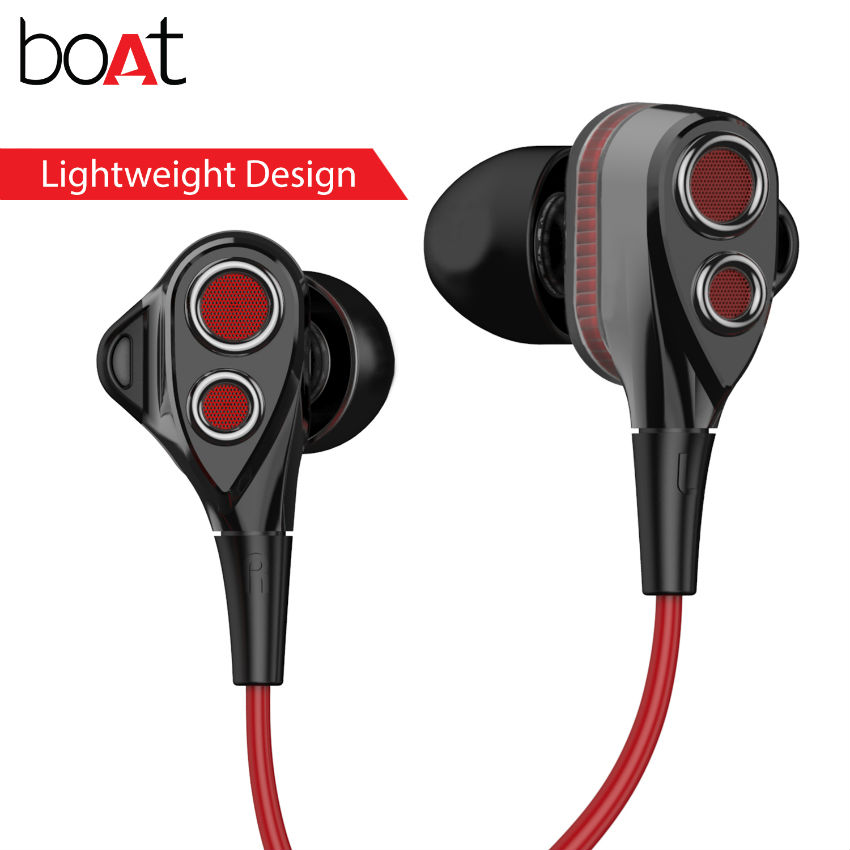
Audio electronics product manufacturer, boAt unveiled their latest flagship earphones in India. Nirvanaa Tres is the name of the company's latest flagship earphones by the company. Also, the Nirvanaa Tres comes with Triple Drivers, High Definition audio, deep bass sound and an In-line microphone. However, the company is quoting it as a flagship killer, just like OnePlus did with its phones. Let's hope it performs as well as OnePlus did in its segment.
"NIRVANNA TRES is designed for the audiophiles, it is powered by Triple drivers which enables you to hear the exceptional with a blend of quality and comfort. It complements the user’s lifestyle and gives a definite fashion statement. boAt is taking the audio experience to a new height. We plan to bring such technologically advanced earphones like these in the near future.”
-Aman Gupta, co-founder, boAt electronics
boAt Nirvanaa Tres Features
The Nirvanaa Tres consists of a triple driver setup. It consists of two dynamic drivers along with one balanced armature driver. Although The company says this unique combination is like having a high-end surround sound system in your ears, we can't make such a claim without testing. The earphones are acoustically balanced by design. This is done with dual 6mm*2 dynamic & one balanced armature driver on each ear mold. Also, this enables the earphones to deliver the sound in the frequency range of 20Hz - 20KHz.
However, the company claims to have an ergonomic design which enables easy adjustment and more to offer a complete and comfortable experience. Also, boosted by the company, is the build materials of the earphone.
The earphones come with noise canceling and in-line controls with a microphone for phone calls for the convenience of the user. The earphones also features a tangle-free premium cable. This is a really good design as who like tangled cables in their life.
boAt Nirvanaa Tres Specifications
Construction: Two 6mm drivers with one balanced armature driver
Xiaomi, the Chinese tech giant, is finally expanding its business in India. The company got its place in the top 10 list of smartphones sold in India. Now the company is focusing on bringing its other products to the country. Xiaomi, on Wednesday, announced the launch of two new Mi TVs. The company has launched the 43-inch Xiaomi Mi TV 4A alongside the cheaper 32-inch Mi TV 4A.
The Mi TV 4A line-up is a series of smart televisions by Xiaomi at a very reasonable price. Both the televisions feature Xiaomi's AI-powered PatchWall UI. The TVs sold in India have their software especially optimised for the country.
Specifications
As the names suggest, the Mi TV 4A 43-inch comes with a 43-inch panel while the other one comes with a smaller 32-inch panel. The 43-inch model sports a resolution of 1920x1080 pixels while the 32-inch model features a resolution of 1366x768 pixels. Displays on both the televisions have a 178-degree viewing angle and a refresh rate of 60Hz. Both the smart TVs are powered by a quad-core Amlogic processor. These televisions come with 1GB of RAM and 8GB of onboard storage.
In terms of connectivity, both the televisions come with built-in Wi-Fi, three HDMI (including one ARC) ports, one Ethernet port, one AV component port and an antenna port. The 43-inch model also comes with one S/PDIF audio port and a 3.5mm headphone jack. The 32-inch model sports two USB 2.0 ports while the 43-inch model comes with three USB 2.0 ports.
Price and Availability
Xiaomi Mi TV 4A is priced at Rs. 22,999 for the 43-inch model while the 32-inch model comes with a price tag of Rs. 13,999. Both the smart TVs will go on sale starting March 13 via Flipkart, Mi.com and the Mi Home stores across the country.
Samsung is one of the most trusted brands when it comes to smartphones. The company has a wide range of smartphones starting from Rs. 5,000 which then go all the way up to Rs. 73,000.The Samsung Galaxy J7 and J7 Pro are mid-range offerings from the company to compete against the Xiaomi Mi A1, Redmi Note 5 Pro, Honor 7X and more. These two popular mid-range smartphones from Samsung have again received a price cut in India.
The Samsung Galaxy J7 Max is now priced at Rs. 14,900. The smartphone was initially launched at a price of Rs. 17,900 which was differently overpriced. Samsung Galaxy J7 Pro was launched at a price of Rs. 20,900 and now has a price tag of Rs. 18,900. This Rs. 18,900 price tag might not attract many buyers which is why Samsung has partnered up with PayTM. People buying the J7 Pro from an offline store can make the payment via PayTM in order to get a cashback of Rs. 2,000.
Samsung Galaxy J7 Max is a great deal at the Rs. 14,900 mark. However, we would highly recommend going in with the Galaxy J7 Pro instead by putting in a couple of bucks. Here's why.
Why should you get the Galaxy J7 Pro?
The PayTM cashback on the Galaxy J7 Pro further brings down its price to Rs. 16,900. At Rs. 16,900, the Samsung Galaxy J7 Pro is a steal deal. Galaxy J7 Pro being a steal deal is an arguable statement since smartphones like Xiaomi Mi A1 and Redmi Note 5 Pro come at a similar pricing. So to justify the statement, we will have to dig in further into the specs of the smartphone.
Samsung Galaxy J7 Pro
The Samsung Galaxy J7 Pro is powered by the Exynos 7870 chipset. Now, the chipset is a year old but still outperforms most mid-range and budget chipsets like MediaTek 6757. However, Snapdragon 636 on the Redmi Note 5 Pro is still better than the Exynos 7870.
Now moving on to the display, the Galaxy J7 Pro features a 5.5-inch Super AMOLED display with a resolution of 1080x1920 pixels. A Super AMOLED display is really hard to find at this price considering the Galaxy J7 Pro is effectively priced at Rs. 16,900. Yes, you are not getting the latest 18:9 display but Samsung's Super AMOLED is much much better than any display in the price segment. The smartphone also has an Always-on Display which is just an icing on the cake.
Summing everything up, the Galaxy J7 Pro might not be the best smartphone under Rs. 17,000. The smartphone does not have an 18:9 display and carries an old design. The smartphone is also not recommended for those who care only about the performance or do not like the Samsung's UI. However, the Galaxy J7 Pro is the best bet for those looking in for a smartphone from a tier one brand. The J7 Pro is also a great mid-range smartphone for watching videos and movies on the go.