Whether you were a fan of the older bulky boxy design phones or you hated the big bezels, it can't be denied that the bezel-less design has become somewhat of a compulsion. With Sony still continuing their old ugly design with big bezels on the Xperia XA2, Xperia XA2 Ultra, and Xperia L2 doesn't mean these phones aren't any good.
Sony Xperia XA2
The Xperia XA2 and Xperia XA2 Ultra sport edge-to-edge displays that are curved at the sides. This helps the glass bleed into the sides for a more seamless feel in the hands. The Xperia L2 feels like it is from 2016 with big bezels on all four of the sides. None of the three newly announced phones sport an 18:9 resolution for minimum bezels which is a trend these days. The Xperia L2 being a lower end device also brings down the display resolution to 720p while it's elder siblings sport a more acceptable 1080p display.
Sony Xperia XA2 and XA2 Ultra and Xperia L2 Spec Sheet
Xperia XA2
Xperia XA2 Ultra
Xperia L2
Display
5.2" Full HD 1080p
6" Full HD 1080p
5.5" HD 720p
Processor
Qualcomm Snapdragon 630
Qualcomm Snapdragon 630
Quad-core 1.5 GHz
RAM
3 GB
4 GB
3 GB
Storage
32 GB
Expandable up to 256 GB via microSD
32 GB
64 GB
Expandable up to 256 GB via microSD
32 GB
Expandable up to 256 GB via microSD
Camera
Rear: 23 MP Exmor RS with f/2.3 aperture, hybrid AP, and 5x zoom
Front: 8 MP sensor with 120-degree wide-angle lens
Rear: 23 MP Exmor RS with f/2.3 aperture, hybrid AP, and 5x zoom
Front: 16 MP sensor with OIS and 8 MP with 120 wide-angle lens
Rear: 13 MP sensor with 3x zoom
Front: 8 MP sensor with 120-degree wide-angle lens
Miscellaneous
Android 8.0 Oreo, 3,300 mAh battery, Bluetooth 5.0, NFC, USB Type-C, 3.5 mm headphone jack
Android 8.0 Oreo, 3,580 mAh battery, Bluetooth 5.0, NFC, USB Type-C, 3.5 mm headphone jack
Android 7.1.1 Nougat, 3,300 mAh battery, Bluetooth 4.2, NFC, USB Type-C, 3.5 mm headphone jack
The similarities between the Xperia XA2 and Xperia XA2 Ultra continue with their rear 23-megapixel camera capable of 4K 120fps slow-motion videos. Both of these smartphones have an 8-megapixel front camera capable of 120-degree wide-angle photos. The Xperia XA2 Ultra boats a second front camera. The Xperia XA2 Ultra also has a 16-megapixel front camera with optical image stabilization.
What's impressive is the lower end Xperia L2 keeps up with it's elder siblings in the selfie department but opts for a smaller 13-megapixel rear camera.
Sony Xperia XA2 and XA2 Ultra and Xperia L2 Specifications
Sony Xperia XA2
Sony Xperia XA2 Ultra
Sony Xperia L2
As for the specifications, the Xperia XA2 and Xperia XA2 Ultra are both powered by Qualcomm’s Snapdragon 630, though the latter features slightly more RAM and two storage options. Both of the devices include a micro-SD card slot which is quite useful as the base storage on these phones is only 32GB. Both the Xperia XA2 and the Xperia XA2 Ultra run on Android 8.0 Oreo out of the box which is great news. However, the Xperia L2 still runs Android 7.1.1 Nougat out of the box which is quite strange.
Android 8.0 Oreo was released to the public in late August, and, at this point, it’s ridiculous to not have Oreo be available out of the box. Keeping this in mind we don't expect Xperia L2 to see the light of Android Oreo anytime soon.
Sony Xperia XA2 and XA2 Ultra and Xperia L2 Pricing and Availability
The Xperia XA2, Xperia XA2 Ultra, and Xperia L2 are said to be available in late January but as Sony didn’t say anything about the pricing of their new smartphones, it can't be considered as an option just yet if you are looking to upgrade.
The Xperia XA2 will come in silver, black, blue, and pink, while the Xperia XA2 Ultra will arrive in silver, black, light blue, and gold. Finally, the Xperia L2 will come in black, gold, and pink.
CES an annual trade show put on by the Consumer Technology Association. It is one of the biggest, if not the biggest consumer technology display with over 170,000 people in attending the event. Companies big and small attend the trade show every year, showing off the best products on offer by them. It is scheduled to take place on Tuesday, January 9 and will go on until Friday, January 12, 2018. Like every year, CES 2018 is to be held at the Las Vegas Convention Center in Las Vegas, Nevada.
What to expect from CES 2018?
Every year including this year, we can expect to see devices shown off from just about every segment of the technology world. This can and will be including drones, audio, IoT/smart home, AR/VR, vehicles, and more. We don't see many smartphones been shown off in CES. They are reserved for launches at MWC and IFA.
Most of the giant companies will be in attendance including giants like Samsung, LG, ASUS, Sony, Huawei, and others. Not many companies have shared what they plan to unveiled but we have rumours about various products we can expect to be unveiled.
So, which products are expected to make their debut at CES 2018? Let’s have a look.
Samsung
At CES this year, Samsung will unveil its selfie-focused mid-ranger devices namely the Galaxy A8 (2018) and Galaxy A8 Plus (2018). Announced recently by Samsung it comes with a 16 and 8 MP cameras with f/1.9 aperture. It will also be capable to take portrait mode selfies, and blur the background before and after the phone is taken. The same feature was seen in the Samsung Galaxy Note 8.
There is no doubt in Samsung making some of the capable flagship devices in form of S-Series and Note-Series devices. But nobody can argue with a good budget series devices. That is what Samsung is delivering here.
According to the recent report, the Samsung Galaxy S9 and S9 Plus are “scheduled to make their first public appearance” at CES. This doesn’t necessarily mean the devices will be announced at the show, Samsung might just show them off in a teaser video. They will be officially be unveiled in February 2018. Though, it wouldn’t surprise us if Samsung used CES to announce an official reveal date for the devices.
Samsung might also announce an upgraded version of the Chromebook Pro to take on the Google Pixelbook. The upgraded version is expected to come with an Intel Core m7 processor and 16 GB of RAM.
LG
LG's press conference is to take place a day before the CES 2018, on 8th January 2018. According to a report from BusinessKorea, LG will reveal the G7 at the trade show. The device is thought to be expected to be released at MWC in Barcelona, same as its predecessor.
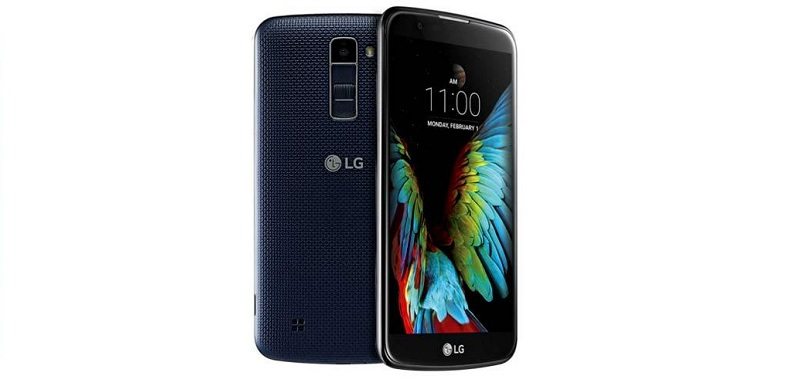
This doesn't mean LG won't be unveiling any devices at CES this year. LG is expected to show off a new device in its K series, just like it did last year. LG K10 (2018) which is rumoured to come with a 5.3-inch 1080p display, 3 GB of RAM and 32 GB of storage, plus FM radio might be unveiled. This handset could also be LG’s first mid-to-low-end device to feature its recent mobile payments system, LG Pay.
Alongside its new smartphones, LG is expected to unveil a Google Assistant-powered ThinQ Speaker. We might also see a slew of other smart home products under the ThinQ lineup and name.
Huawei
Huawei is not expected to launch new smartphones at CES this year. Said that we will definitely hear some details about the Mate 10 Pro coming to the United States. In a recent interview, Richard Yu, the CEO of Huawei said that the company will sell one of the smartphones of the Mate 10 lineup through wireless carriers in 2018. More details to be revealed at CES. While he didn't mention which one will be launched, it might be the Mate 10 Pro.
Rumor has it that the Mate 10 Pro will be an AT&T exclusive. There’s no word on how much it will cost or when it will be released. We need to stay tuned for more information.
Honor
Leaker Evan Blass has gotten his hands on some materials that indicate the Huawei P11 could come with an unprecedented camera setup.
Honor although won't likely reveal any new smartphones at CES. The company has recently launched the Honor 7X and Honor View 10 in the US, Europe, and a few other markets.
The 7X is already available for $13,000(~Rs 12,999), while the View 10 will go on sale starting January 8 for Rs 29,999.
Google
Google is betting everything it has got on the Assistant at CES 2018. Located in Central Plaza-21, the Google Assistant Playground will show off the company’s new integrations, devices, and the newest ways you can use Google Assistant.
The Google Assistant Playground will show off the company's new integrations, devices, and the newest ways you can use Google Assistant.
-Google
Rumours also suggest Google might also unveil more Chromebooks to join the Pixelbook lineup. Additionally, Google might use this event to offer consumers a close-up look at its lineup of products. These include the Pixel 2 smartphones, Daydream View VR headset, and smart speakers like the Home Mini.
ASUS
Rumors suggest that ASUS is working on an upgraded version of its C302CA Chromebook that will go head to head with Google’s Pixelbook. Nothing has been confirmed yet, but there’s a chance we’ll see it at CES.
EDITOR'S PICK
ASUS launches ZenFone Max Plus (M1) with 18:9 display, 4,130 mAh battery
ASUS has already unveiled its latest smartphone, the ZenFone Max Plus (M1). This is similar to the Pegasus 4S unveiled last month and is the company's second 18:9 display resolution device.
Asus might also launch a PixelBook competition. The device is said to come with the Core m7 processor and 16 GB of RAM, same as the upgraded version of the Chromebook Pro Samsung is reportedly working on.
It’s also possible that ASUS will reveal a new smartphone or two in Las Vegas. The company unveiled the ZenFone AR and ZenFone 3 Zoom at CES 201. So it will be not surprising it Asus unveils it's followup devices at the trade show.
Sony
Sony didn't say anything about their CES 2018 products just yet but recent CAD renders of the Sony Xperia L2 suggest it might be launched at the trade show. These renders show off a slightly redesigned chassis. While the device features the same large bezels that we expect from Sony phones, the Xperia L2 will likely come with a rounded back plate.
Xperia L2 is rumoured to sport a 5.5-inch 1,280 x 720 display, a Snapdragon 630 processor, 4 GB of RAM, and Android Nougat out of the box.
The original Sony Xperia L1 was first unveiled at MWC 2017. Like the first generation L1, the Xperia L2 is expected to be a pretty cheap device. It’s possible that the L2 will be revealed at CES 2018, though, like its predecessor, it may not appear until MWC at the end of February.
HMD Global / Nokia
Nokia 6 (2018)
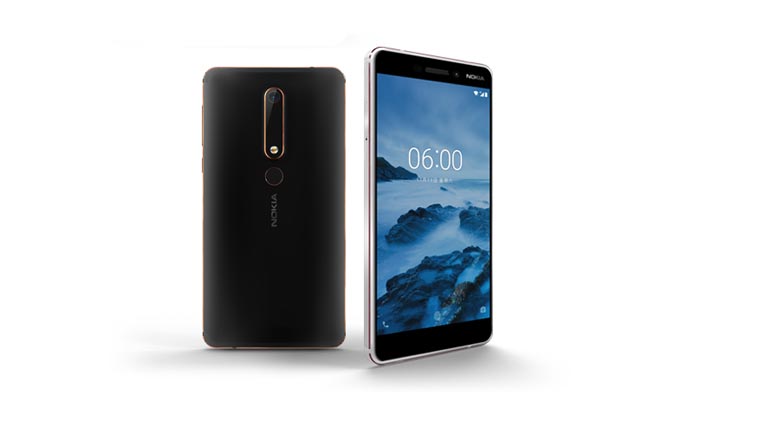
Nokia has just taken the wraps off its latest mid-range Android phone, the Nokia 6 (2018). The biggest changes to this edition over last year’s model are the inclusion of a Qualcomm Snapdragon 630 chip which upgrades the performance enormously, OZO Audio recording technology, and a “Bothie” photo mode. Additionally, the Nokia 6 (2018) will indeed come with a USB Type-C port.
The handset is available for pre-booking in China in 32 GB and 64 GB configurations for $230 and $245 respectively and will be released on January 10.
HP
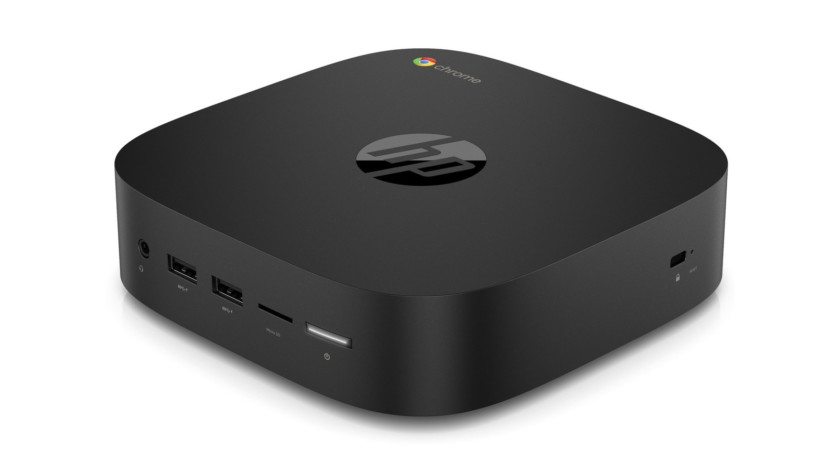
HP is showing off its new Chromebox G2 at CES this year. Powered either by Intel’s Core i5-7300U or the Core i7-8650U, the pc comes with 16 GB of RAM, two USB 2.0 ports, three USB 3.0 ports, a USB Type-C port, a headphone jack, an HDMI port, an ethernet port, and an SD card reader.
HP also recently unveiled two new Chromebooks, the Chromebook 11 G6 and the Chromebook 14 G5. Both Chromebooks are aimed at the education and enterprise markets, but they’re perfectly serviceable machines for everyday use. That is thanks to their jump to 7th generation Intel Celeron N processors. Folks have the option of sticking with the base dual-core N3350 or the quad-core N3450, with RAM going up to 8 GB.
Regardless of the processor and RAM choice, the Chromebook 11 G6 and Chromebook 14 G5 make do with Intel HD Graphics 500. The smaller Chromebook features MIL-STD 810G protection, so it should stand up well to drops and extreme conditions. Even with the added protection, you can equip both Chromebooks with up to 64GB of internal storage and they also feature microSD card slots.
Anything else?
Like every year, we’re expecting to see plenty of new self-driving and connected car announcements at the trade show. JVC and Kenwood have announced its plans to unveil two new wireless Android Auto head units at CES, which is a first for Google’s connected car platform. Many other companies including HTC, ZTE, and Lenovo will be present at CES 2018. When any interesting products releases happen, we’ll keep you up to speed.
Last year's Nokia 6 was a great deal for everyone as it marked the return of Nokia to the smartphone business and the introduction of Android-powered Nokia smartphones. While the design and build quality was something everyone loved, it was a massive let down. The performance was not up to the par due to not that great of a hardware in its price segment. HMD Global is now set to make amends with updated internals, a refined design and a few new flagship grade features on the new Nokia 6 (2018).
The Nokia 6 (2018) has been launched in China at a starting price of around CNY 1,499 (roughly Rs 14,500). This putts the smartphone directly in the Xiaomi Mi A1's directory. We already compared it to the Nokia 6 of the previous generation and it killed it. After years of playing around with the MIUI, Xiaomi finally accepted that nothing beats the performance aspect of the Stock Android. Xiaomi also backed the device with a premium design, capable dual cameras and solid internals on the Mi A1.
Xiaomi Mi A1
Although the Nokia 6 (2018) is only China exclusive for now, it is expected to launch worldwide in the upcoming weeks. Let's see how the new Nokia 6 (2018) compares to the budget king of its time, the Xiaomi Mi A1.
Design
Both the Xiaomi Mi A1 and the Nokia 6 (2018) are metal body smartphones that look and feel quite premium and stylish. Both of the devices have chamfered edges for holding comfort and rear-mounted fingerprint sensor in the middle of the device. This is where the similarities end in terms of design. The Nokia 6 (2018) is machined from series 6000 aluminium which goes through the two-colour anodisation process. This not only makes the smartphone durable but also look good.
Nokia 6 (2018)
With the centre camera with a ring around it, the Nokia 6 (2018) has a unique link. The Mi A1, on the other hand, has a really dull and safe design. With its clean metal design and the dual camera at the top left corner, it looks a lot like the other smartphones in the market, originally the design of the iPhone 7 Plus.
Durability
Xiaomi Mi A1
The last year's Nokia 6 was built very well with high durability ratings. The 2018 iteration of the variant is expected to built like a tank. The 2017 Nokia 6 was extremely solid and durable and exhibited no creaks or rattles, even under pressure. We can't say anything about the build quality of the Nokia 6 (2018) but if it's same as the previous generation it easily trumps the Mi A1. The Xiaomi build the Mi A1 way better than it's other devices but it's nowhere near the 2017 Nokia 6 or it's competitors like the Moto G5 Plus.
Display
Nokia 6 (2018)
Both the Nokia 6 (2018) and Xiaomi Mi A1 sports a 5.5-inch 1080p display covered with Gorilla Glass 3 for the protection from small nicks and scratches. Both of them have a 16:9 resolution display and lose to the 2017 trend, the 18:9 display seen in few budget smartphone like the Honor 7X and Vivo V7+.
Performance
As we know, one of the biggest downfalls of the last year's Nokia 6 was its performance. The Snapdragon 425 was trumped by its competition. This time around, HMD Global realized their fault and upgraded the hardware. The Nokia 6 (2018) has a more sensible and a more powerful Snapdragon 630 processor clocked at 2.2GHz. This helps Nokia 6 (2018) get directly in sync with the ultra-reliable Snapdragon 625 on the Xiaomi Mi A1.
Xiaomi Mi A1 Red
Th rest of the hardware is almost same with minor changes. The Nokia 6 (2018) comes with 3/4GB of RAM depending on the variant, 32/64GB of internal storage expandable via a microSD card and a 3,000mAh battery with fast charging support. The Mi A1 is only offered in a single variant with 4GB of RAM, 64GB of internal storage expandable via a microSD card and a 3,080mAh battery. While the Mi A1 had the hardware for it, the fast charging was brought in only with Android 8.0 Oreo update.
The Nokia 6 (2018) also ditched the micro-USB port in favour of the new and advanced Type-C port for charge and sync. The Xiaomi Mi A1 also has the Type-C charging and sync port. While most connectivity options are similar (4G Volte, Wi-Fi, GPS and so on), the Nokia 6 (2018) outdoes Xiaomi's smartphone thanks to the included support for aptX and Bluetooth 5.0.
Software
At the start of 2017, a Xiaomi device with a Stock Android was something people only wished for. But it launched with the Android One project was successfully received by the people. Both smartphones run on a clean and untouched version of Android - but one is slightly more true to Google's vision than the other. The software on the Mi A1 is exactly what you will find on the Google Pixel - a move that will appeal to purists. While the software on the Nokia 6 (2018) is also almost 100 percent stock, Nokia has skinned the icons and added a few features like dual capture (Bothie) to add their own identity, which is welcomed. While the Mi A1 has already got Android 8.0 Oreo, the Nokia 8 (2018) ships with Android 7.1.1 Nougat with an update to Oreo promised in the near future.
Camera
Xiaomi Mi A1
On the optics front, the Nokia 6 (2018) comes with a 16-megapixel rear camera with phase detection autofocus, f/2.0 aperture and a dual-LED flash. For the selfies, there is an 8MP sensor with f/2.0 aperture and an 84-degree wide-angle lens. Dual sight or Bothie feature allows users to record video or capture images from the front and rear camera both at the same time. The Xiaomi Mi A1, on the other hand, has a dual camera setup at the back with a 12-megapixel 26mm wide-angle sensor with f/2.2 aperture, paired with a 12-megapixel 50mm telephoto sensor with f/2.6 aperture. The dual camera setup not only allows for the capture of bokeh shots or the Portrait mode loved by all but also offers 2X optical zoom which is always welcomed. For the selfies, the Mi A1 has a 5-megapixel sensor. HMD Global definitely missed a lot of market by not including a dual camera setup on the Nokia 6 (2018).
Samsung, the South Korean giant, recently launched two new smartphones calling them the Samsung Galaxy A8 Plus and A8 (2018). These are the first smartphones from the company which are not flagship but still feature an infinity display with 18.5:9 aspect ratio. The A8+ is also the first smartphone offering from the company to feature a dual-camera setup at the front.
Samsung has started rolling out media invites for an upcoming launch event. The company is expected to launch the Galaxy A8+ as the invite reads “Samsung invites you to witness the unravelling of the year’s first big innovation on Wednesday, January 10, 2018.” The Samsung Galaxy A8+ will be an Amazon Exclusive device and Amazon India has already set a banner with "Coming Soon" written on it. The people interested in buying the smartphone can click on the Notify Me icon to get notifications once the device is available for purchase.
Specifications
The Samsung Galaxy A8+ features a 6-inch Super AMOLED display with a resolution of 1080x2220 pixels and an 18.5:9 aspect ratio. The smartphone is powered by the Exynos 7885 processor which is an octa-core chipset. The device packs 4GB or 6GB of RAM and comes with either 32GB or 64GB of onboard storage. The storage on the device is further expandable up to 256GB using a microSD card. The Galaxy A8+ runs on Samsung Experience UI 8.1 based on Android 7.1.1 Nougat. Under the hood, there is a 3,500mAh battery with fast charging support.
On the optics front, the Samsung Galaxy A8+ sports a 16-megapixel camera at the back with f/1.7 aperture. Up front, there is a dual-camera setup consisting of a 16-megapixel sensor coupled with an 8-megapixel sensor.
In terms of connectivity, the Samsung Galaxy A8+ supports 4G LTE, Wi-Fi 802.11 a/b/g/n/ac (2.4/5GHz), Bluetooth 5.0, ANT+, USB Type-C, NFC, GPS, Glonass and BeiDou. The smartphone is IP68 rated which makes it dust and water resistant. The Galaxy A8+ also comes with a fingerprint scanner at the back right below the camera setup. The device also features the Always On Display feature and Samsung Pay.
HMD Global owned Nokia made a comeback last year with their first Android-based smartphone, the Nokia 6. It was first announced in China in January 2017. It was due for a replacement around now. So Nokia launched the Nokia 6 (2018). The second generation Nokia 6 or Nokia 6 (2018), is the replacement of the Nokia 6 that was launched last year. It also looks like the last generation Nokia 6 and also costs the same. Its still is made up of metal unibody and comes with sharp edges that made the original look like an unpolished prototype. HMD Global only added minor upgrades to the phone rather than redefining the phone. HMD Global is ringing youth eccentric features like Dual-Sight (and Bothie), to the masses with the new Nokia 6, to make sense for a wider audience instead of upgrading the phones.
The Nokia 6 (2018) is an all-metal phone with chamfered edges and curved 2.5D Corning Gorilla Glass 3 on the front. This is just like the original Nokia 6. The thing that's changed is the use of accented colours to highlight the device's chamfers on both the front as well as on the back. The accents being in bold colours bring life to the old design. The same accent colour is used all along the phone on the front and back. Also this year Nokia decided to move the fingerprint sensor to the back instead of the front. Last year, Nokia used capacitive buttons for navigation along with a front mounted fingerprint sensor. The new Nokia 6 uses an on-screen navigation button.
The second generation Nokia 6 comes with a Type-C charing and sync port instead of the Micro USB on the previous generation Nokia 6.
With the fingerprint sensor moved to back instead of the front and the 2017 trend being an 18:9 resolution display, the same was expected from the new Nokia 6. For reasons unknown, the new generation device still has the same 5.5-inch 1080p display with a traditional 16:9 aspect ratio as the original Nokia 6. Why no 18:9 resolution bezel-less display, it is still unknown.
Hardware: What the original Nokia 6 should have been
The original Nokia 6 sported a Qualcomm Snapdragon 430 processor coupled with 3GB of RAM along with 32GB of internal storage. There was also a provision for expandable memory up to 128GB via a micro-SD card slot. With the price tag of Rs 15,000 in India, its hardware was something to be desired for. It's hardware specifications didn't cope up with the build quality of the phone which Nokia is always known for.
HMD is looking to change all that with the Nokia 6 2018. It can be easily said that the new Nokia 6 is what last year's Nokia 6 should have been in the first place. The new Nokia 6 (2018), as a result, comes with a beefier 2.2GHz octa-core Qualcomm Snapdragon 630 processor clubbed with 4GB of RAM and up to 64GB of internal storage. The new Nokia 6 still supports expandable storage of up to 128GB via a hybrid micro-SD card slot.
The Snapdragon 630 is notably successor to the ultra-popular Snapdragon 625, and we can expect only good things from it because phones like the Moto X4 (that are based on Snapdragon 630) haven't disappointed. The GPUs are also different and the Adreno 508 found in Snapdragon 630 is said to offer up to 30 percent better performance than Adreno 506 in the Snapdragon 626/625. The Snapdragon 630, in addition, also offers more advanced connectivity options: 2X higher download speed and more advanced Wi-Fi and Bluetooth connectivity. Lastly, Snapdragon 630 brings along Quick Charge 4 support to devices.
In essence, the Nokia 6 2018 is powered by a Snapdragon 630 processor that is a gradual upgrade of the Snapdragon 625, and therefore, the new Nokia 6 has all the ingredients to better Xiaomi's dominance in the budget smartphone segment in the country. The Nokia 6 (2018), on paper, supports Bluetooth 5.0 and fast charging (not sure whether it's Quick Charge 4 though) and comes with LPDDR4 RAM. The original Nokia 6 came with Bluetooth 4.1 and LPDDR3 RAM. There was no fast charging.
Elsewhere, the speaker setup onboard the original Nokia 6 came with dual amplifiers and support for Dolby Atmos sound technology. That is absent in the second generation Nokia 6 for reasons unknown. It's still backed by a 3,000mAh battery.
Cameras: Same old with Bothie feature
The Nokia 6 (2018) features the same hardware on the optics front as last year's Nokia 6 which means that it carries the same 16-megapixel camera on the rear with f/2.0 aperture, Phase Detection Autofocus and dual LED flash. For those concerned with selfies, it comes with an 8-megapixel camera. The only improvement is the Nokia 8's bothie feature or as Nokia calls it the Dual-Sight. Dual-Sight, to recall, is a feature that lets a user to simultaneously use both the rear and front cameras to take stills/record videos. Think of it as picture-in-picture. If that wasn't enough, the phone also allows for a live broadcast of videos shot using Dual-Sight on to social media platforms like Facebook. The second generation Nokia 6, in addition, allows a user to capture high-fidelity spatial audio.
Price and Availability
The Nokia 6 (2018) has been launched in China in two variants. One with 4GB of RAM and 32GB of internal storage for CNY 1499 (~Rs 14,600) and one with 4GB of RAM and 64GB of internal storage for CNY 1699 (~Rs 16,600). The smartphone is said to be available for sale on January 10th and is pre-orders are can be booked right now.
The original Nokia 6 was launched in India in June 2017 following a global roll-out in February 2017. We can expect HMD to launch the Nokia 6 (2018) in India soon enough but the company will have to get the pricing right on this one.
HMD Global has finally unveiled the much-awaited Nokia 6 (2018). There have been a lot of leaks and rumours about the Nokia 6 (2018) and now its finally here. The highlights of the smartphone are the stock Android experience and metal unibody build that is made of 6000 series aluminium. The smartphone is currently available in China and will soon be introduced in other markets.
Specifications
As far as the specifications are concerned, the Nokia 6 (2018) features a 5.5-inch IPS LCD display with a resolution of 1080x1920 pixels and 16:9 aspect ratio. The smartphone is powered by the Qualcomm Snapdragon 630 chipset which is clocked at 2.2GHz. The device packs 4GB of RAM and comes with either 32GB or 64GB of onboard storage. The storage on the phone is expandable up to 256GB using a microSD card. The Nokia 6 (2018) runs on Android 7.1.1 Nougat which will soon be updated to Android 8.0 Oreo. Under the hood, there is a 3,000mAh battery which supports fast charging.
In terms of optics, the Nokia 6 (2018) features a 16-megapixel camera at the back with f/2.0 aperture and a dual-tone LED flash. Up front, there is an 8-megapixel selfie shooter with f/2.0 aperture.
Price and Availability
The Nokia 6 (2018) is currently launched in China at a price of CNY 1,499 (roughly Rs. 14,650) for the 32GB variant while the 64GB variant comes with a price tag of CNY 1,699 (roughly Rs. 16,600). The smartphone is available in Black and Silver colour variants. The Nokia 6 (2018) is currently available for pre-orders and the device will go on sale starting January 10.
There were rumours about OnePlus planning to launch a new Sandstone variant of the OnePlus 5T. Well, OnePlus finally announced the Sandstone White variant of the OnPlus 5T today on their website. This new variant of the device looks awfully similar to the previously launched Star Wars Limited Edition of the same device. It sports the same company's famous 'sandstone' textured back as seen on the OnePlus One and OnePlus 2. OnePlus has also posted a video on their official Youtube channel announcing the launch of the smartphone. There is currently no update on when the variant will be launched in India.
The OnePlus 5T Sandstone White variant is currently listed on the OnePlus store at a launch price of $559 (~Rs. 35,400). The Sandstone White variant comes in 8GB RAM and 128GB storage variant only. Also according to the listing, the new Sandstone white variant will be available to purchase since January 9th which is only 4 days away. A 'Subscribe' button is present under the listing. This button can be used to enrol in a list to which email updates on the phone's availability are sent.
OnePlus 5T Sandstone White variant
The OnePlus 5T Sandstone White variant comes with a white textured back panel. What is interesting is the same textured white back panel was seen on the phone's limited edition Star Wars variant. It also borrows the Red Slider Alert from the Star wars limited Edition variant.
JD.com had listed the Sandstone White variant just a few hours before the official OnePlus Store listing. The JD listing currently holds the price for the OnePlus 5T Sandstone White variant at CNY 3,499 (~Rs. 34,200). Also on JD.com, other variants including Midnight Black and Lava Red are priced at the same amount.
As for the specifications, the OnePlus 5T was originally launched in November 2017. This limited edition has same specs as the original device. The device sports a 6.01-inch full-HD + (1080x2160 pixels) Full Optic AMOLED display with an aspect ratio of 18:9. It is powered by a Qualcomm Snapdragon 835 SoC, coupled with 6GB/ 8GB of RAM and 128GB inbuilt storage. However, the Sandstone White variant is only listed in 8GB of RAM and 128GB of storage variant. All of this is backed up by a 3,000mAh battery.
Asus India announces new discounted prices for a range of smartphones including the Asus ZenFone 3 and ZenFone Max. The company has changed the prices of its 7 smartphones which include the ZenFone 3 5.2”, ZenFone 3 5.5”, ZenFone 3 Max 5.2, ZenFone 3 Max 5.5, ZenFone Max, ZenFone Go 5.0” and the ZenFone Go 5.5”. Asus is offering discounts of up to Rs. 2,000 on these smartphones via all major e-commerce sites like Flipkart, Amazon, Snapdeal and leading retail stores including Asus Exclusive Stores across India.
Commenting on the announcement Peter Chang, Region Head, South Asia and Country Manager for Asus India said, “India is one of the biggest markets for us and we are committed to accelerating our rapid growth. Innovatively crafted ZenFones have been successful in attracting our discerning Indian customers, and we are confident of the future as well. In this New Year, we will focus on two pillars of our strategy – ‘the first pillar’ is providing best technology that will work in India and the ‘second pillar’ is attractive pricing. We plan to have aggressive pricing to make ZenFones the most preferred smartphone choice for the Indian Consumer.”
10.or, the smartphone manufacturer, recently launched the 10.or D in India under the ultra-budget segment. This smartphone is the third smartphone offering from the company since its introduction. The company launched the 10.or G and 10.or E a few months ago, for which the company saw success. The recently launched 10.or D is a direct competitor to Xiaomi's recently launched Redmi 5A. The smartphone is set to go on sale exclusively via Amazon India starting January 5.
Specifications
In terms of specifications, the 10.or D features a 5.2-inch IPS LCD display with a resolution of 720×1280 pixels. It is powered by the Qualcomm Snapdragon 425 chipset which is a quad-core processor clocked at 1.4GHz. The device is available in two variants, one with 2GB of RAM and 16GB of storage while the other one packs in 3GB of RAM and 32GB of onboard storage. The Tenor D smartphone runs on Android 7.1.2 Nougat out of the box. Under the hood, there is a 3,500 mAh battery powering up the internals.
As for the optics, the 10.or D comes with a 13-megapixel camera at the back with a LED flash. Up front, there is a 5-megapixel selfie shooter.
Price and Offers
The 10.or D is currently priced at Rs. 4,999 for the 2GB RAM variant while the 3GB RAM variant will retail for Rs. 5,999. The smartphone is exclusive to Amazon India and the e-commerce website is also offering an additional 1-year warranty for Prime customers. Additionally, customers who purchase the 10.or D can get Rs. 1500 back with the Jio Unlimited plan at Rs. 299 per month. The device will be available in Aim Gold and Beyond Black colour variants. Additionally, the device has been made and manufactured by Amazon itself so don't hesitate while buying.
Airtel and Vodafone are two of the top Telecom operators in the country. Targetting their consumers in the smartphone market, these telecom operators have partnered with Samsung to offer a cashback worth Rs 1,500 on select Galaxy J-series devices over a period of two years. This is in-line with the Flipkart Mobile Bonanza sale which is going on right now.
Airtel is offering schemes and offers on Galaxy J2 (2017), Galaxy J5 Prime, Galaxy J7 Prime, and Galaxy J7 Pro. These smartphones are priced in the range of Rs 6,990 to Rs 19,900.
Vodafone is offering schemes with cashback on three models Galaxy J2 Pro, priced at Rs 8,490; Galaxy J7 Nxt, priced at Rs 10,490 and Galaxy J7, priced at Rs 16,900.
For Airtel customers, Samsung smartphones will come bundled with special recharge pack of Rs 199 which offers 1GB 4G data per day and unlimited calling within the country.
While as the Airtel customers will need to recharge their account with a total value of Rs 5,000 the Vodafone users will have to recharge their account every month with Rs 198. This brings the total value Rs 4,752 over a period of two years. This will be compulsory to avail the full benefit of cashback scheme. This is as per the companies statements.
"The Rs 1,500 cashback will be disbursed to customers over 24 months. At the end of 12 months, customers who have done recharge, in any denomination of their choice, worth Rs 2,500 will be eligible for the first instalment of Rs 300. They will be eligible for the second instalment of Rs 1,200 provided they complete another set of recharges worth Rs 2,500 over the next 12 months"
-Airtel company official statement
Airtel also said to send the cash back to Airtel payments bank of the customer. Whereas the Airtel offer is only for Prepaid customers, Vodafone is also offering offers on PostPaid backs also.
"Postpaid customers need to opt into any one of Vodafone's attractive Red Plans. At the end of the first 12 months, users will receive a cashback of Rs 600 and after another 12 months, a cashback of Rs 900 respectively. The cashback will be credited to their Vodafone M-Pesa wallets"
-Vodafone company official statement
Telecom operators like Vodafone and Airtel are coming up with such schemes with an aim to capture smartphone users in the country. This is in turn as reports suggest them to be consuming more data and calling minutes compared to feature phone users.
As per a report by CLSA, Reliance Jio has already captured 80 percent of smartphone users in the country. This is especially fascinating as the company was launched just a little under 2 years. The company had 13.9 crore subscribers in September while smartphone customer base stood at around 17.8 crores in the same month.