Honor View 10 starts receiving the Android 9 Pie based EMUI 9 update
Honor, the Chinese smartphone manufacturer has started rolling out the Android 9 Pie based EMUI 9 update for the Honor View 10 in Europe. The update should soon make its way to the Indian handsets. The Honor View 10 is the second device to get a stable build of EMUI 9, first being the Huawei Mate 10 Pro.
Honor View 10 users will soon get a notification for the available OTA update. Though the company has not given a timeline, it should arrive by the end of this month. The EMUI 9 update brings in the latest taste of Android, the Android 9 Pie. Alongside the Android 9, the update also brings the latest September 2018 Android Security Patch.
Apart from the usual Android 9 Pie changes, the EMUI 9 update also brings in new features like GPU Turbo 2.0, a password vault and a travel assistant. The update also improves on the overall device performance by introducing quicker app launches and much more.
As for the specifications, the Honor View 10 features a 5.99-inch IPS LCD display with a resolution of 1080x2160 pixels. The smartphone is powered by the HiSilicon Kirin 970 SoC coupled with the Mali-G72 MP12 GPU. The device comes with 6GB of RAM and 128GB of onboard storage. All of this is backed by a 3,750mAh battery.
On the optics front, the Honor View 10 gets a dual-camera setup at the back consisting of a 16-megapixel primary and a 20-megapixel secondary sensor. Up front, there is a 13-megapixel selfie shooter.
Nokia recently launched the Nokia X5 in India and it goes on sale with the name of Nokia 5.1 Plus. It is a new budget-oriented smartphone from the company and with the new aggressive pricing, HMD is trying to take over companies like Xiaomi and Asus. Here are some alternatives that can offer better value for your money.
Asus ZenFone Max Pro M1
Asus ZenFone Max Pro M1 runs on stock Android 8.1 Oreo out of the box
Asus ZenFone Max Pro M1 surely does not look as beautiful as the Nokia 5.1 Plus but it does pack in some great hardware inside. It sports a 5.99-inch FullHD+ display and it is powered by the Qualcomm Snapdragon 636 SoC. It comes with up to 6GB of RAM and 64GB of onboard storage. Unlike the Samsung Galaxy J6+, this one runs on a stock version of Android. The ZenFone Max Pro M1 is available in India at a starting price of Rs. 10,999.
Xiaomi Redmi Note 5
The Redmi Note 5 from Xiaomi is one of the best selling smartphones in the price range. The dual-SIM handset is powered by the Qualcomm Snapdragon 625 SoC coupled with up to 4GB of RAM. The phone sports a 5.99-inch IPS LCD display with a resolution of 2160x1080 pixels. It is available in India at a starting price of Rs. 9,999.
The Xiaomi Redmi 6 Pro is one of the few smartphones in the price range to come with a notch up front. The smartphone is powered by the Qualcomm Snapdragon 625 SoC coupled with up to 4GB of RAM and 64GB of onboard storage. The Redmi 6 Pro comes in at a starting price of Rs. 10,999.
RealMe 2 Pro
RealMe 2 Pro comes with a water drop style notch up front
In case you are willing to spend a little more, the RealMe 2 Pro can be a great option as it comes with way more powerful hardware than the Nokia 5.1 Plus. The RealMe 2 Pro is powered by the Qualcomm Snapdragon 660 processor. The RealMe 2 Pro also comes with a water drop style notch and up to 8GB of RAM. The smartphone is available at a starting price of Rs. 13,999.
Samsung recently launched their premium looking budget smartphone, the Galaxy J4+ in India. If you chose the Nokia 5.1 Plus because of the brand trust, you can have an equal trust in Samsung. The Galaxy J4+ comes with 2GB of RAM and 32GB of onboard storage. The phone features a 6-inch HD+ display up front.
Huawei Y9 (2019) is even available in a gradient colour option
Huawei, the Chinese smartphone manufacturer has unveiled a new mid-range smartphone in China. The Huawei Y9 (2019) is a successor to the Y9 (2018) and brings in significant improvements over the latter. The new smartphone comes with the all-new Kirin 710 chip and a notch up front. The company has not shared the pricing details yet but it should be priced somewhere around Rs. 20,000.
Specifications
As for the specifications, the Huawei Y9 2019 features a 6.5-inch IPS LCD display with a resolution of 2340x1080 pixels. Powering up the smartphone is the HiSilicon Kirin 710 octa-core processor coupled with Mali-G51 GPU. The dual-SIM handset packs in 4GB or 6GB of RAM paired with 64GB and 128GB of internal storage respectively. All of this is backed by a 3,900mAh battery.
On the optics front, the Huawei Y9 2019 sports a dual-camera setup at the back consisting of a 13-megapixel primary and a 2-megapixel secondary sensor. Up front, there is another dual-camera setup which is a combination of a 16-megapixel and a 2-megapixel sensor.
Xiaomi Mi A2 is also a part of Google's Android One program
If you want a smartphone under Rs. 20,000 that can perform as good as the Kirin 710 on the Huawei Y9, you should look for the Xiaomi Mi A2. The smartphone is powered by the Qualcomm Snapdragon 660 chipset and it runs on a stock version of Android Oreo as it is a part of the Android One program. The Xiaomi Mi A2 is available with a price tag of Rs. 16,999.
Xiaomi Poco F1
Xiaomi Poco F1 comes with a dual-camera setup at the back
For around Rs. 20,000, the Poco F1 offers the most value for your money. The Poco F1 comes with the Qualcomm Snapdragon 845 SoC. The dual-SIM handset comes with up to 8GB of RAM and 256GB of onboard storage. All of this comes in at a starting price of just Rs. 20,999.
Honor Play
Honor Play comes with flagship grade hardware at a relatively lower price
Just like the above mentioned Poco F1, the Honor Play also offers flagship grade hardware for a relatively cheaper price point. The Honor Play is powered by the company's own flagship Kirin 970 chipset which is way more powerful than the Kirin 710. It comes with up to 6GB of RAM and 64GB of onboard storage. The Honor Play is available at a starting price of Rs. 19,999.
The laptop sports a dedicated graphics card by AMD.
Lenovo unveiled its IdeaPad 330 laptop a few months ago in India. The Ideapad 330 does look beautiful outside, but does that beauty continue to resonate in the interiors also? Find out by reading this review:
Lenovo IdeaPad 330: Design
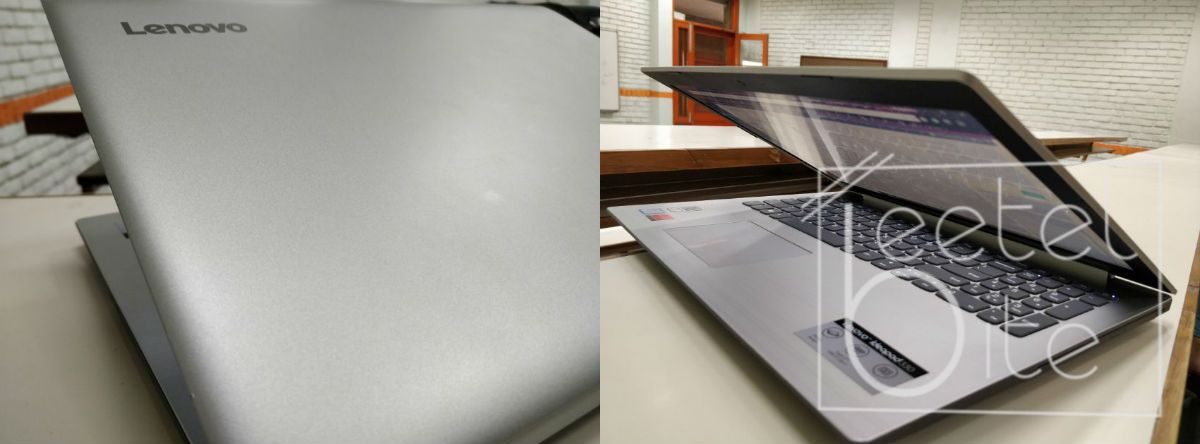
The Lenovo IdeaPad 330 looks great from a distance, it looks like it sports a metal body. As soon as you touch it you realize that it is just plastic infused with the polished aluminium paint job on top. Apart from the plastic fooling itself to look like metal, the body sports a matte paint job all over. The Lenovo branding is minimal with a small logo below the display and a logo on the top-right of the outer lid. This gives the laptop a clean and minimalist look.
The design on the laptop is clean and minimal.
The touchpad is big enough for most of the use cases. However, the sensitivity of the touchpad is a little lower than what I personally prefer. The plastic painted touchpad to match the body is not smooth at all, making long hours of usage feel a bit unpleasant. As for the keyboard, it has good key travel and is respectable and comfortable for long typing sessions.
The overall look of the laptop resembles a metal body laptop.
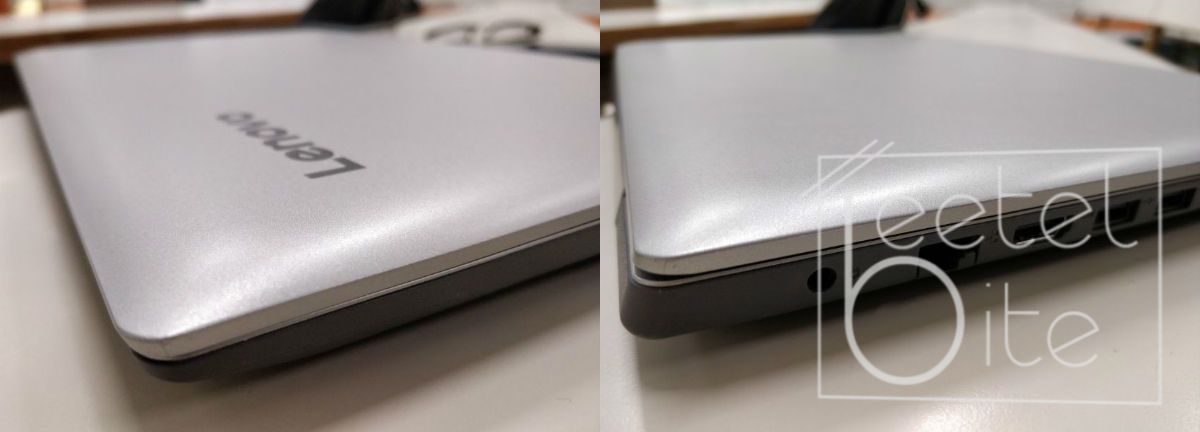
The edges around the IdeaPad 330 body are neatly chamfered allowing comfortable grip while holding the laptop in your hand or typing with your wrist against the body. The base of the laptop is almost flat with the exception of a slight curve to the body on three of the four sides. The colour matched rubber shoes on the base keep the laptop in one place. The hinge on the laptop feels almost perfect.
The hinge-less design of the laptop enables it to open up to 180 degrees
The laptop sports something the company calls the hinge-less design. This gives the laptop the ability to open at any angle between 0-180 degrees. This makes it viewing in awkward positions easy. The company also claims, with this design the hinge breaking issue that most laptops usually face after a few years of usage won't ever happen. However, we cannot guarantee anything from our side.
Lenovo IdeaPad 330: Display and IO
The IdeaPad 330 sports a 15.6-inch full HD (1920 x 1080) IPS display. While the display is non-reflective it attracts fingerprints quite easily. It is bright enough for daily usage, but I found the display a little dull while sitting in a park writing an article. In short, if you are planning to use the laptop outdoors regularly, you will find the brightness disappointing.
The display is quite sharp.
The viewing angles of the laptop are quite good. The text is legible even when the display is pushed back completely. Colours are neither too sharp nor too faded, and appear very natural during the usage.
Overall, the display is quite good considering the price of the laptop. While I haven't tested its HD display variant, in my experience spending a little extra for the full HD one if the budget allows will pay off.
While the speakers are loud enough for listening to music while working late hours in the office. The dialogue and the lack of bass demands a lot to be expected from the speakers. For anything more than casual music playback in the background while working, I would recommend using a pair of headphones or earphones instead.
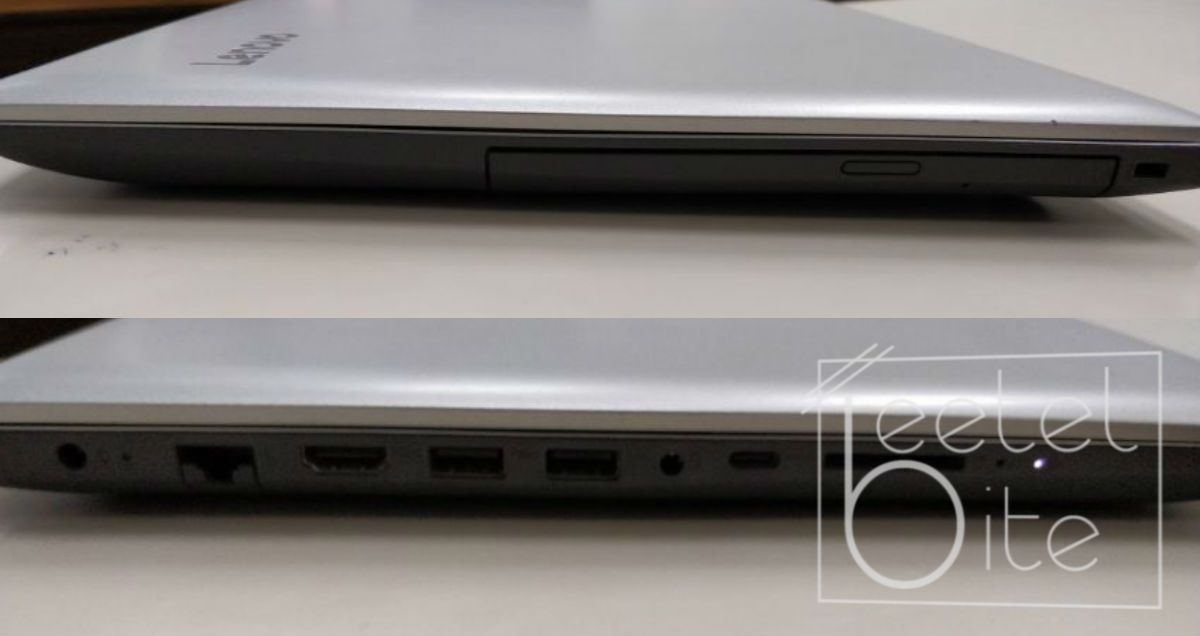
The IO on the Laptop is good and the options offered should be good for most of the people out there.
For the IO (Input Output) ports, the Ideapad 330 sports two full-size USB ports, an HDMI port, a card reader, 3.5mm audio jack, a charging port and a USB Type-C port. Along with this, the laptop also sports a DVD drive. Honestly, in the modern world, I don't see a need for a DVD drive and would have honestly loved to trade that space for an SSD or more USB ports. However, that's only my personal preference. The presence of only two full-size USB ports does bother me a bit, as both of them will vanish if you decide to use an external mouse and keyboard with the laptop. Presence of the USB Type-C port helps.
Lenovo IdeaPad 330: Keyboard and Touchpad
The Lenovo Ideapad 330 sports a chiclet-style keyboard, which does not feature any sort of backlighting. The keys on the keyboard are flat are have got a nice feel to them. However, the tactile feedback from them isn’t too positive. The key travel is more than what you expect from a laptop at this price range, which according to me is a good thing.
The touchpad sports the same texture as the body
Overall the keyoboard of the laptop is acceptable for the price.
The touchpad on the IdeaPad 330 supports Windows multi-finger gestures, which work right out of the box. This is the same technology that Microsoft calls the precision unit. The presence of such a good touchpad on a mid-level laptop is great. The lower part of the touchpad can be pressed down to register left or right clicks. However, the surface of the touchpad is not as smooth as one would like. If you plan on using the mouse heavily, it would be a great option to invest in an external mouse.
Lenovo IdeaPad 330: Performance
Performance is the most important specification while testing any laptop. The IdeaPad 330 can be configured from an i3 8th Generation to all the way up to an i7 8th Generation. Our review unit sports a Core i7-8550U processor clocked at 2.0GHz. It can be equipped with a base model of 4GB of RAM and an empty slot to upgrade to all the way up to 20GB of RAM. Our model was configured with 8GB of RAM. Storage is taken care of by a 2TB hard drive on this device. The laptop can be configured to sport an SSD of up to 256GB with or without the hard drive. Unfortunately, our model doesn't sport the SSD. The graphics onboard are handled by an integrated Intel UHD Graphics 620 chip along with a dedicated AMD Radeon 530 graphics card. The laptop can be specced with or without the dedicated graphics card.
The IdeaPad 330 sports a USB Type-C port as well.
While things like booting, application launches, and everyday tasks happen without too much fuss. Opening and working with multiple tabs on Chrome with 5 different applications ranging from Fortnite and Android Studio the laptop doesn't break a sweat. However, many times the laptop was found lagging. While further diagnosing the using the windows task manager's performance section it was found out due to heavy windows applications like the Windows Search Index bogging up to 80% of the disk usage leaving almost next to no disk space for the rest of the laptop to perform. Force closing such applications made it back to normal. So if you have a little extra room in your budget, I will suggest opting for a model with the SSD.
With a dedicated graphics card on board and such a powerful processor, gaming was something we all needed to test. However, it is safe to say that the AMD Radeon 530 doesn't do this laptop any good while gaming. We tested the laptop's gaming performance on CS: GO, PUBG, and Fortnite on the lowest and highest settings possible in the game and here is how that turned out to be.
The gaming performance of the laptop is below average at best.
The laptop in CS: GO on lowest settings and Fortnite on lowest settings was playable. With highest settings, the CS: GO started to lag a little while the Fornite became unplayable. With the PUBG, the lowest settings made the game barely playable, while the highest settings made the game impossible to play.
Lenovo IdeaPad 330: Battery
Writing and looking up websites for reference while listening to music at full volume with about ten Chrome tabs and running downloads in the background. With that being my usual usage and the battery setup cranked up to max performance settings, the battery lasts approximately six hours. However, when working on projects on Android Studio the battery lasts around three and a half hours at a stretch.
The battery is sealed off inside the back cover of the laptop.
A total time of six to seven hours is what one can expect from the IdeaPad 330's battery when it’s fully charged and normally used. Cranking down the brightness to about 75% works well for indoor usage and the lowering down the laptop performance to better battery life should give you about an hour or so of more battery life.
Overall, the battery performance of the IdeaPad 330 considering its price range is a little disappointing. The company offers the same battery in their lower i3 and i5 models as well. That should make the performance well worth the price at that range, however, at the price of our variant, the battery could be slightly bigger.
Lenovo IdeaPad 330: Verdict
The Lenovo IdeaPad 330 is a modern computer that looks classy and sports a minimalist design. The laptop is definitely not designed to be thin and light and the performance of the laptop makes up for whatever is lost with the chunky design.
The overall profile of the laptop is great.
While the IdeaPad 330 can be appreciated for its sturdy build, the plastic body leaves a lot to be demanded. The overall non-shiny, non-flashy design of the laptop combined with a full HD display, decent battery life, okayish touchpad and keyboard is great for the price.
With a Core i7 8550U processor coupled with 8GB RAM and an AMD Radeon 530 graphics card, the performance of the laptop is well worth the money except for the gaming performance.
The Lenovo IdeaPad 330 features chamfered edges.
The Lenovo IdeaPad 330 we had is priced at Rs. 75,000. For what laptops worth, the price tag does feel appropriate for the laptop. However, if you are willing to invest a bit more you can get a gaming laptop with similar specifications optimised for performance. So, if gaming is not your cup of tea, this laptop is the answer to your problems. If you are looking for gaming, I would suggest ignoring this one.
Few smartphones are lined up to launch in October 2018 and triple cameras are going to be a trend
Smartphone giants like Google, LG, OnePlus, Nokia and Huawei are gearing up to launch a couple of new smartphones in October 2018. While a few companies have already rolled out the media invites, others have left teasers on their social media platforms. Here are the top smartphones launching in October 2018.
Google Pixel 3 and Pixel 3 XL
The Google Pixel 3 XL will come with a notch up front
One of the most hyped events for October 2018 is the Google Pixel 3 launch. Google is gearing up to launch the Pixel 3 and Pixel 3 XL on October 9. We have already seen enough leaks and rumours to have an idea what the devices would look like. Both the smartphones will be powered by the latest Qualcomm Snapdragon 845 SoC. As per the leaks, the Pixel 3 XL will come with a notch up front while the Pixel 3 will sport a standard 18:9 panel.
LG V40 ThinQ
LG V40 ThinQ will sport a triple camera setup at the back
LG, the South Korean giant, is also hosting an event in October where they will launch the much-awaited LG V40 ThinQ. The event is set for October 3 and the company is also said to unveil their new Android Wear smartwatch alongside the V40 ThinQ. The LG V40 ThinQ is said to be powered by the Qualcomm Snapdragon 845 and feature a notch up front. The teasers claim that the phone will come with a triple camera setup at the back.
OnePlus 6T
OnePlus 6T is said to come with a water-drop style notch and in-display fingerprint scanner
After the Pixel 3, if there is a hype for something, then its the OnePlus 6T. OnePlus has already started rolling out official teasers for the upcoming smartphone. The OnePlus 6T is said to come with an in-display fingerprint scanner and a water drop style notch up front. The company is hosting the launch event sometime in October, but the date is not fixed yet. However, there were leaks that the company will be hosting the event on October 17.
Nokia 7.1
Nokia is also gearing up to launch a smartphone with Penta lens setup
Nokia is probably launching more than one smartphone next month. HMD Global might unveil the Nokia 7.1 or the Nokia 7.1 Plus at the October 4 event. The company is also rumoured to launch a smartphone with a 5-camera setup.
Razer, the company known for its gaming peripherals launched their first smartphone last year. Now, the company is gearing up to launch the next generation of the Razer Phone. The event is set for October 10 and as the date comes closer we see more leaks and rumours. The phone is said to come with a dual-camera setup at the back and a 16:9 display up front.
Huawei Mate 20
Image: Roland Quandt (WinFuture.de)
Huawei recently hosted an event where they showed off their latest flagship chipset, the HiSilicon Kirin 980. The company is yet to launch a smartphone running on the latter. The Huawei Mate 20 and the Mate 20 Pro, launching in October 2018, will be the first smartphones to come with the Kirin 980 processor. Also, the Mate 20 Pro will be the second smartphone from the company to offer a triple camera setup at the back.
After providing the Android 9 Pie update to regular OnePlus 6 users, the company has now started to push an update for the Open Beta users. The new OxygenOS Open Beta 4 has already started rolling out while the OnePlus 3 and OnePlus 3T users get an OxygenOS 5.0.6 update with September Android Security Patch.
As for the OnePlus 6, the new Open Beta update brings in major improvements including the fix for the touch latency issue and optimized standby power consumption. With the Open Beta 3, users complained that the phone keeps accidentally answering the second call while using answer calls by the gesture. Now that problem has been fixed with the latest update and also they have optimized the UI for speed dial and calling interface.
Apart from these major bug fixes, the company has also updated the Community app to the version 2.2.0. The new version brings in community notices as a feature, new feed for following community members, stickied comments, more options to share threads and much more. Some of the bugs and issues have also been fixed in the Community app.
OnePlus 3 and 3T users have started receiving the OxygenOS 5.0.4 update. The update brings the latest September 2018 Android Security patch to the table. The company has also brought improvements to the front camera where image quality has been improved. The update also fixes manual ISO setting issue of 3rd party camera apps. The front camera zoom issue on Snapchat has also been fixed. WhatsApp parallel app kept crashing on the previous version and it has now been fixed with OxygenOS 5.0.4.
Microsoft in now entering the Robotics industry with the announcement of ROS1
Microsoft recently made an announcement that they will be releasing their first "Robot Operating System" for Windows 10 and it will be called as the ROS1. The new operating system can be used for development in the industrial space where users can bring features like Machine Learning, computer vision, Internet of Things (IoT) and Cloud services to robots.
The company made the announcement at the "ROSCon 2018" where Microsoft was demonstrating the “ROBOTIS Turtlebot 3” robot. The robot can recognise different people and can also steer towards them. Interestingly, the new robot runs on the Windows 10 IoT Enterprise operating system.
Lou Amadio, Principal Software Engineer, Windows IoT, Microsoft wrote “This development will bring the manageability and security of ‘Windows 10 Internet of Things (IoT) Enterprise’ solutions to the ‘ROS’ ecosystem,” in a blog post on Friday.
“Windows has been a trusted partner of robotic and industrial systems for decades and we’re looking forward to bringing the intelligent edge to robotics by bringing more advanced features,” Amadio added. With the advancements of robots, Microsoft plans to experiment into advanced development tools. “Microsoft will host the Windows builds for ‘ROS1’ and shortly ‘ROS2’, as well as provide documentation, development and deployment solutions for Windows,” he further added.
For those who are completely unaware of what ROS is, it is a set of tools that can be used to build and train robots. The tool can be used on top of “Windows 10 IoT Enterprise” which brings in more control for the enterprises. With Windows 10 IoT Enterprise and ROS, the company is not trying to target the normal audience and rather focusing on providing better solutions to the industries working on building robots.
LG is now gearing up to host an event on October 3 where they will finally unveil the next generation of the V-series smartphone and a new smartwatch alongside. The new smartphone is expected to be called the LG V40 ThinQ. ThinQ is the name for company's AI and they have been using the name along with the phone's name from quite some time now.
LG Watch W7
As far as the watch is concerned, the new LG Watch W7 will be revealed alongside the LG V40 ThinQ. The new watch will be powered by the Google's Android Wear operating system and it is expected to run on the latest WearOS 2.1 out of the box. The watch is said to come with a 1.2-inch LCD panel with a resolution of 360x360 pixels. It is said to be powered by the Qualcomm Snapdragon 2100 SoC which is quite a disappointment as it is a 2-year old chipset now. However, these are just claims and we will have to wait for the final product to be more certain. The watch is expected to come with 768MB of RAM coupled with 4GB of onboard storage.
On the connectivity front, the LG Watch W7 will get Wi-Fi 802.11 b/g/n, Bluetooth 4.2 and GPS. The watch will be available in Aurora Black and Cloud Silver colour variants for a starting price of under $250 (roughly Rs. 18,000).
As for the LG V40 ThinQ smartphone, it is expected to be powered by the Qualcomm Snapdragon 845 chipset coupled with the Adreno 630 GPU. The device is said to come with a 6.4-inch P-OLED display. Just like the LG G7 ThinQ, the V40 ThinQ will also come with a notch up front resulting in an aspect ratio of 19:9.
For the optics, the reports suggest that the LG V40 ThinQ will sport a triple camera setup at the back consisting of a 20-megapixel, a 16-megapixel and a 13-megapixel sensor. Up front, there will be a single 8-megapixel selfie shooter.
Google recently announced the WearOS 2.1 update for the Android Wear smartwatches. The new update brings in new gestures and a whole new redesigned UI. The update concentrates more on the upcoming smartwatches and making them more interactive for the users. Here's everything you need to know about the WearOS 2.1 update.
How to update?
Head over to the Settings by swiping down the system tray and tapping on the gear icon
Swipe all the way down to find About
Now tap on System Updates and then tap on Check for Updates
Also, make sure all your apps including the WearOS app are updated. To do that you can follow these simple steps:
Make sure your watch is connected to the Internet via your phone or Wi-Fi
Open up the app drawer and tap on Play Store
Now swipe down from the top and tap on the My Apps icon
Here you can simply tap on update all to update all the apps installed on your watch
Any Android Wear smartwatch that was launched after the WearOS 2.0 was announced or the watches that got the update down the lane should be receiving the WearOS 2.1 update as well. However, the watches which could not make it to this list include LG G Watch, Samsung Gear Live, Moto 360 (1st gen), Sony Smartwatch 3, and the original Asus Zenwatch.
Google has already started rolling out the WearOS 2.1 update and you should receive them anytime soon. However, looking at Google's track record we recommend you to be patient and wait for a few weeks.
Motorola recently launched the Moto G6 Plus in India for which many people started criticising the company as it offered Snapdragon 636 at Rs. 22,499 while the competion is offering the same at almost half the price. To counter that, the company has reduced the price of the Moto X4 which was previously priced at Rs. 20,999 for the base variant.
The Moto X4 is now available for a starting price of Rs. 13,999 while the 64GB variant can be picked for Rs. 15,600. However, currently, the base model of the Moto X4 is available for Rs. 15,999 and Rs. 13,621 on Flipkart and Amazon respectively. Mahesh Telecom has made the announcement via their official Twitter handle and we should see the price drop on these e-commerce websites soon. Until then, you should be able to find the Moto X4 for a lower price point at your nearest retail stores.
Though the new pricing looks a great deal as it has come all the way down from Rs. 20,999, we highly recommend checking out options from Asus, Xiaomi and RealMe as they can offer better value for money. In case you want to stick with Moto, you should put in a little more money and grab the Motorola One Power instead.
Moto X4 Specifications
As for the specifications, the Moto X4 features a 5.2-inch IPS LCD display with a resolution of 1080x1920 pixels. The phone is powered by the Qualcomm Snapdragon 630 SoC coupled with Adreno 508 GPU. The dual-SIM handset packs in 3GB or 4GB of RAM coupled with 32GB and 64GB of onboard storage respectively. The storage on the device is further expandable up to 2TB using a microSD card. All of this is backed by a 3,000mAh battery that supports Moto's Turbocharge technology.
As for the optics, the Moto X4 features a dual-camera setup at the back consisting of a 12-megapixel primary sensor and an 8-megapixel sensor secondary sensor. The rear set of cameras support phase detection autofocus and a dual-tone LED flash. Up front, there is a 16-megapixel camera with f/2.0 aperture and a LED flash for selfies and video calling.