Home Blog Page 148

Xiaomi to launch Mi Pad 4 and Redmi 6 Pro on June 25: Here are some alternatives

Xiaomi recently launched the Redmi 6

Xiaomi, the Chinese tech giant is gearing up to launch the Mi Pad 4 and Redmi 6 Pro in China. The company will be hosting an event in China scheduled for June 25. The smartphone and tablet will initially be available in China and might later make their way to the other markets. The company has not yet launched any Mi Pad in India, so the Mi Pad 4 is unlikely to come to India.

A teaser image of the upcoming Xiaomi Redmi 6 Pro claims that it will come with a Qualcomm Snapdragon 625 processor. The poster also says there will be a 4,000mAh battery powering up everything. Unlike the Redmi Note 5 Pro, the Redmi 6 Pro will feature a 19:9 display. The teaser image is also giving a clue towards some AI features on the upcoming smartphone.

According to the teaser, the Xiaomi Mi Pad 4 will come with a Qualcomm Snapdragon 625 SoC. Notably, this is the first time Xiaomi is using a Qualcomm processor in its Mi Pad series. The teaser also claims that the tablet will feature a massive 8-inch FullHD+ display.

Alternatives

The Xiaomi Redmi 6 Pro is launching in China on June 25. The company has not yet disclosed whether it will be bringing the device to India or not. However, even if the phone comes to India, it will take a few more weeks before it officially goes on sale. So, here are some alternatives you can buy right now.

Xiaomi Redmi Note 5

Xiaomi Redmi Note 5
Redmi Note 5 runs on MIUI 9 out of the box

The Xiaomi Redmi Note 5 is the perfect alternative for the Redmi 6 Pro as they both have the same processor. The Redmi Note 5 is powered by the Qualcomm Snapdragon 625 SoC coupled with 3GB or 4GB of RAM. The smartphone features a 5.99-inch FullHD+ IPS LCD display. In India, the smartphone is available at a starting price of Rs. 9,999.

Also Read: Asus Zenfone Max Pro M1 vs Xiaomi Redmi Note 5: Dethroning the king?

Asus ZenFone Max Pro M1

Zenfone Max Pro M1
Zenfone Max Pro M1 runs on Android 8.1 Oreo out of the box

Asus ZenFone Max Pro M1 is priced slightly higher than the Redmi Note 5 but packs in a lot of power. The smartphone comes with the Qualcomm Snapdragon 636 SoC. The phone features a 5.99-inch FullHD+ IPS LCD display with an 18:9 aspect ratio. The dual-SIM handset is available at a starting price of Rs. 10,999.

Xiaomi Redmi Note 5 Pro

Xiaomi Redmi Note 5 Pro
Xiaomi Redmi Note 5 Pro is available at a starting price of Rs. 14,999

Xiaomi Redmi Note 5 Pro is on a more expensive side when compared to the smartphones listed above. The Redmi Note 5 Pro is backed by a Qualcomm Snapdragon 636 SoC paired with 4GB or 6GB of RAM. The dual-SIM handset comes with 64GB of onboard storage. The 4GB RAM variant is priced at Rs. 14,999 while the 6GB RAM variant retails for Rs. 16,999.

Instagram to launch the IGTV today: A longer-form video hub

Instagram
Instagram to soon have a long-form video hub

Facebook-owned Instagram is launching the IGTV today. The IGTV is the company's long-form video hub which will allow users to upload even a 10min long video. Instagram will unveil the feature today at a special event in San Francisco at 9 AM Pacific Time (9:30 PM IST).

According to a report by TechCrunch, the company has already sent out media invites for the event. The report claims, “Instagram has spent the week meeting with online content creators to encourage them to prepare videos closer to 10-minute YouTube vlogs than the 1-minute maximum videos the app allows today.”

The new IGTV feature on the social-media platform is especially for the Youtubers and creators encouraging them to upload 4k content of up to 10mins. To clear any misunderstandings, the company is not competing against Netflix Originals or any other high-quality streaming services.

Also Read: You will never get to know who took screenshots of your Instagram stories

Reports suggest that the feature will be a part of the explore tab in the application. The videos can be of as high as 4k resolution and can be vertically oriented in order to provide a full-screen experience. Uploaders can also link these videos to their other social media platforms like YouTube.

The Facebook-owned company might soon extend the limit to 20mins which is a standard for many video platforms. YouTubers are motivated to upload videos as they also get to earn from the platform. It will be interesting to see how Instagram will keep the creators motivated. The social media platform might introduce ad based earnings for the creators somewhere down the line.

Facebook Messenger app to now get annoying Autoplay ads

Facebook Messenger is available on iOS and Android

Facebook is now looking forward to expanding its advertising business. The company will soon start annoying people with a set of Autoplay ads that can play anytime while using the Facebook Messenger application.

According to a report by Quartz, a Facebook spokesperson told them that "the people will remain in their control." This shows that Facebook will force people to view those ads and will not give any option to turn them off. However, users can still choose the ads which they do not want to see again so Facebook can come up with an alternative advertisement.

The Facebook spokesperson also said, “We will be rolling out video ads gradually and thoughtfully. People that use Messenger each month are our top priority and they will remain in control of their experience.”  As mentioned before, users will always have an option to report a specific advertisement. The reported ads will not be shown to the user ever again on the platform.

Also Read: WhatsApp for iOS can now play Facebook and Instagram videos within the app

The social media network will first roll out the feature for a small group of people as a test. Later, the company will roll out the feature globally. As of now, it seems that the feature will come to the Facebook Messenger app only. So Android users can use the Messenger Lite app as a temporary solution for a while. However, we are certain that the company will soon port the feature to the Lite app as well.

SoundBot SB574 Review: Can a cheap and good looking speaker cut it?

SoundBot SB574
Pretty speaker, but does it pack enough power?

SoundBot recently announced their SB574 wireless portable speakers. Bluetooth speakers are now becoming cheap by still maintaining a good sound quality. The market is filled with Bluetooth speakers and smart speakers which makes a tough competition. However, it's not easy to find a good looking speaker under Rs. 2,000. The SB574 by Soundbot is one handsome looking speaker but will it be able to match the style in sound?

Specifications

  • Built-in 3.5mm audio port for wired and Bluetooth 4.2 for wireless connectivity
  • Playback time: Approx. 6 hours at 75% volume
  • Speaker driver: 52mm
  • Passive Radiator Subwoofer: Yes
  • Charging time: 4-4.5 hours
  • Connection range:  33 feet
  • Operating frequency: 150-18KHz
  • Battery Capacity: 2000mAh
  • Dimension: 7.7 in. x 2.75 in. x 2 in.
  • Signal-to-Noise Ratio: ≥65db
  • Distortion: ≤1%

Design

The SB547 is one of the best looking Bluetooth speakers in this segment. The speaker on the front has a cloth finish, which gives it a really impressive look. On the front, you get to see the SoundBot branding as well. The speaker is housed inside a plastic body. SoundBot used a really high-quality plastic and covered it with a grey wood finish to make the speaker look much more premium.

The speaker comes fitted with rubber standoffs at the bottom to give it a good amount of grip while you are listening to music at high volumes. On the top of the speaker sits the Volume rocker and power button which also allows the speaker to get into the pairing mode. The buttons are shaped according to their actions and are embossed to the body to give a nice feel when you click them.

Sound and Performance

The sound quality of the SoundBot SB574 is very satisfying and it manages to get loud enough. The bass is a little low for the speaker's size. The highs and mids were quite impressive. However, the lows were little too low for my taste. That's just a personal preference as I prefer highs in my music.

The SB574 does not pack in a lot of features. It takes around 2-3 hours to charge the speaker enough to get at least 5-6 hours of continuous usage at around 75 percent volume. The buttons on the top are firm and have a nice clicky feel to them. The microphone in the speaker is not that great. Also, the speaker makes a beeping sound while turning on or connecting to Bluetooth devices. We felt that beeping sound to be a little annoying.

The volume on the speaker is independent of the volume on the device it plays from so that makes it a bit frustrating. We tested on multiple devices including phones and computers and the result was the same. However, the range of the Bluetooth connectivity is excellent.

Conclusion

SoundBot SB574
Beats the speakers more than double its price in looks

SoundBot SB574 is available on Flipkart for Rs. 1,790. For the price point, and the sound quality it offers, the SB574 is one of the best Bluetooth speakers in the market. If you are more of an audiophile, we'll recommend you to shell out a little more money for a better speaker. However, if the style is your thing, you won't find a better-looking speaker at this price bracket.

Oppo Find X Lamborghini Edition launched: Price, Specifications and Alternatives

Oppo Find X Lamborghini version
Oppo Find X Lamborghini Edition comes with a carbon fibre back

Oppo has finally launched the much anticipated Oppo Find X. The company has also partnered up with Lamborghini and launched a Find X Lamborghini Edition. The special edition smartphone has a carbon fibre back with an embedded Lamborghini logo.

The Lamborghini Edition Find X comes with the next level Super VOOC fast charge technology that can charge up the smartphone from 0 to 100% in 35 mins. The smartphone comes with a premium price tag of EUR 1699 that roughly converts to Rs. 1,34,000.

Oppo Find X Lamborghini version price
The Lamborghini Edition will be available for EUR 1699

Specifications

In terms of specifications, the Oppo Find X features a 6.4-inch FullHD+ OLED display. The smartphone is powered by the latest and greatest, Qualcomm Snapdragon 845 SoC. The Lamborghini Edition of the phone comes with 8GB of RAM and 512GB of onboard storage. The dual-SIM handset runs on Android 8.1 Oreo-based Color OS out of the box. All of this is backed by a 3,730mAh battery which supports Oppo's latest Super VOOC fast charging.

As for the cameras, the Oppo Find X features a dual-camera setup at the back consisting of a 16-megapixel and a 20-megapixel sensor. Up front, there is a 25-megapixel selfie shooter.

Alternatives

Vivo Nex

Vivo recently launched the Vivo Nex that comes with an in-display fingerprint scanner. The smartphone also comes with a Pop-up selfie camera that comes out only when you launch the camera app. The phone sports a 6.5-inch Super AMOLED display with a resolution of 1080x2316 pixels.

Vivo X21

In case you are in love with in-display fingerprint scanners, the Vivo X21 is on sale. The Vivo X21 features a 6.28-inch Super AMOLED display with a resolution of 1080x2280 pixels and an in-display fingerprint scanner. The smartphone is available in India with a price tag of Rs. 36,999.

OnePlus 6

If you don't care about fancy tech and need the best out of your money, the OnePlus 6 makes more sense. The OnePlus 6 is powered by the Qualcomm Snapdragon 845 SoC paired with 6GB or 8GB of RAM. The smartphone features a 6.28-inch Super AMOLED display. OnePlus 6 is available in India at a starting price of Rs. 34,999.

Yahoo Mail Android Go app launched along with a revamped mobile interface

Yahoo Mail Go
Yahoo Mail Go is a lighter and much faster version of the e-mail client.

Yahoo once a big name in the industry is now struggling to keep up and gain new customers. But, the fact is that the company will not be dying off at least in the near future, as still millions of people trust Yahoo to keep their e-mails safe and secure. The company is also making huge efforts to keep up with the times and to keep their users happy. Today they have launched a new app for Google's Android Go operating system. Additionally, they have also revamped the whole mobile web experience. The stripped down version of the app is aptly named Yahoo Mail Go. The app is less than 10MB in download size and utilises only 50MB's of RAM while running.

Yahoo has kept all of the important features of the original application, this has been made possible thanks to the lite version of the app being built on the same architecture as the larger one. Additionally, the company has also added lots of other features like compatibility with third-party e-mail service providers, support for search, customisable swipe actions, themes, people notifications, animated GIFs, and much more. Yahoo has also built-in the capability of telling apart general and promotional e-mails directly into the app.

Also Read: Yahoo introduces Squirrel chat app: Here are some alternatives

The Yahoo Mail Go app is currently available on the Google Play Store. However, according to a report from Android Police, the app isn't compatible with Android Go devices like the Nokia 1. But, they do claim that the app will soon be up and running on all of the Android Go running smartphones.

Also Read: Yahoo’s “The 32” to keep you up to date with FIFA 2018 updates live

Along with the new Android Go app, the company has also revamped its web experience for mobile users, which you can check at mail.yahoo.com. The new revamped mobile platform according to the company is more interactive and fast. This new interface features a lot of intuitive features like infinite scroll for emails, a side menu with all the folders, quick actions for a chosen email, customisable swipe actions, multiple themes, and suggestions for frequent contacts. It is being said that a similar redesign is coming to the main app with a ton of other new features very soon.

LG X5 (2018) launched in South Korea: Price, Specifications and Alternatives

LG X5 (2018) is currently only available in South Korea

LG, the South Korean giant has launched the LG X5 (2018) in their home country. Even in 2018, the smartphone comes with a 16:9 display. The company has priced the handset at KRW 363,000 which roughly converts to Rs. 22,200.

Specifications

As far as the specifications are concerned, the LG X5 (2018) features a 5.5-inch IPS LCD display with a resolution of 720x1280 pixels. The smartphone is powered by the MediaTek MT6750 processor. The device packs in 2GB of RAM and 32GB of inbuilt storage which is further expandable using a microSD card. Under the hood, there is a 4,500mAh battery powering up the device.

On the optics front, the LG X5 (2018) sports a 13-megapixel camera at the back with a LED flash. Up front, there is a 5-megapixel selfie snapper.

Also Read: Google Maps removes Uber integration: You can no longer book cabs from the app

Alternatives

LG has not yet revealed any plans for launching the LG X5 (2018) in India. So, here are some alternatives available in India right now

Xiaomi Redmi Note 5 Pro

Xiaomi Redmi Note 5 Pro
Xiaomi Redmi Note 5 Pro is available at a starting price of Rs. 14,999

Xiaomi Redmi Note 5 Pro is one the best mid-range smartphones available in India. The smartphone comes with a 5.99-inch FullHD+ display. The handset is powered by the Qualcomm Snapdragon 636 SoC coupled with 6GB of RAM. The phone is priced at Rs. 14,999 for the 32GB variant while the 64GB variant is available for Rs. 16,999.

Asus ZenFone Max Pro M1

Zenfone Max Pro M1
Asus Zenfone Max Pro M1 runs on Android 8.1 Oreo out of the box

The ZenFone Max Pro M1 by Asus is a much better option when compared to the LG X5 (2018). The ZenFone Max Pro M1 starting at Rs. 10,999 comes with the powerful Snapdragon 636 processor. The dual-SIM handset sports a 5.99-inch IPS LCD display with a resolution of 2160x1080 and an 18:9 aspect ratio.

Vivo V9

Vivo V9

The Vivo V9, when compared to the LG X5 (2018), carries a modern design with the notch up front. The Vivo V9 sports a 16MP+5MP dual-camera setup at the back. Up front, there is a 24-megapixel selfie shooter. The Vivo V9 is available at a price of Rs. 22,990.

Oppo Find X with Pop Up cameras launched: Price, Specifications and Availability

Oppo Find X

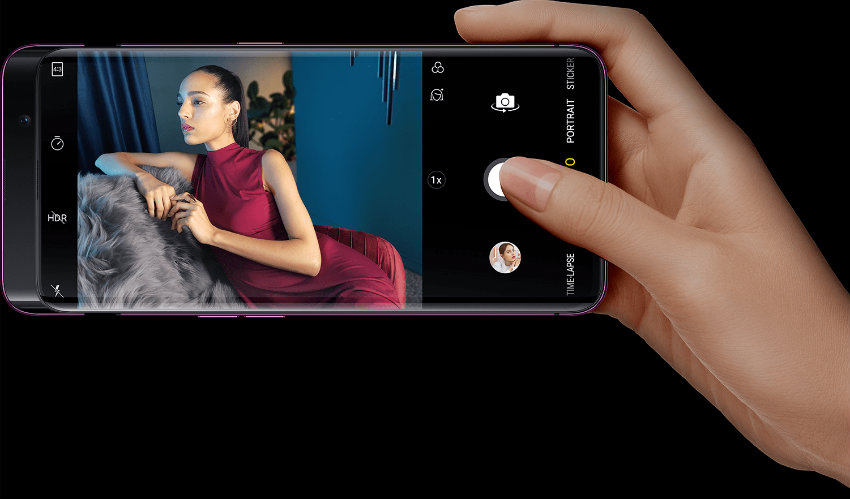
Oppo has finally launched the much-awaited Oppo Find X. After a lot of leaks and rumours, we finally have a smartphone in the market that sports a 6.4-inch display with a stunning 92.25 percent screen-to-body ratio. The smartphone comes with flagship grade specifications and three Pop Up cameras.

The most interesting thing about the Oppo Find X is the Pop-up mechanism for the cameras. We have seen pop-up selfie camera on the Vivo Apex and Vivo Nex before. The mechanism on the Find X is quite different. The rear camera, as well as the front camera, pop out as soon as you fire up the camera app. Oppo claims it takes only 0.5 seconds for the smartphone to load the cameras.

Oppo Find X

Unfortunately, the phone does not have a fingerprint scanner, not even an in-display one. Oppo Find X uses face unlock which again pops out the camera when you need to unlock and pops it back in when done. With this whole pop up mechanism thing, Oppo managed to get 92.25 per cent screen-to-body ratio up front and a clean design at the back.

Specifications

As for the specifications, the Oppo Find X features a 6.4-inch FullHD+ OLED display. The smartphone is powered by the Qualcomm Snapdragon 845 SoC. The dual-SIM handset packs in 8GB of RAM and offers up to 256GB of onboard storage. The phone runs on Oppo's Color OS which is based on Android 8.1 Oreo. Under the hood, there is a 3,730mAh battery that supports Oppo's VOOC fast charging.

On the optics front, the Oppo Find X sports a 16MP+20MP dual-camera setup at the back. Up front, there is a 25-megapixel selfie shooter.

Price and Availability

Oppo Find X is priced at a premium of EUR 999 that roughly converts to Rs. 78,800. There is also a Lamborghini Edition of the same that comes with a price tag of EUR 1699 (roughly Rs. 1,34,000. The smartphone will be made available in Europe starting August 2018. Oppo is planning to bring the Find X to India on July 12.

Now receive text messages directly on your laptop using the latest Android Messages app: Here's how

Android Messages is available for all Android smartphones

Google now allows you to send and receive text messages from your desktop with the latest update of the Android Messages application. Android Messages app comes pre-installed on most smartphones, while others have an option to install it and use it as the default app. Just like WhatsApp, Android Messages users will also have a web interface where they can read, send and receive text messages.

The new Android Messages web interface will work on browsers like Google Chrome, Mozilla Firefox, Opera, Apple Safari, Microsoft Edge on Windows PC, Mac or even Chromebooks. The feature will need the latest app installed on your Android phone. The latest version of the application is 3.3.043 which can be found here.

We updated the app on our 4-5 Android phones but the option didn't show up on any of them. However, a developer at XDA Developers uploaded screenshots of the same so we can say the feature will start working soon.

Messages Web Interface (Image Credits: XDA Developers)

Here's how you can use Android Messages Web Interface

  • Download and install the latest version of Android Messages
  • Open the app and tap on the three-dots on the top-right corner
  • Tap on "Messages for web"
  • Click on "Scan QR Code"
  • Now head over to your PC and fire up your browser
  • Go to this link.
  • Scan the QR Code shown on the Website using your smartphone

Also Read: WhatsApp to launch a proper Windows app soon: Report

If you have used WhatsApp for Web then the setup process will be quite familiar to you. The interface is simple yet brings in a lot of features. Apple users had this privilege for a long time and now finally we Android users can enjoy the feature as well. However, Apple iPhone's iMessage sync only with Macs whereas the Android Messages can be used on both Windows as well as Mac.

Google Maps removes Uber integration: You can no longer book cabs from the app

Google, Google Maps, Uber, Google Maps Uber integration, Google Uber, Google and Uber partnership, Waymo, Google removes Uber
After 18 months of the partnership, Google seems to have removed the integration and started requesting users to directly book cabs from the Uber application.

Google and Uber last year partnered up with each other to integrate the ride-hailing service directly into the Google Maps application. This partnership allowed users to book, track, complete and pay for cab rides directly from the Maps application. We even saw an APK teardown of the Google Maps beta app in which we got to see the option to create an Uber account was lying disabled.

After 18 months of the partnership, Google seems to have removed the integration and started requesting users to directly book cabs from the Uber application. The announcement of this news was first posted on Google's support page, which was spotted and reported on by Android Police. The support page states, "You can no longer book Uber rides directly in Google Maps."

Also Read: WhatsApp to launch a proper Windows app soon

The feature was extremely well received when first launched as it allowed users to search for directions then choose the ride-sharing option after which they could book a cab directly from within the app. The ride-sharing option is still available in the Google Maps app, however, when chosen it shows you an estimate of your ride and then sends a prompt to take you to the Uber application.

Also Read: BookMyShow launches music streaming and digital radio app

Uber is not the only app that shows in the ride-sharing tab of the Google Maps app, there are over 17 different services that show up. However, it is the only one that previously would let users ride and complete their rides without opening any other app. The reason as to why the feature has been disabled is currently not known. It may be the fact that not many people were using the feature, or that the relationship between both the companies has suffered due to various lawsuits and isn't as strong as it used to be.