Home Blog Page 149

Is the Apple iPhone 4S still worth in 2019? Should you buy it?

Apple iPhone 4S, Apple, iPhone, iPhone 4S, Apple iPhone, is the iPhone worth it
Apple iPhone 4S was launched back in 2011

Apple iPhones are one of the most demanded smartphones globally since the date launched. With the iPhone Xs starting at Rs. 99,900 in India, it can be said that the future models with a few exceptions might not be affordable for all. However, as the years pass, prices of smartphones depreciate and they become more affordable. Also, with these phones being powerful devices at the time of launch, buying them after a few years doesn't make them a bad choice.

If you look in the used smartphone market now, the Apple iPhone 4s is available at really impressive prices. An old iPhone 4s in good condition at the moment would cost you around Rs. 1,000 to Rs. 1,500. The smartphone ticks all the right options like design, performance, looks, and more. However, the only problem you might have is that the device is over eight years old right now. So the question remains, Is the Apple iPhone 4s worth it? Continue reading to know if it is the right purchase decision or not.

Apple iPhone 4S: Design

The design on the iPhone 4s is quite dated as it is almost seven years old. However, this kind of a design is now making a comeback on the iPhone. If seen now, the metal and glass sandwich design doesn't look dated. The thing to keep in mind is that the iPhone 4s doesn't have Corning Gorilla Glass protection instead it features normal toughened glass.

The design only seems dated when you get to its boxy construction and the 3.5-inch display. Apart from the design, the phone features a 30-pin connector that hasn't been used for around 7 years now. It was the last Apple device to feature the 30-pin connector. Additionally, it comes with large bezels and has an extremely small footprint when it comes to holding the device. It might be good or bad depending on personal choices. However, personally, I feel the phone still looks stunning and has the potential to turn heads.

Also Read: Apple Watch Series 3 with built-in cellular brought to India by Reliance Jio

Apple iPhone 4S: Software

The iPhone 4s when initially launched came running iOS 5. Due to the good support offered by the manufacturer the device was able to get iOS updates til v.9.4.5, it got iOS 9 in 2015 alongside the iPhone 6S. It is able to run most of the essential apps people require on a daily basis. However, recently we have seen many apps starting to drop support. Soon the device will be left with support for only basic apps. Also, the software will lag heavily if you try to use the phone for anything that is not a basic task. The software does pack a lot of nifty iOS features like Airdrop, Airplay, iMessage, FaceTime and more. This does make the iPhone 4s a good choice for a secondary smartphone. At the price range, the smartphone is currently available at, the software is better than most of the others.

Apple iPhone 4S, Apple, iPhone, iPhone 4S, Apple iPhone, is the iPhone worth it

Also Read: Apple Airport discontinued: Here are the Top 3 alternatives

Apple iPhone 4S: Performance

When launched the iPhone 4S had the best in class performance, but as of now due to the advancements in technology, the iPhone 4S can only perform basic tasks and a few heavy ones. This can be blamed on the older processor not being able to keep up. The device also gets slightly heated when performing any kind of heavy tasks on it. We are not gonna bother with the performance numbers for this one. As we already know they will be low thanks to today's standards.

Also Read: iOS 11.3 on Apple iPhone 5S does not have Battery health features. But Why?

Apple iPhone 4S: Display

The iPhone 4s sports a 3.5-inch 640 x 960 pixels IPS Display, which does seem pretty small, especially in 2019. The device comes with big bezels, which make its display look even smaller. Typing on such a small screen is extremely challenging. However, you will get used to it pretty quickly as was our experience. Web browsing and minor tasks are also quite hard to perform on such a small display. The sunlight readability is simply, bad. The display is bright enough for indoor usage.

Apple iPhone 4S, Apple, iPhone, iPhone 4S, Apple iPhone, is the iPhone worth it

Also Read: Apple iPhone 8 and 8 Plus are now available in Red: Price, Availability and more

Apple iPhone 4S: Camera

The iPhone 4s sports an 8 MP f/2.4 aperture primary camera with an LED flash. On the front, it comes packed with a VGA sensor. The camera is pretty bad on paper in terms of 2019. However, in reality, you will discover it is somewhat ok. It was good back in 2011, but right now it is there just if you need a camera in an emergency. Over the past few years, smartphone camera quality has radically improved. However, if you look at Rs 3000-4000 priced phones in the market right now, it is comparable.

Also Read: Apple iPhone SE 2 to launch soon: Here's what to expect

Apple iPhone 4S: Battery

Apple iPhones are known for really bad battery backup. If you buy a used and abused smartphone the battery can last at max 2-3 hours. Before purchasing the smartphone it is recommended to take a good look at the battery condition before buying a used 4S used. Even if the battery is in perfect condition don't expect it to last more than 8-10 hours. You will really struggle with the battery life with a used iPhone 4s.

Also Read: Here’s a list of all the Apple iPhones and iPads that will get updated to iOS 12

Apple iPhone 4S: Conclusion

Apple iPhone 4S, Apple, iPhone, iPhone 4S, Apple iPhone, is the iPhone worth it

Buying a smartphone that was launched eight years ago would seem absurd. But getting an iPhone at Rs. 1,500 also seems unbelievable. All in all, using the 4s for a week reminded me of the great Apple's Design was. The smartphone is good for daily light usage. Like phone calls, WhatsApp, and basic net browsing. However, if you are looking for a smartphone that can handle heavy tasks, this phone won't last. For Rs. 3,000, a new phone will perform almost the same or worse in many cases. So if you are looking for a basic smartphone under the budget of Rs. 5,000, the iPhone 4s is a good option. Just keep in mind, you will not get a warranty on a used smartphone. So now it hinges on the fact, what do you want? at that price point, do you want a warranty or great design and build quality.

Asus ZenFone Ares launched: Price, Specifications and Availability

Asus ZenFone AR launched as ZenFone Ares in Taiwan

Asus has launched the ZenFone Ares in their home country, Taiwan. The smartphone is nothing new but just the ZenFone AR which was launched in India back in July 2017. Almost a month later, the Taiwanese company decided to launch the smartphone in their home country without making any changes.

The Asus ZenFone Ares or ZenFone AR is focused towards AR (Augmented Reality) and VR (Virtual Reality). The Asus ZenFone AR was one of the first smartphones to come with 8GB of RAM and one of the first Tango-enabled smartphone.

Specifications

As far as the specifications are concerned, the Asus ZenFone Ares comes with a Qualcomm Snapdragon 821 chipset coupled with Adreno 530 GPU. The phone sports a 5.7-inch Super AMOLED display with a resolution of 1440 x 2560 pixels and a pixel density of 515 PPI. The device packs in 8GB of RAM and 128GB of onboard storage. The ZenFone Ares runs on Android 7.0 Nougat out-of-the-box with the company’s own ZenUI 3.0 layered on the top. It also packs a 3,300 mAh battery and supports Qualcomm’s Quick Charge 3.0.

In the camera department, the ZenFone Ares features a TriCamera setup including a 23-megapixel primary camera, a depth-sensing camera and a motion-tracking camera Asus’ high-res PixelMaster 3.0 technology. The primary camera supports OIS (Optical Image Stabilization) and phase detection autofocus. Up front, there is an 8-megapixel front-facing camera for selfies and video calling.

Price and Availability

Asus ZenFone Ares has been launched in Taiwan at a price of TWD 9,990 (roughly Rs 22,500). The price point is pretty cheap considering it was launched at Rs. 49,999 in India.

Asus Zenfone Max Pro M1 vs Xiaomi Redmi Note 5: Dethroning the king?

Zenfone Max Pro M1 vs Redmi Note 5
The Zenfone is better than the Redmi on paper. However, does the same carry out in real life?

Taiwanese Electronics Manufacturer, Asus recently launched their latest smartphone in the Zenfone Max series. The Asus Zenfone Max Pro M1 packs a massive 5,000mAh battery and comes in at Rs. 10,999. This puts the Zenfone Max Pro M1 in direct competition with the Xiaomi Redmi Note 5. Xiaomi with the Redmi Note series has dominated the budget smartphone segment. However, in our testing, the Zenfone proved to be giving a hard time to the Redmi. So, is the Zenfone Max Pro M1 really better than the Redmi Note 5?

Design

Both the phones sport a 5.99-inch 18:9 aspect ratio display with metal back and plastic parts at the back for antenna purposes. Both the devices have considerable bezels but less than what we are used to. Also, both the smartphones have a rear mounted fingerprint sensor. However, the Zenfone Max Pro M1 features a dual camera setup at the back while the Redmi Note 5 has a single one. Along with the Redmi Note 5 sports an IR Blaster while the Zenfone Max Pro M1 doesn't.

Both the devices look and feel premium in hand. Also, both the handsets sport an almost similar footprint.

Software

The Zenfone Max Pro M1 runs on stock Android 8.1.0 Oreo while the Redmi Note 5 runs on MIUI with Android 7.1.2 Nougat out of the box. In terms of software performance and stability, the Zenfone takes the lead. However, many MIUI fans will disagree as it carries a ton of useful features. If you are not an MIUI fan, you will love the stability and performance of stock Android on the ZenFone.

Performance

Performance is the major concern for any smartphone. The Xiaome Redmi Note 5 is powered by the Qualcomm Snapdragon 626 SoC coupled with 3/4GB of RAM and 32/64GB of storage. While the Asus Zenfone Max Pro M1 sports a Qualcomm Snapdragon 635 SoC with 3/4GB of RAM along with 32/64GB storage. This instantly makes the Zenfone better than the Redmi on paper. However, not everything depends on specifications.

We ran our usual AnTuTu v7 and Geekbench 4 benchmarks in our reviews for the devices. That also proved the Zenfone is better in performance numbers than the Redmi. Just like the specifications, the real-life performance does not depend on these numbers. In real life usage, the ZenFone Max Pro M1 is leaps and bounds ahead in terms of performance compared to the Xiaomi Redmi Note 5.

Also, the Redmi tended to run a little hot on heavy gaming while the Zenfone managed to remain cool. You can read more in your detailed reviews (Asus ZenFone Max Pro M1).

Display

WhatsApp to launch a proper Windows app soon: Report

WhatsApp
WhatsApp is currently one of the most popular messaging applications

WhatsApp is now working with Microsoft in order to launch a proper desktop app. A recent report by Windows Central, WhatsApp is introducing a Universal Windows Platform (UWP) version of the app.

Facebook-owned WhatsApp will now have its own native app on Windows. For this project, Microsoft and WhatsApp are closely working together. The reports have also shared a few screenshots which give us an idea of what the application will look like.

WhatsApp UWP
Source: Windows Central


To recall, WhatsApp already has its own desktop app. However, the app is just another version of its Web app. The web app does the job but misses on to a lot of features. Unlike the web app, the new UWP version of the desktop app will now have support for voice and video calling.

Also Read: You will never get to know who took screenshots of your Instagram stories

Looking at the screenshots shared, we can confidently say that the new UWP application will also link to your smartphone using a QR code. This is the same way you used to connect to the web app. So, you will still need an internet connection on your desktop as well as your smartphone.

WhatsApp has been constantly updating its application in order to provide users with most as many features as possible. The company recently introduced UPI feature in the app where users can transfer money to their contacts directly from their bank account within the app. The Facebook-owned company also introduced a Business version of the app recently which allows businesses to create a separate account and use the app to send important messages and reply to user's queries.

How to download, install and use Samsung Good Lock on your smartphone

Samsung Good Lock lock screen on Galaxy S8

Samsung introduced Good Lock, a customisation tool for Samsung smartphones back in the days when flagships were running Android Marshmallow. The company has now finally released a new version for the Samsung devices running on Android Oreo.

The Samsung Good Lock app was recently spotted on the Galaxy App store in South Korea. Sadly, the app is not available for other regions. However, thanks to a few people in South Korea, the app was extracted as apk and shared over the internet. The app can be installed on Samsung devices running on Android Oreo including Samsung Galaxy S7, S8, S9 and Note 8.

Here's how to download and install the app

Unfortunately, the app is split into various parts so you will need to install multiple apks in order to make it work.

  • Download and extract the zip file from here
  • Install the Apks one by one
  • Now head over to the Google Play Store and install QuickShortcutMaker
  • Open the QuickShortcutMaker app on your phone and search for LockStar, Routines, QuickStar and Task Changer in order to change different settings. When you tap on these apps inside the QuickShortcutMaker app, you need to click on Try in order to open the app.

As the app is not officially supported for other regions, you will need to make changes like this. There will be an icon for Good Lock 2018 in the app drawer but firing up that app will always show you a blank screen. It is not the perfect solution but as for now, this is the only way to get the Good Lock to work on your Android Oreo smartphone.

How to use Good Lock

Good Lock a great customisation app as it allows users to customise everything from Lock Screen to Notification icons. You can even change how the task manager on your smartphone looks. Unlike the third-party apps found on Play Store, Good Lock is ad-free and gives you a lot of customisation options without affecting the device's performance.

  • Open the QuickShortcutMaker app
  • Select the app you want to customise (LockStar, Routines, QuickStar or Task Changer)
  • Hit Try
  • Turn it on and make the necessary changes
  • Tap on Save and confirm if the changes are now applied

You can go back to the app anytime and make any changes you want.

Asus Zenfone Max Pro M1 In-Depth Review: Budget smartphone king?

Zenfone Max Pro M1
Is the Asus ZenFone Max Pro M1 the best mid-range smartphone?

Asus recently unveiled a new smartphone in their Zenfone Max series. The Zenfone Max series is focused towards providing great battery backup and decent performance on a budget. The all-new Asus Zenfone Max Pro M1 comes packed with a 5,000mAh battery. Will it be able to live up to our expectations? Here's our full review of the ZenFone Max Pro M1

Asus Zenfone Max Pro M1

The Asus Zenfone Max Pro M1 comes with a Qualcomm Snapdragon 636 SoC coupled with 3GB or 4GB of RAM. It sports a 5.99-inch FullHD+ IPS LCD display with an 18:9 aspect ratio. For the optics, it features a dual-camera setup at the back consisting of a 13-megapixel and a 5-megapixel sensor with f/2.2 and f/2.4 aperture respectively. For the Selfies, there is an 8-megapixel selfie snapper with a selfie flash. All of this is backed up by a massive 5,000mAh Battery.

Zenfone Max Pro M1
Asus Zenfone Max Pro M1 is an impressive smartphone that shatters its competition on and off the paper.

The smartphone sports a metal and glass construction with plastic caps at top and bottom for the antenna. This gives the smartphone a premium look. It runs on a nearly-stock Android 8.1.0 Oreo. What differs the ZenFone Max Pro M1 from other Asus devices is the absence of the ZenUI skin. It also features a Fingerprint sensor, a dual-sim card slot, micro-USB port and a 3.5mm audio jack.

Design

Asus Zenfone Max Pro M1 sports an almost similar design to the smartphones in this segment but slightly improved. The device sports an 18:9 aspect ratio display which increases the screen size by reducing the bezels and keeping the dimension of the phone the same.

Zenfone Max Pro M1
The ZenFone Max Pro M1 sports a 5.99-inch display up front

The front of the device houses a 5.99-inch (1080x2160 pixels) IPS LCD display with an 18:9 aspect ratio. The smartphone has a rear mounted fingerprint sensor and on-screen buttons so the bottom is void of anything. Above the screen, there is an earpiece. On the right of the earpiece are the sensors and on the left, there is the 8-megapixel front camera.

Zenfone Max Pro M1
There is a vertical dual-camera setup at the back

The smartphone sports a metal back. There is a plastic strip at top and bottom and sides of the phone for antenna purposes. The rear camera sensors lie vertically on the top left of the smartphone. The led flash is just below the camera sensor. The rear-mounted fingerprint sensor is in the top centre of the smartphone. There is an Asus branding just below the fingerprint sensor. On the bottom centre, there are the labels regarding production. However, the branding and the labels are so subtle that they aren't visible that much. It really gives the back a clean look.

The right of the smartphone sports a volume rocker and a power button. The hybrid dual sim card tray is on the left of the smartphone. The bottom of the phone features a micro-USB slot for charging and data-sync in the centre along with speakers on the right and headphone jack on the left. There is a secondary microphone situated on the top of the device.

The ZenFone Max Pro M1 comes with something called as a Max box. It is nothing special but a piece of cardboard designed to increase the smartphone sound. It can also act like a smartphone stand. There is nothing so special about it but its good to see that smartphone manufacturers like Asus are taking initiatives like this.

Software

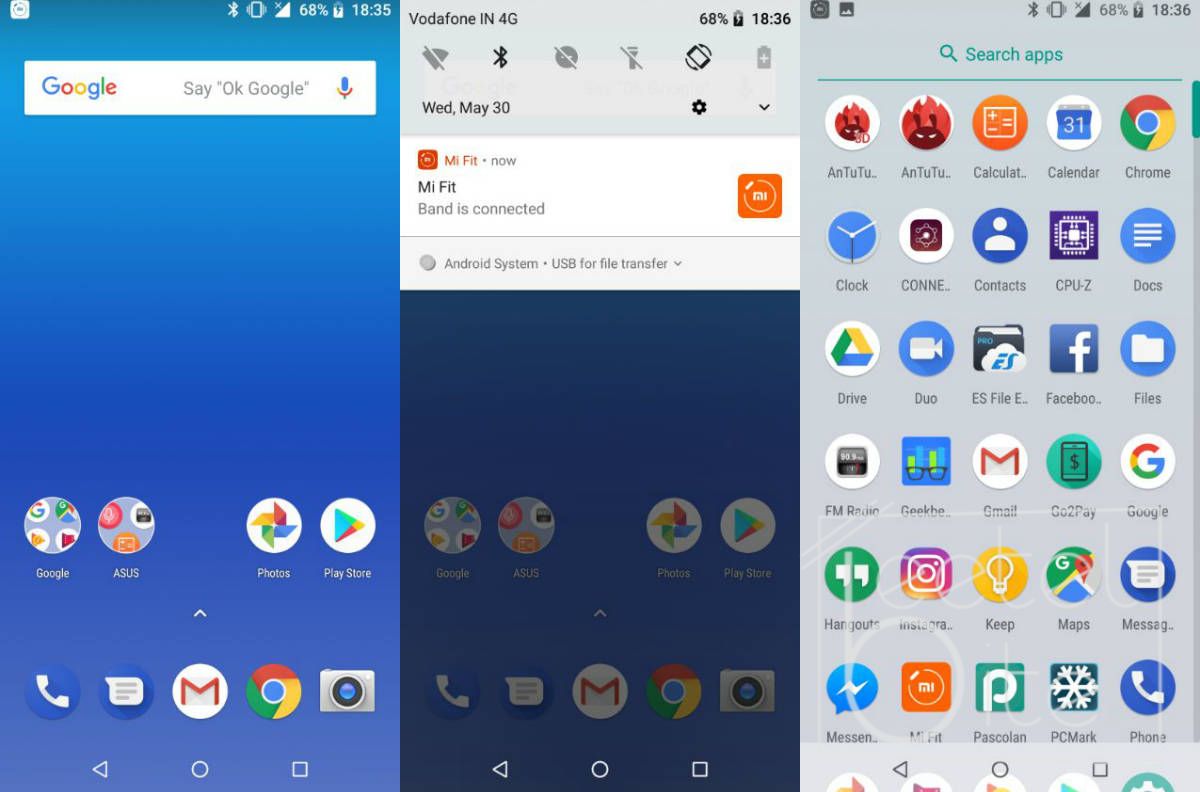
Asus Zenfone Max Pro M1 runs on nearly stock Android 8.1.0 Oreo out of the box. It is not exactly like the interface found on the Google Pixel or Xiaomi Mi A1 as Asus has made a few modifications here and there. However, the interface is snappy and apps load in a gist.

Zenfone Max Pro M1 Software
The software is almost stock which gives this smartphone an edge.

The software performance of the Asus Zenfone Max Pro M1 is great. The software runs lag-free with nothing to complain in regards to the performance. Also, it's an Android phone so if you don't like the way it looks, you can always change it with third-party launchers and more. The smartphone, unfortunately, comes with bloatware including Facebook, Messenger and Instagram that cannot be uninstalled.

Performance

The performance is a major area of concern in any device. Asus Zenfone Max Pro M1 focuses towards delivering a great battery backup. However, the smartphone performs good enough for its price point. With its specifications, it already matches the expected performance mark. The Zenfone Max Pro M1 comes with a Qualcomm Snapdragon 636 SoC paired with Adreno 509 GPU. Our review unit has 3GB of RAM and 32GB of onboard storage. There is also a 4GB+64GB variant on sale.

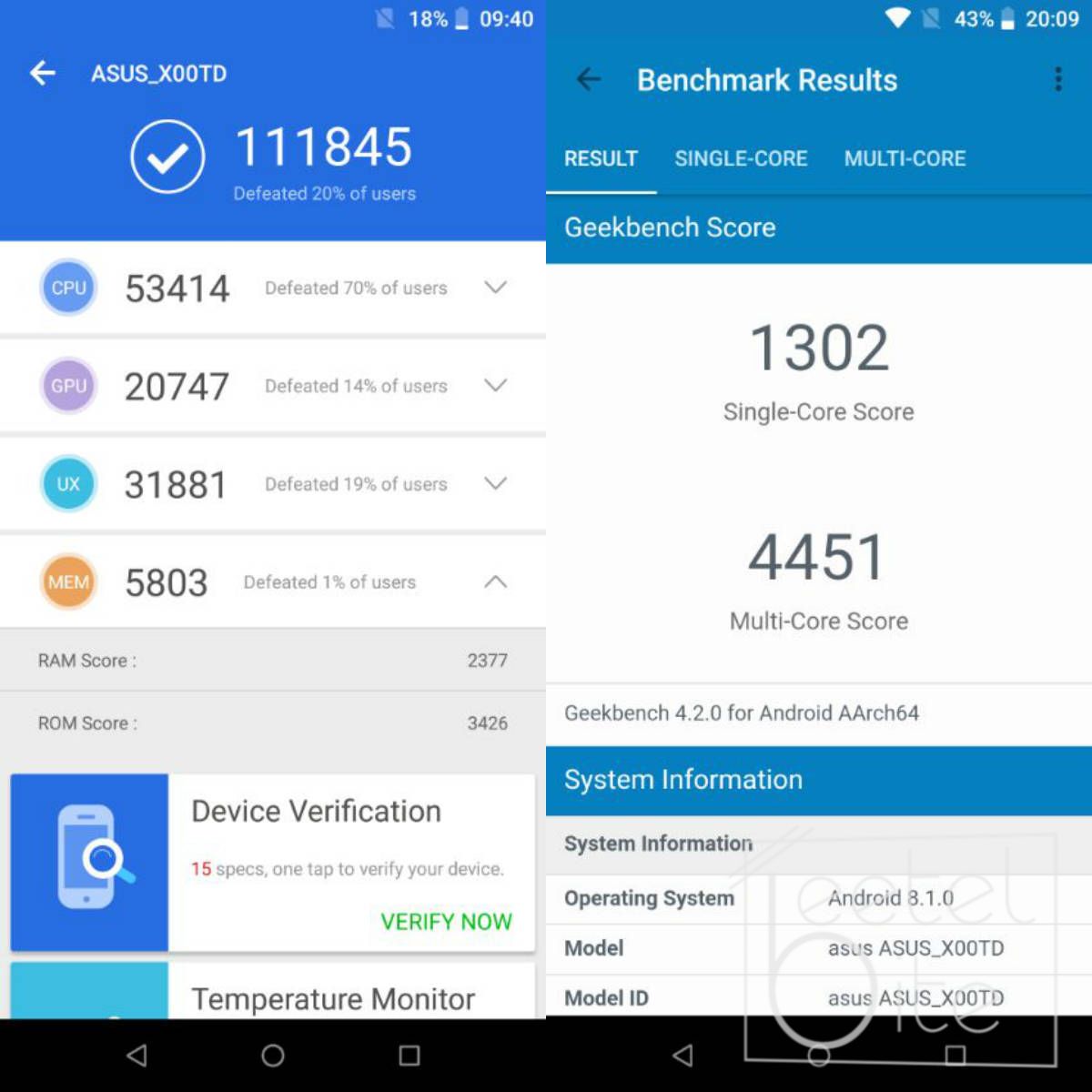
 Zenfone Max Pro M1 AnTuTu and Geekbench
AnTuTu v7(Left) and Geekbench 4(Right)

We ran our usual AnTuTu benchmarks and the GeekBench benchmark to evaluate the performance of the phone. The AnTuTu 7 yielded a score of 111845 while GeekBench gave it a solid single core score of 1302 and multi-core score of 4451. The performance numbers of the device are higher compared to its competition.

The phone exhibits no lag while long usage duration and the internals remains cool even at heavy gaming. In light gaming such as Temple Run and Hill Climb Racing, the phone runs smoothly and cool. The situation is different with heavy games like PUBG. While the phone doesn't lag it heats a bit.

Display

The smartphone has an average 5.99-inch display with 18:9 aspect ratio. A 5.99-inch display would seem like a large display, however, that's average by 2018 standards. Also, it's an 18:9 aspect ratio display, so it doesn't feel so huge in hand. It also has a rounded display making it look and feel better. The display gets not so quite low and highly bright. The colours are average but considering the price tag, it is good enough. The sunlight readability is great. Coupled with the 18:9 aspect ratio display, the browsing and consuming content on this smartphone is a delight.

Camera

The Asus Zenfone Max Pro M1 features a dual rear camera setup. The setup consists of a 13-megapixel rear camera f/2.2 aperture with a 5-megapixel f/2.4 aperture sensor. For the selfies, it packs an 8-megapixel front camera with LED flash. The camera sensors are good on paper, how the secondary rear camera could have a bigger sensor. However, not all depends on the sensor so let's see.

The indoor shots by the device are impressive and the colours feel quite good. Also, the focus on the indoor shots and the stabilization of the camera is good. The outdoor images from the smartphone are really good and colours are satisfying. The details and the exposure is also good. However, there is no bokeh effect, at least one that is noticeable despite the dual camera setup.

Zenfone Max Pro M1 Camera Samples
Outdoor

The 8-megapixel front-facing camera with LED flash has the same story. The photos from the front camera are same as the back camera except for the little unnatural colours. Rest the camera quality is the same as the back.

The camera quality of the smartphone quite impressive. The true camera buffs might like this smartphone. Also, the company has to post an update to improve the low-light performance and overall camera improvements which our unit didn't get at the time of writing the review. So expect the camera performance to improve.

Battery

Packing a 5,000mAh battery, the expectations are quite high. Also, its a device of the Zenfone Max series, so expectations are even higher. The device charges adequately fast with the included 2amp charger. It took the smartphone to completely charge from 0-100 around 2 hours 30 mins. The smartphone lasts almost two days with average usage which is excellent.

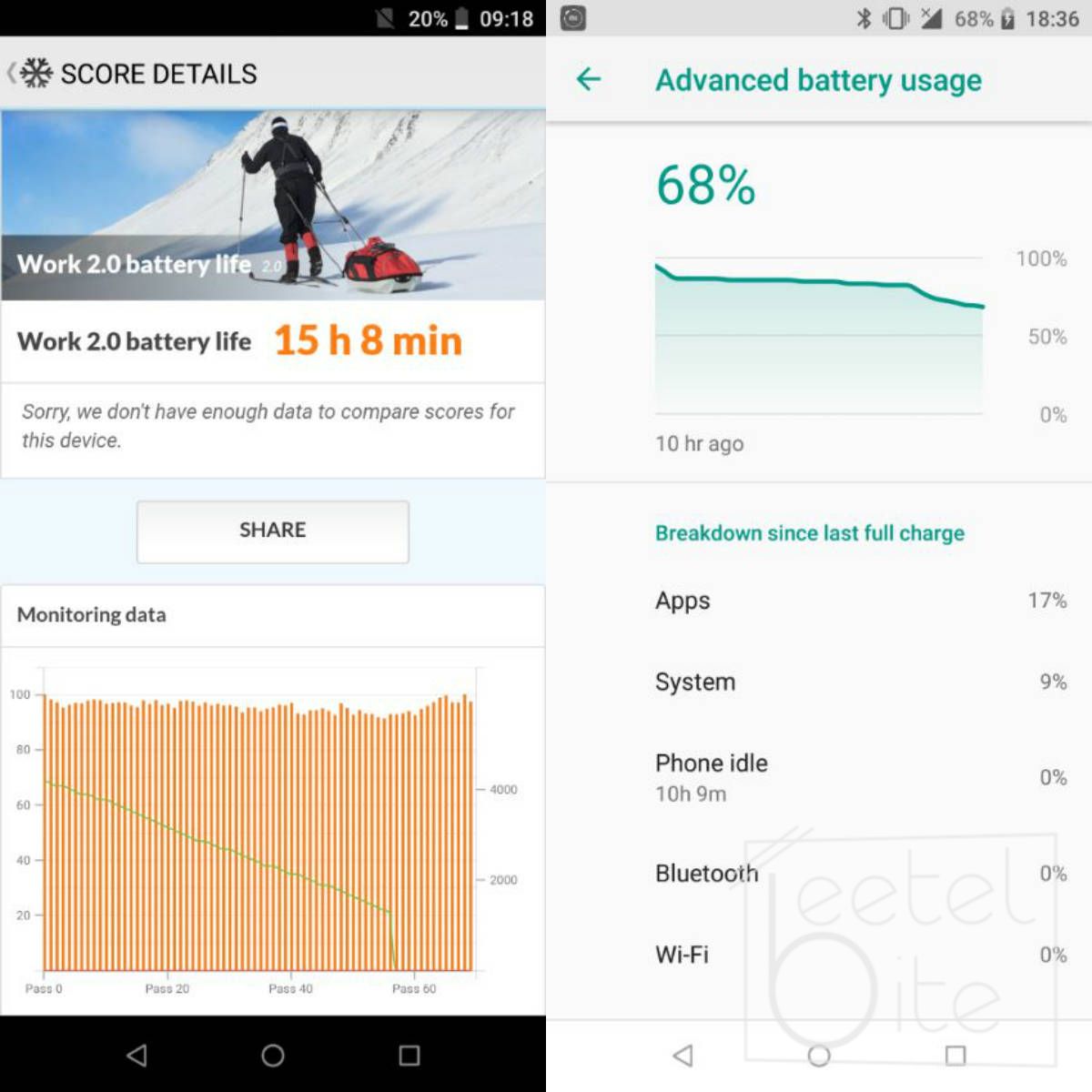
 Zenfone Max Pro M1 Battery and PC Mark
The PC Mark shows a lot less time than real usage due to the display not getting as lower than other phones.

We ran the PC Mark’s Work 2.0 Battery Life test which subjects the phone to extreme usage and finds out the battery life in that condition. The device yielded a result of 15 hours and 8 minutes. Which is lower considered the competition, however, the smartphone lasts longer than those smartphones. This is due to the screen not being able to get lower than other competing phones. Personally, I don't think this should affect daily performance.

Conclusion

Zenfone Max Pro M1
The Zenfone Max Pro M1 is truly the budget king we have been looking for.

The Asus Zenfone Max Pro M1 comes with a starting price tag of Rs 10,999 for the 3GB RAM and 32GB storage variant. However, the upgraded 4GB RAM model with 64GB storage costs Rs 12,999. Considering the price tag, the smartphone is a great deal. Better than any we have seen. The smartphone is amazing compared to its competition. The smartphone also packs Face Unlock, however, at the time of writing this review, the update was not live it. In simple words, the smartphone is the best one you can buy at this range.

Edit: The smartphone got an update after this review was written. The update enabled the Face Unlock on the smartphone. In our testing, we found that the face unlock on the Asus Zenfone Max Pro M1 isn't as good as the competition. It doesn't recognize the face half of the time and when it does it takes longer than phones like the Redmi Note 5. However, the smartphone was already impressive in our testing, so this shouldn't change anything. You can continue to use the Fingerprint sensor which is quite fast and responsive.

Micromax Canvas 2 Plus (2018) launched: Price, Specifications and Alternatives

Micromax Canvas 2 Plus (2018) features an 18:9 display

Micromax has launched the Canvas 2 Plus (2018) in India today. The smartphone is a successor to the Canvas 2 Plus and it now comes with an 18:9 display to match today's smartphone standards. The budget smartphone is launched with a price tag of Rs. 8,999 and will be available in Jet Black and Matte Black colour variants.

As far as the specifications are concerned, the Micromax Canvas 2 Plus (2018) features a 5.7-inch IPS LCD display with a resolution of 720x1280 pixels and an 18:9 aspect ratio. The smartphone is powered by a 1.3GHz quad-core SoC coupled with 3GB of RAM. The dual-SIM handset comes with 32GB of internal storage which is further expandable using a microSD card. The Canvas 2 Plus (2018) runs on Android 7.0 Nougat and it is backed by a 4,000mAh battery.

On the optics front, the Micromax Canvas 2 Plus (2018) sports a 13-megapixel rear-facing camera. Up front, there is an 8-megapixel selfie shooter.

Alternatives

If the Micromax's latest budget smartphone, Canvas 2 Plus (2018) failed to impress you, here are some alternatives available to buy right now.

Also Read: Xiaomi Mi A2 launch date, specifications, expected price and alternatives in India

Xiaomi Redmi 5

Xiaomi Redmi 5 features an 18:9 display up front

Xiaomi Redmi 5 is one of the best alternatives to the Micromax Canvas 2 Plus (2018). The Redmi 5 is powered by the Qualcomm Snapdragon 450 SoC. The smartphone features a 5.7-inch HD+ IPS LCD display with an 18:9 aspect ratio. Xiaomi Redmi 5 is currently available at a starting price of Rs. 7,999.

10.or G

10.or G Back 2
10.or G sports a dual-camera setup at the back

10.or G is not as impressive in terms of looks but it does have some powerful internals. The 10.or G sports a 5.5-inch FullHD IPS LCD display. The smartphone is powered by the Qualcomm Snapdragon 625 SoC coupled with 3GB or 4GB of RAM. The dual-SIM handset comes with 32GB or 64GB of storage. 10.or G starts at a price of Rs. 7,699.

Xiaomi Redmi Note 5

Xiaomi Redmi Note 5
Xiaomi Redmi Note 5 runs on MIUI 9 out of the box

If you are willing to spend Rs. 1,000 more, the Redmi Note 5 can be a great choice. The smartphone comes with an 18:9 display and it is powered by the Qualcomm Snapdragon 625 chipset. The Redmi Note 5 is available in India at a starting price of Rs. 9,999.

Google adds more devices to the Android Enterprise Recommended Program

Nokia 6 4
Nokia 6 is now a part of Google's Android Enterprise Recommended Program

Google recently introduced a program called Android Enterprise Recommended Program. Under this program, Google collaborates with separate OEMs in order to list down the smartphones that can be used for business purposes. As of today, there are 7 OEMs with 17 different devices under this program.

Here's a complete list of devices that are now a part of Google's Android Enterprise Recommended Program:

  • BlackBerry KEY2
  • Huawei P20
  • Huawei P20 Pro
  • Huawei MediaPad M5 8.4
  • Huawei MediaPad M5 10.8
  • Moto G6
  • Moto G6 Plus
  • Moto Z3 Play
  • Nokia 3.1
  • Nokia 5.1
  • Nokia 6
  • Nokia 7 Plus
  • Nokia 8 Sirocco
  • Sharp Aquos SH 10-K
  • Sony Xperia XZ2
  • Sony Xperia XZ2 Compact
  • Sonim XP8

In case you are wondering how these devices made it to the list and what is the criteria, there is a minimum set of specifications set by Google. The device must have at least 2GB of RAM and 32GB of onboard storage. On the optics front, the device should have a selfie camera of at least 2-megapixel while the rear one has to be of at least 10-megapixels.

Also Read: Asus ZenFone Max Pro M1 receives FOTA update with VoLTE support and much more

The smartphone or tablet should be capable of providing a battery backup of minimum 8 hours. Also, the OEMs should ensure that the device gets security updates within a 90-day timeframe and the company should guarantee at least one major Android update.

Apparently, every flagship including some mid-range devices is capable of making it to this list. However, it depends on the OEMs whether they want their devices to be rolled out for the program or not.

You will never get to know who took screenshots of your Instagram stories

Instagram
Instagram is a popular social-networking app

Instagram, a few months ago revealed that they are testing out a feature where users will get notified if anyone takes a screenshot of their stories. In a recent report, Instagram confirmed that they will be no longer testing out the feature and it will never make its way to the app any time soon.

As per a report by BuzzFeed News, Instagram confirmed that they will no longer be testing out the feature. The company announced back in February that they will be bringing the screenshot notification feature to their app soon. However, now the plans seem to be dropped and people who were excited about this feature will be disappointed.

Instagram's competitor Snapchat has this feature for quite a while now. The company introduced the stories feature only after Snapchat started to gain popularity. Now the Facebook-owned app wanted to copy the screenshot notification feature as well.

Also Read: Fortnite now available for Nintendo Switch: Here’s what you need to know

Instagram recently introduced the Swipe Up feature where viewers can swipe up on some stories which will then redirect them to a link provided by the uploader. The feature was really helpful for YouTubers, Bloggers and Businesses as they can give direct links to their fans via Insta Stories. A recent change in the app also allowed users to purchase items directly from stories uploaded by various businesses. In the latest update, the social-networking app brought in a feature where users can make the stories where they are mentioned as their stories.

Asus ZenFone Max Pro M1 receives FOTA update with VoLTE support and much more

Zenfone Max Pro M1
Asus Zenfone Max Pro M1 runs on Android 8.1 Oreo out of the box

Asus has rolled out a new FOTA update for the recently launched Asus ZenFone Max Pro M1. With this new system update, the company is aiming towards improving the overall user experience of the smartphone.

The new FOTA (Firmware Over The Air) update updates the Google Security patch to May 2018. One of the biggest changes in the update will make Airtel, Idea and Vodafone users happy as the phone now finally supports VoLTE on these networks. Apart from the changes, the update improves the response speed of the fingerprint scanner. The update also improves the front-facing camera performance.

Asus ZenFone Max Pro M1 users should receive the OTA notification soon. To check for updates manually, head over to Settings>System>System Update and tap on Check for updates. If you have not received the update yet, you can manually flash the latest firmware by downloading the file from here.

Also Read: Asus Zenfone Max Pro M1 Hands-on Review: Best Budget Phone?

Asus ZenFone Max Pro M1 Specifications

Zenfone Max Pro M1
Zenfone Max Pro M1 features a dual-camera setup at the back

In terms of specifications, the Asus ZenFone Max Pro M1 features a 5.99-inch IPS LCD display with a resolution of 1080x2160 pixels and an aspect ratio of 18:9. The smartphone is powered by the Qualcomm Snapdragon 636 SoC. The dual-SIM handset comes in three variants, 3GB+32GB, 4GB+64GB and 6GB+64GB. The smartphone runs on Android 8.1 Oreo out of the box. Under the hood, there is a 5,000mAh battery powering up the internals.

As for the cameras, the Asus ZenFone Max Pro M1 sports a 13MP+5MP dual-camera setup at the back. Up front, there is an 8-megapixel selfie snapper.