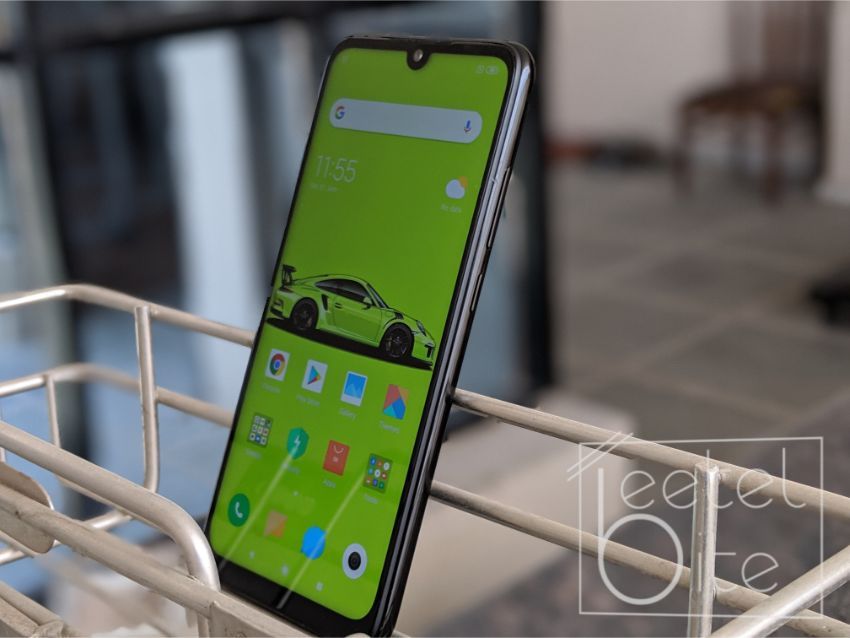
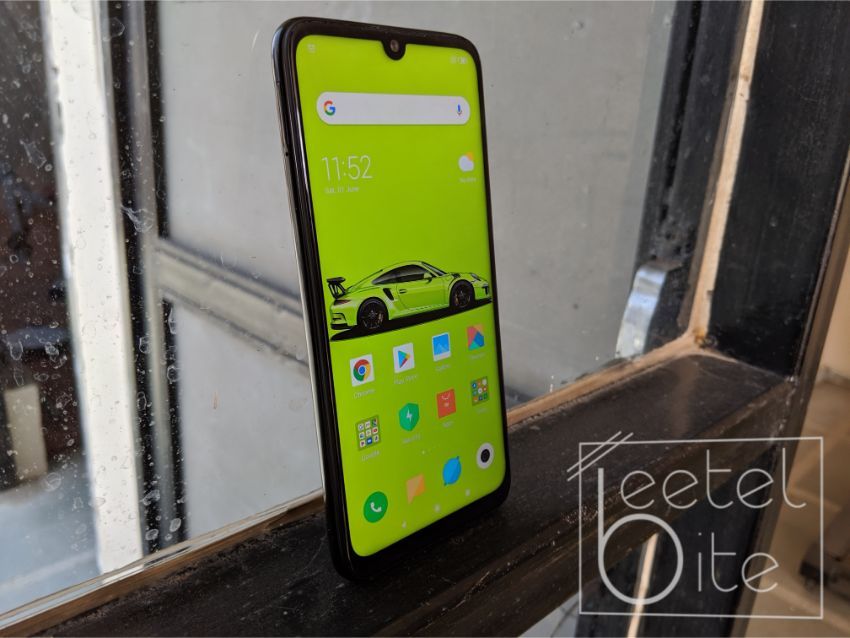
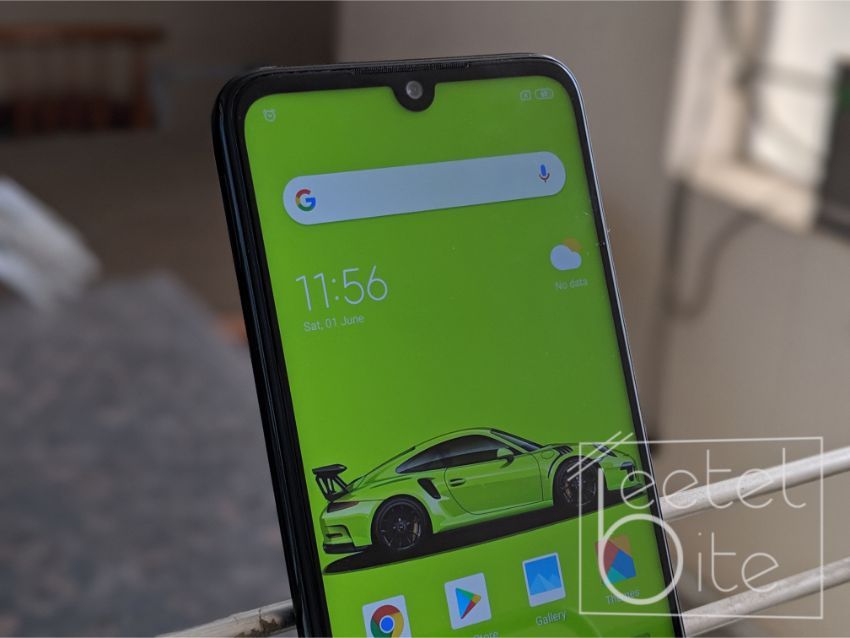
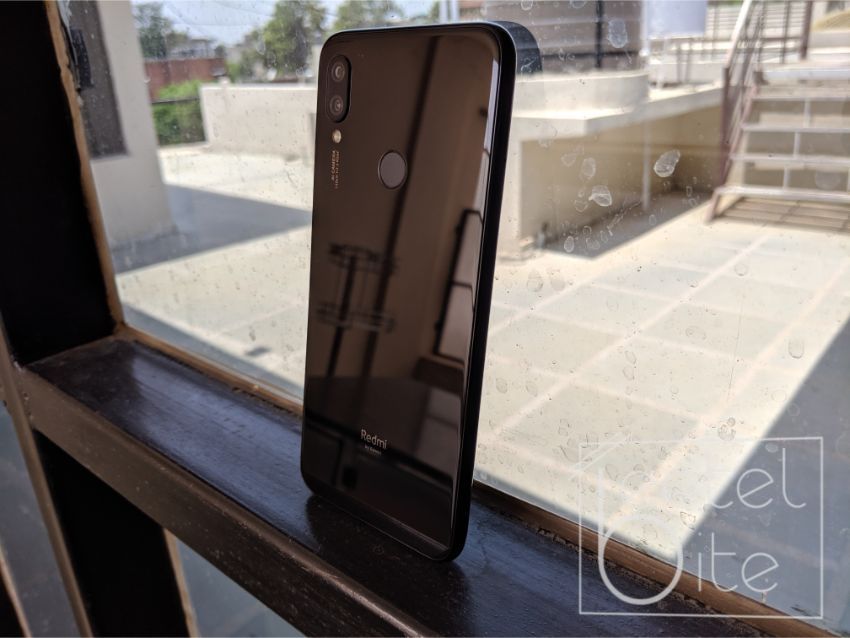
Redmi Note 7 Pro comes with a waterdrop style notch.
Every month there are dozens of smartphones launching in different pricing categories. The one price bracket that gets the most attention is the smartphones under Rs. 15,000. So, we have prepared a list of top five smartphones under Rs. 15,000 available in India right now.
Redmi Note 7 Pro
While the Redmi Note 7 Pro was launched a few months ago, it is still one of the best smartphones in the price range. The device comes with a 6.3-inch FullHD+ display with a waterdrop style notch up front. It is powered by the Qualcomm Snapdragon 675 chipset coupled with up to 6GB of RAM. It is available at a starting price of Rs. 13,999.
Realme 3 Pro
Realme 3 Pro comes with a gradient back design.
Realme India recently launched a new mid-range smartphone, the Realme 3 Pro. The smartphone comes with a much powerful Qualcomm Snapdragon 710 processor. It comes with up to 6GB of RAM and 128GB of onboard storage. One of the key highlights of the smartphone is the 32-megapixel selfie camera. All of this comes at a starting price of Rs. 13,999.
Samsung Galaxy M30
Samsung Galaxy M30 sports a Super AMOLED Infinity U display.
While the Samsung Galaxy M30 might not be able to defeat its competition in terms of performance, it does come with a much better display when compared to the others. It sports a 6.4-inch fullHD+ Super AMOLED Infinity-U Display. The device is powered by the octa-core Exynos 7904 processor paired with up to 6GB of RAM. It is available at a starting price of Rs. 14,990.
Asus ZenFone Max Pro M2
Asus ZenFone Max Pro M2 sports a dual-camera setup at the back.
Asus ZenFone Max Pro M2 is powered by the Qualcomm Snapdragon 660 chipset paired with up to 6GB of RAM. The device runs on Google's Android 9 Pie, which has a near to stock user interface (UI). Asus ZenFone Max Pro M2 is currently available at a starting price of Rs. 11,999.
Redmi India recently launched the Redmi Note 7S in India, which is basically the Redmi Note 7 with a 48-megapixel camera. It comes with the same Qualcomm Snapdragon 660 processor coupled with up to 4GB of RAM. All of this comes in at a starting price of Rs. 10,999.
Tiny Royale is a new battle royale game to compete against PUBG and Fortnite.
Since the launch of PUBG Mobile, the craze for battle royale games has increased more than ever. While there are dozens of battle royale games on the Play Store already, Zynga has launched a new game called Tiny Royale on the recently launched Snap Games gaming platform.
As the name suggests, Tiny Royale will be lighter than games like PUBG Mobile, Fortnite and Call of Duty: Mobile. This will make it easier for people to download as well as play on some of the low-end smartphones. Also, the game uses a portrait style gameplay instead of the traditional landscape.
As for the gameplay, players can choose custom characters and play solo, duo or in a squad. Unlike PUBG and Fortnite, the matches on Tiny Royale are much faster as they last just for two minutes. However, just like the other games, the users will need to grab the supplies and be the last man or team standing to get a win.
In order to keep the match time short, the game only throws up to 30 people in the battleground. Players can go in a team of up to four people.
Zynga has also announced that they will soon be bringing a ranked matchmaking feature called Tiny Royale Leagues. With the help of the feature, players will be placed in group of 100 and broken out into 20 tiers. Once they manage to climb up the rankings, they will be rewarded with trophies.
Vodafone India has just announced a new RED postpaid plan for Rs. 999. The plan will allow users to add up to five connections and it will offer up to 80GB of 4G data. In order to add more people to the plan, users will need to pay a rental fee of Rs. 200 per person apart from the monthly Rs. 999 bill.
In order to make the plan more attractive, the telecom operator has bundled a set of offers with the plan. The plan brings access to streaming services like Amazon Prime Video, ZEE5, Sony LIV and more. Apart from that, users will get data roll-over facility as well as Vodafone Mobile Shield.
The primary motive of the plan is to provide users with unlimited voice calls (local, STD and national roaming) and 100 SMS messages per day. As for the 4G data, the primary user on the family plan will get 80GB data per month with roll-over of up to 200GB. As for the other members, they will get 30GB data per month with 50GB roll-over facility.
As mentioned earlier, the users will get free one year access to Amazon Prime along with free access to Vodafone PLAY, ZEE5, Sony LIV, Shemaroo, Hoi Choi, Sun NXT and Alt Balaji.
The older Vodafone RED plans come ranging from Rs. 399 all the way up to Rs. 899. While they offer lesser data or inability to add more connections, the new RED Rs 999 plan is perfect for a family with up to 5 family members.
Instagram has announced a new feature added to its already popular Music Stories feature. Now, the app allows users to post the lyrics of the songs that they have added to the stories. Obviously, the new feature is available only in countries where the Instagram Music option is available. These countries include the US, Germany and France.
While the feature is just to bring the lyrics on-screen, people might use it as a TikTok alternative to showcase their lip-syncing talents. The feature allows users to show the lyrics of the song that is being played. Users can even switch between different fonts to spice up the stories. Even the singer Billie Eilish demoed the feature in one of her stories.
“Add a music sticker and search for a song. If lyrics are available for the song you select, you can choose different fonts and designs for them, and you can edit which part of the song you want to play. When someone watches your story, they can tap the lyrics to learn more about the artist or listen to more of the song,” says the Instagram support page.
The Facebook-owned company first made the announcement via their official Twitter handle and later Eilish helped to broadcast the message through her story. In order to get the feature, the users should be in one of the above-mentioned countries and they should also update their Instagram application on their Android or iOS device.
Xiaomi Poco F1 is one of the best smartphones in the price segment.
Xiaomi, almost a year ago, came up with a new brand called Poco or Pocophone in order to bring flagship grade hardware at a much reasonable price point. When the Poco F1 was launched with a price tag of Rs. 20,999, it shook the whole industry. Now with the Redmi K20 and K20 Pro on their way, the company decided to bring the Poco F1's price down.
Poco F1 received its first price cut back in December, where the phone came down to just Rs. 19,999. Now, with the latest price cut, the base variant with 6GB RAM and 64GB storage costs just Rs. 17,999. This just might be the best time to grab a new Poco F1 as it can still last more than two years due to the flagship grade internals inside.
The price of the 6GB RAM + 128GB storage variant has also dropped and it is now available for just Rs. 20,999. However, the prices of the 8GB RAM variant and the Armoured Edition still remain the same at Rs. 27,999 and Rs. 28,999 respectively.
As far as the specifications are concerned, the Poco F1 sports a 6.18-inch IPS LCD display with a resolution of 2246x1080 pixels. The smartphone is powered by the Qualcomm Snapdragon 845 processor coupled with Adreno 630 GPU. It packs in up to 8GB of RAM and 256GB of onboard storage. All of this is backed by a 4,000mAh battery, which supports Quick Charge 3.0.
Apple recently announced the latest iteration of its mobile operating system, the iOS 13. While the WWDC announcement really pumped up the iOS users, Google also rolled out the Android Q Beta just a few weeks ago for the Android fanboys. With both the new operating systems out in the wild, here's a head to head comparison.
Dark Mode
Dark Mode saves battery on phones with OLED screens.
If there is one thing common in both the platform's latest update, it has to be the Dark Mode. After years of requests, both the companies have finally provided a true Dark Mode on their platforms. However, iOS takes a lead here as it has managed to truly dark mode all the system applications. Whereas, on the Android side, stock apps like Gmail and Chrome still lack the feature.
Photos
Google Photos offers a much better backup solution.
One of the best changes brought with the iOS 13 update is the new Photos app. The company has improved it drastically by giving it a complete overhaul. They even provide much better editing tools on the go. However, Android still manages to win this round due to a couple of handy things. The Google Photos app gives more free storage for backing up the data when compared to iCloud. Also, Google Assistant brings up some of the old memories constantly and makes customised videos to share automatically.
Mobile apps on PC
Project Catalyst has been in works for years.
When we speak of the top 5 features of iOS 13, one of them has to be the new Project Catalyst. The project allows iOS and Mac users to run the iOS applications on their Mac desktops or laptops. While Google has tried it before with the ChromeOS, Apple still gets a lead here as Mac is more popular around the globe.
Sign in with Apple will be available on most iOS apps.
Every year, Google and Apple, both work on the privacy of users with their latest versions of Android. In my opinion, this round has to be a tie-breaker as both the smartphone giants have worked hard to maximise the security level. Google has now provided better control over the mic and camera. Apple, on the other hand, has introduced something called Sign in with Apple, which allows users to sign in to new apps without needing to give away any private information.
Redmi Note 7 Review: Redmi Note 7 was the company’s first smartphone after detaching its name from the Xiaomi brand. From this phone onwards all phones that the company launches will be branded as Redmi by Xiaomi instead of Xiaomi Redmi.
The phone features a lot of nice hardware and a nice design. The Snapdragon 660 though not super powerful is a decent performer. The company seems to have had plans to make the Redmi Note 7 the new budget smartphone king. However, the world doesn't revolve on Xiaomi's will. Let's see whether Xiaomi nailed it with this one or not?
Redmi Note 7
The Redmi Note 7 comes with a Qualcomm Snapdragon 660 processor. This is coupled with 3GB/4GB of RAM and 32GB/64GB of internal storage depending on the variant you choose to purchase.
The smaller notch on the Redmi Note 7 looks better.
The device sports a 6.3-inch (2340 x 1080 pixels) 19.5 aspect ratio IPS LCD display. For optics, it features a dual camera set up at the back, consisting of a 12-megapixel, f/2.2 aperture main sensor with PDAF along with a 2-megapixel, f/2.4 depth sensor. For selfies, it packs a 13-megapixel sensor with an f/2.0 aperture sensor. All of this is backed by a 4,000mAh non-removable battery.
The device sports a glass like looking polycarbonate back panel that comes in a number of paint jobs like most other smartphones these days. It runs Google’s Android 9.0 Pie operating system with the company’s own MIUI skin on top. The phone sports a hybrid dual SIM card slot, 3.5mm headphone jack, a USB-Type C port for charging and data syncing and a fingerprint sensor at the back.
Redmi Note 7 Review: Design
The design of the Xiaomi Redmi Note 7 is really good. The back panel is made out of a thin layer of polycarbonate. Our review unit was the Lemonade Blue Variant, which is super flashy. If you want something less eye-catching, the Caviar Black colour variant is a good bet for you.
The bezels on the Note 7 are small enough not to be noticed.
The speaker grille is above the display whereas the 13-megapixel front camera is housed.
The back looks like glass but it is not.
Coming to the back, Redmi Note 7 sports a dual camera setup paired with an LED flash aligned vertically on the top left corner. The dual camera unit has a small bump which gets aligned flat with the included cover. The fingerprint sensor is towards the top of the device aligning perfectly in your hand if you have regular sized hands.
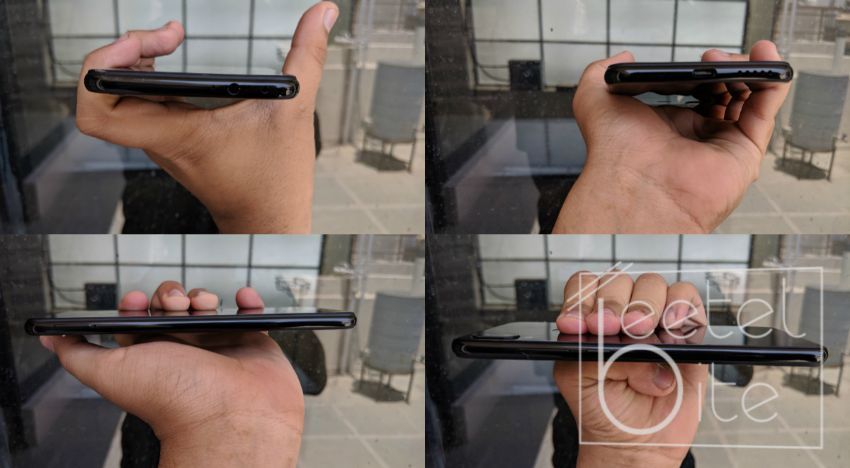
Top, Bottom, Left, Right.
The right edge consists of the volume rockers and the power button. The top edge holds the microSD card slot with IR blaster and secondary microphone. The left edge sports only the SIM card tray while the bottom edge has the USB-Type C port along with the speakers. The primary microphone grille has been made to look the speaker grille giving the phone symmetrical look which improves the look if you ask me.
Overall, the design of Note 7 feels pretty good. It’s subtle but not dull enough to go unnoticed. The smartphone feels comfortable in hand if not premium at the most.
Redmi Note 7 Review: Software
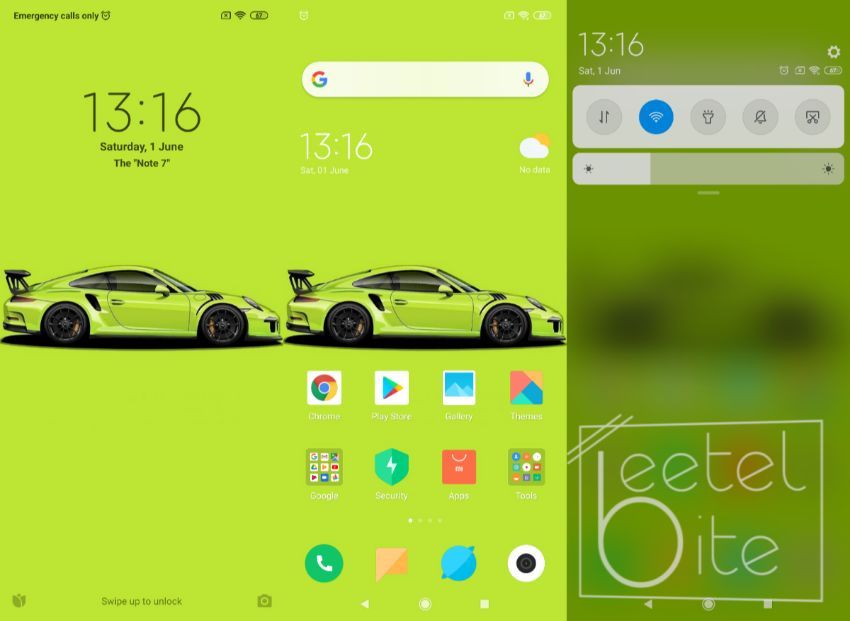
The Redmi Note 7 runs Google’s Android 9.0 Pie with the company’s own MIUI 10.2 skin on top. Xiaomi's MIUI is one of the most popular custom Android skins on the market. Love it or hate it, its features are useful and its colourful look with heavily modified Android experience is a bane for many users.
The MIUI is the software you might like depending on your preferences.
It offers a heavily customized Android experience with its own icon packs and many additional apps by the company. Most of these apps cannot be uninstalled. Between the colourful UI and no app drawer, whether you like it or not depends on your personal wish.
Overall, with its MIUI 10, Xiaomi has made an effort to satisfy all the users but has also made the UI even more complex and different from the stock Android build, which is a negative for me.
Redmi Note 7 Review: Performance
Performance is a major area of concern on any device, the same goes for the Redmi Note 7. It is powered by a Qualcomm Snapdragon 660 processor coupled with an Adreno 512 GPU and 3/4GB of RAM. Our review unit came with 4GB RAM and 64GB of internal storage.
AnTuTu (Left) GeekBench (Right).
We ran our usual benchmark tests to evaluate how the device performs. On AnTuTu the device was able to score 141411, which is great considering its price point.
On GeekBench it managed to get a single core score of 1632 and a multi-core score of 5154. The performance numbers of the device on paper are around the same for the competition.
While playing light games such as Temple Run and Crossy Chicken, the phone runs flawlessly. Heavy games like Asphalt 9: Legends, PUBG Mobile and Call of Duty also run without any hiccup with some minor heating.
Redmi Note 7 Review: Display
The display of the Note 7 is good enough.
Redmi Note 7 sports a 6.3-inch Super AMOLED display with a resolution of 2340×1080 pixels and an aspect ratio of 19.5:9. The brightness levels are able to get super low and immensely high depending on the situation. The colours are more vibrant than most other smartphones in this price range, which is not something everyone will like.
Redmi Note 7 Review: Camera
Redmi Note 7 features a dual camera setup at the back. There is a 12-megapixel, f/2.0 aperture main sensor with PDAF along with a 2-megapixel, f/2.4 aperture depth sensor. For selfies, it packs a 12-megapixel sensor with an f/2.2 aperture sensor. I personally would have preferred a wide angle or a zoom lens but the depth sensor will also do.
1 of 8
Low light (Night Mode: Left and Regular: Right)
Outdoor
Indoor
Indoor
Outdoor
Images that were taken with the rear camera come out decently good. The images have good details and come out very sharp. Due to a dedicated depth sensor, the focus and details of the images are exceptionally good. However, the colours are a little brighter and sharper making the images look a little touch-up.
Default Beuty Mode average setting (Left), No beauty mdoe (Center), Max beauty mode (Right).
Coming to the front camera, that is a completely different story. The camera app has a smart beauty mode turned on by default, which tries to make you look better. However, all it goes is makes the skin tone a little brighter. It is annoying to turn it off every time you open the camera. Apart from that the camera is good enough with the details being a little lower than expected.
Overall, the camera quality of the Redmi Note 7 is not that impressive. However, it being the lower version with the Redmi Note 7 Pro being the one with the actual impressive setup, the camera of the Note 7 will not impress you but at the same time it will not disappoint you also.
Redmi Note 7 Review: Battery
Redmi Note 7 is backed by a 4,000mAh battery Li-Po, which easily lasts more than a day on a single charge. Charging time with the included charger is around 120-150 minutes, which is great. If you are not a heavy user, you can easily make it work till the end of the workday.
Charging Animation (Left), PC Mark Work 2.0 (Center), Battery Optimization (Right).
We ran PCMark’s Work 2.0 Battery Life test, which subjects the phone to heavy usage and finds out how the battery performs in those conditions. The device yielded a result of 14 hours and 25 minutes, which is quite good in comparison to similar battery capacity smartphones.
Redmi Note 7 Review: Verdict
The Redmi Note 7 has a tough competition but is a good option to consider.
Redmi Note 7 starts at Rs. 9,999, for the 3GB RAM and 32GB storage variant. The bigger 4GB RAM and 64GB storage variant are priced at Rs 11,999. The competition is tough at that price range which makes the decision very hard.
However, considering this is one of the best devices I have tried out at this price point. I can say that you will not regret purchasing the device as of now.
Realme finally rolls out Android 9 Pie based ColorOS 6 Beta update for Realme 1.
While Android Q is just around the corner, Realme prepares some of its budget-oriented smartphones for the Android 9 Pie update. The much popular Realme 1 and Realme U1 have started receiving last year's Android via the company's ColorOS 6 Beta program. The update brings all the goodness of Pie with a couple of other customisations.
Realme 1 and Realme U1 users can register for the Beta program and install the update right away. This way, users will be able to report any issues or bugs before the update reaches the masses. The final version is expected to come out in approximately three weeks.
In case you are willing to try out the latest version of Android along with the company's new custom UI skin, you can enrol for the beta program via the links given below.
We highly recommend not trying this on your primary device as Beta versions often have issues. Also, do take a complete backup of your data to avoid any chances of data loss.
As for the changelog, the ColorOS 6 beta update brings a ton of changes to the whole user interface. It finally gets an app drawer with a few new live wallpapers for better personalization. They have even updated the notification icons in the status bar to match the whole overhaul. Additionally, it also brings Nightscape Mode for improved low light shots as well as HAL3 support for better third-party camera support.
Google rolls out Android Q Beta 4 for Pixel devices.
Google has just released the Android Q Beta 4 update today but it seems to cause issues for some users. The company rolled out the Beta 3 back in May during its I/O developer conference and the Beta 4 update aims to solve many of the issues found on the older versions. The new update brings a more polished experience with final developer APIs.
Google has made the Beta 4 update available for all the Google Pixel devices. However, the update is causing problems as reported by some of the Pixel owners. The users are complaining of their phones being stuck while rebooting or just booting into recovery mode with a failed update error. Although the boot loop can be fixed by reinstalling the software, it will cause a total data loss.
According to the users, the issue is not widespread and it is affecting only a small number of people. So, we highly recommend you to avoid installing the update right away. Google might be working on a fix already and they should roll out another update soon.
As far as the changelog is concerned, the Android Q Beta 4 brings a few minor aesthetic changes along with bug fixes and improvements. The update adds new accent colours for the UI, namely, Space, Cinnamon, Ocean and Orchid. Even the notifications have received improvements such as the introduction of "Prioritized" or "Gentle" instead of the earlier "Interruptive" and "Gentle."
Huawei Maimang 8 is powered by the company's own Kirin 710 processor paired with an ARM Mali-G51 MP4 GPU.
Huawei Maimang 8 with waterdrop style notched display, triple rear cameras and a capacitive fingerprint sensor launched in China. The device seems like a rebranded Huawei P Smart+ (2019) smartphone. The only difference is the increased RAM and internal storage modules.
This shows the company's determination to still release new smartphones in the market even though it is battling the US authorities at the same time.
Huawei Maimang 8 is priced at CNY 1,899 (approximately Rs 19,000) for the 6GB RAM/128GB internal storage variant. It is offered in two colour options Midnight Black and Sapphire Blue. The device is currently available on Huawei Mall and other major e-commerce platforms for pre-ordering and will go on sale starting June 12.
Huawei Maimang 8 sports a 6.21-inch full HD+ display with a 2340x1080 pixels and 19.5:9 aspect ratio. It is powered by the company's own Kirin 710 processor paired with an ARM Mali-G51 MP4 GPU. The device comes with 6GB of RAM along with 128GB of internal storage expandable up to 512GB via a microSD card.
The device runs the company's own EMUI 9.0 based on Google's Android 9.0 Pie operating system. All of this is backed by a 3,400mAh non-removable battery.
In terms of optics, the Maimang 8 sports a triple camera setup on the back consisting of a 24-megapixel primary sensor paired with a 16-megapixel ultra wide-angle sensor and a 2-megapixel depth sensor. On the front, the device features an 8-megapixel selfie shooter.