Redmi might soon unveil a smartphone with a 48-megapixel sensor
Xiaomi has used Redmi as a label for quite some time now. Redmi used to denote the budget-oriented smartphones by the company. The Chinese smartphone manufacturer has now announced that they will be using Redmi as their new sub-brand.
Redmi series has been known for budget-oriented smartphones, which offer a great value for your money. The company recently launched the Redmi Note 6 Pro under the branding. Now, under the sub-brand Xiaomi is planning to launch a phone with a 48-megapixel camera at the back.
The company has not yet openly discussed it plans related to Redmi. However, the company will be hosting a press conference on January 10, where they will elaborate about their plans related to the Redmi sub-brand.
Xiaomi currently owns a couple of sub-brands, one of the more recent ones being Pocophone. The sub-brand has launched only one phone till date and has seen a lot of success. Some of the other sub-brands of the company include Haumi and more.
The image released by Xiaomi also gives a hint on their upcoming smartphone. The text 4800 on the image might denote that the smartphone manufactueren is soon launching the much anticipated 48-megapixel camera phone under its new sub-brand. However, 4800 could also mean the battery size in the next phone.
Samsung Galaxy Note 9 sports a dual-camera setup at the back with variable aperture
Samsung Galaxy Note 9
Samsung Galaxy Note 9 offers one of the best image quality when it comes to smartphone photography. The phone uses a dual-camera setup at the back consisting of two 12-megapixel sensors. One of the sensors also feature variable aperture which helps a lot in low light photography.
Huawei Mate 20 Pro
Huawei Mate 20 Pro sports a triple camera setup at the back
Huawei recently launched the Mate 20 Pro smartphone in India. The phone comes with a triple camera setup powered by Leica. The three sensors at the back include, a 40-megapixel sensor, a 20-megapixel sensor and an 8-megapixel sensor. All of them combined deliver a great image quality.
Google Pixel 3
Google Pixel 3 depends more on the software than on extra sensors
Google Pixel series are known for delivering some of the best photos. Pixel 3 is Google's latest offering and it still uses a single camera at the back. Google is able to do all the magic in the software itself, which allows for such pretty shots.
Apple iPhone XS
Apple iPhone X is one of the most expensive smartphones
In case you want a phone that runs on Apple iOS, the iPhone XS is the best one you can get. The phone comes with a dual-camera setup at the back. It is powered by the Apple A12 Bionic chipset which allows for a great image processing. iPhone XS Max is also known for its video recording capabilities as they are much better than its Android counterparts.
Xiaomi Poco F1
Poco F1 is one of the best options under Rs. 25,000
If the above mentioned smartphones are heavy on your pocket, you can even trust the Poco F1. While the phone is more popularly known for its performance, the dual-camera setup at the back also performs quite well. The flagship Snapdragon 845 is able to do some great image processing and even the sensors used are pretty good. Interestingly, the phone came second in the YouTuber MKBHD's blind camera comparison test.
1More's new Triple driver Bluetooth earphones sport a neckband design
1More has launched a new pair of Bluetooth earphones in India. The new triple driver Bluetooth earphones come with a neckband design. They also come with the company's environmental noise cancellation technology (ENC) for crystal clear communication.
According to the company, the new triple driver Bluetooth earphones deliver an accurate listening experience with unsurpassed dynamic power. There is also a patented sandwich structure which allows for a heavy bass and a good effect on the mid-range.
As for the connectivity, the 1More triple driver Bluetooth earphones use a Bluetooth chip with AAC Hi-Res transmission technology, which is said to be better optimized for iOS devices. It also comes with LDAC technology that enables 990 kbps of transmission speed.
In terms of battery, the Bluetooth earphones are expected to deliver a battery life with 7 hours of music playtime. According to 1More, the fast charge technology allows for 2 hours of playback time with only 10 minutes of charge. However, a full charge will take around 1 hour to complete.
While the MRP of the Bluetooth earphones is Rs. 14,999, the company is providing the same for just Rs. 9,999 via their official website. The product also comes with a 1 year warranty.
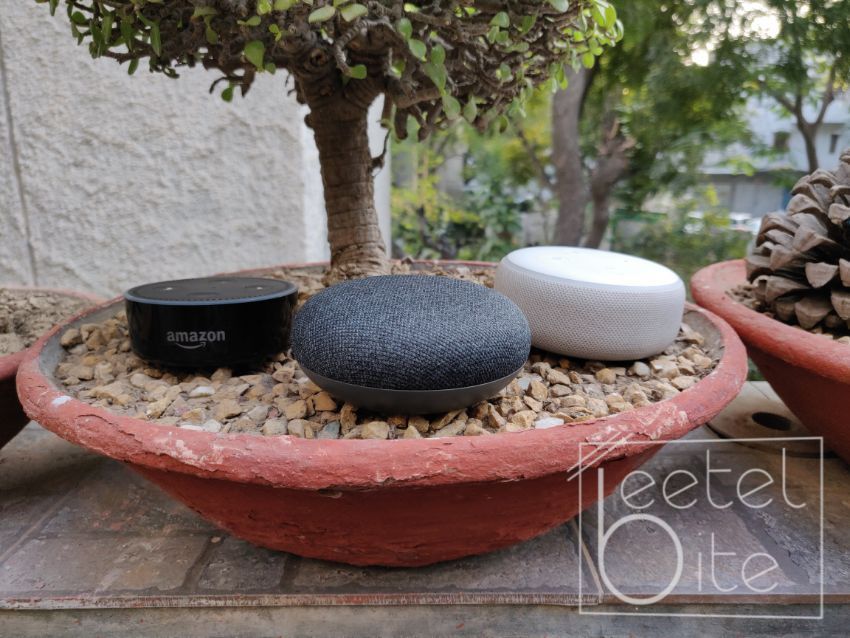
Amazon Echo Dot 2nd generation is smaller than the 3rd generation.
Amazon Echo smart speaker series has always favoured functionality over design. However, with the introduction of the latest generation of Echo devices, Amazon has stepped up their design game. One of the Echo devices to receive a design overhaul is the Echo Dot 3rd generation smart speaker, which replaces the Echo Dot 2nd generation. The question that lies here is should you ditch your old echo dot for the new one? Let's find out:
Amazon Echo Dot 3rd Gen vs Echo Dot 2nd Gen: Design
Amazon with its new Echo Dot 3rd generation smart speaker has stepped up their design game. The new Echo Dot comes with a fabric and rubber build, unlike the full plastic build we got to see on the last Echo Dot. Thus improving the look and feel of the device greatly. Additionally, the blue halo ring light on the top carried from the last generation is well integrated and doesn't feel out of the place on the 3rd Generation.
The Halo Blue Light on the 3rd generation looks great.
Rest of the design configuration remains mostly same, with the same 4 button layout on top. Dimensions have changed a bit, the 3rd Generation Echo Dot is a little bigger and bulkier when compared to the 2nd Generation side by side.
Amazon Echo Dot 3rd Gen vs Echo Dot 2nd Gen: Audio Quality
The Echo Dot 3rd Generation is hands down way better than any of the previous Echo Dots available in the market. It brings major improvements in terms of audio, when compared to the 2nd Generation Echo Dot. It has a comparatively bigger driver, which makes it up to 70 percent louder. You can still connect an external speaker using the 3.5mm jack or Bluetooth just like the previous model if you require much better sound.
There’s a change in the microphone arrangement too. The 3rd Generation Echo Dot reduces the far field microphone count to four from the original seven. This according to us is a bad thing that the company has done. However, Amazon claims the device works fine and during our review process we found that the company's claim isn't wrong.
However, in the case of large rooms, we think it will have an effect. The company also claims to have updated the voice processor, which will make voice processing in the 3rd Generation a lot better than the previous generation.
Amazon Echo Dot 3rd Gen vs Echo Dot 2nd Gen: Conclusion
The 3rd Generation Echo Dot combines the 2nd Generation and the Google Home Mini
Echo Dot 3rd Generation certainly has a lot of improvements inside and out. However, the brain inside of the speaker remains the same, that is the digital voice assistant Alexa. This makes the true function of both the speakers pretty similar.Due to which, it all boils down to two things: Looks and Audio Quality.
If you are looking to upgrade from a 2nd Generation Echo Dot to a 3rd Generation, we would advise you don't follow up on that urge. If you are looking to buy your first smart speaker, you might as well go in for the 3rd Generation. The better sound quality and an addition to the home decor does have its own perks.
Vivo has again collaborated with the e-commerce giant Amazon in order to bring the Vivo Carnival sale. The company is giving hefty discounts on some of its smartphones during the sale. Apart from the discounts, there are bank and EMI offers.
Vivo's more popular smartphone, V9 Pro is now available at a discount of Rs. 2,000 bringing its price down from Rs. 19,990 to Rs. 17,990. Further, the company is also offering an additional Rs. 4,000 discount on exchange. Also, people looking to purchase the Vivo V11 Pro or the Vivo V11 can take advantage of an additional Rs. 3,000 discount on the exchange value.
Vivo is also offering a discount on their flagship Vivo Nex smartphone. The phone is now available for Rs. 39,990, on top of which users can avail an extra Rs. 5,000 off on exchange. It gives great value as the phone comes with flagship grade specifications and features like a pop-up selfie camera.
Amazon and Vivo are also offering good discounts on budget oriented smartphones like Vivo Y95, Y83 Pro, Y93 and more. Consumers can claim up to Rs. 3,000 extra discount on exchange.
People using an HDFC Bank card will be eligible to get an additional 10 percent discount. Other buyers will get a 5 percent discount on EMI and credit card options. Interestingly, these smartphones are available with no-cost EMI options.
Samsung Galaxy M-series smartphones will sport the new Infinity-V display
While 2018 was a great year for smartphones, 2019 is going to be even more exciting. Smartphone manufacturers are taking different routes to reach the bezel less display dream. Here are the top 5 smartphones that are launching this month.
Samsung Galaxy M-series
Samsung recently announced that they will bring a whole new series of smartphones in January. The South Korean giant will unveil two new smartphones under the new series, the Galaxy M10 and Galaxy M20. These will be mid-range smartphones with the company's new Infinity-V Display.
Huawei Y9 (2019)
Huawei Y9 (2019) comes with a notched display
Huawei announced the Y9 (2019) smartphone back in October 2018. However, the phone is expected to fill in the Indian shelves this month. It comes with a notched display, Kirin 710 processor and Fingerprint 4.0 Sensor. It is said to be an Amazon Exclusive at the time of launch.
Xiaomi is also gearing up to launch a new smartphone under its Redmi series. The Redmi Pro 2 is expected to come with a 48-megapixel rear camera. It would be interesting to see Xiaomi putting such a great camera on a Redmi phone, which is usually known for budget segment.
Honor View 20
Honor View 20 will be an Amazon exclusive device
Honor has already put up a banner on Amazon India's website which clearly shows that the phone is launching in the country sometime soon. Also, the phone will be made Amazon exclusive. The phone comes with a hole in the display for the front-facing camera and a 48-megapixel AI-powered rear camera.
Honor 10 Lite
Honor 10 Lite will come with a gradient back design
While the Honor View 20 will fill in the flagship gap, the Chinese smartphone manufacturer might also launch the Honor 10 Lite for the mid-range segment. The phone comes with a FullHD display with a water drop style notch and a Kirin 710 processor. It will run on Android 9 Pie based EMUI 9 out of the box.
Player Unknown's Battlegrounds (PUBG) is available on multiple platforms
PUBG (PlayerUnknown's Battlegrounds) is currently one of the most popular games on PC, smartphones and consoles. The battle royale game has been here for a while now and players are still struggling to master it. Here is a list of five tips and tricks that can help you in becoming a better player.
PUBG Tips and Tricks: Break the door!
Throwing a molotov can break the door
Many competitors like taking cover inside small buildings. They know people will come their way hoping they might get a good loot, however, getting close to them can get you killed. But to remedy this, if you feel there is an enemy hiding behind a door, you can break it.
To do so just throw a Molotov on the door, which will break it and blast inside the building. This way you can deal a huge amount of damage to anyone standing close to the door as well as the break the door for getting a clear view inside the building.
PUBG Tips and Tricks: Drop faster
Maintain a speed of 234 km/h to drop faster
One of the most important things a player needs to learn in PUBG is how to land faster. It helps them in getting the supplies quickly and start killing enemies even before they land.
To land faster, you need to look directly down and glide sideways. This way you will maintain the maximum speed of 234 km/h and land faster than most of your enemies. Once you master this trick, you can allow youfriends to follow you and make them land faster as well.
There are times when someone is shooting at you but, you do not see anyone around. Even looking at the radar does not help. In such scenarios, try to take cover behind some kind of structure immediately and look around for trees and rocks as many players take cover there and then shoot. Peek and shoot before they kill you! and if that's not possible just spray and prey.
PUBG Tips and Tricks: Never stand still
It is always better to take cover
When you are out in the open gathering loot from a crate, never stand still. If you stand still you'll become an easy target for your opponents. Rather we recommend that you keep to moveing a little bit to have momentum if somebody starts shooting at you.
Coming to the last tip that you can make use off, is fake shooting. If you know where your enemy is, insist him to peek by shooting a few bullets.
You can even use a grenade to get his attention. Remember, fake shooting should be on the other side and not at the enemy himself. This will make him peek and look out for what is happening.
As you already know his position, you can quickly kill him even before he spots you.
Realme has rolled out the ColorOS 5.2 update for all of its devices
Realme has started rolling out the ColorOS 5.2 update for the Realme 2 and Realme C1 smartphones. The new version of the operating system was first made available for the Realme 1 and it has now finally made its way to the other budget devices.
Realme has rolled out the update via OTA (Over-the-Air), which means the users should receive a notification once it is available for them. The people who just cannot wait for the OTA update to arrive can head over to the company's forums, where the manual installation package is available. However, the company claims that the update should reach everyone within the first week of January 2019.
The software update comes with the build number RMX1805EX_11.A.21. The changelog of the update claims that the notifications can now be swiped from left to dismiss, which is a much welcome change. The update also brings in a new Smart Bar, which allows users to launch their favourite apps from anywhere. Users can now swipe up on the shutdown interface in order to reboot the smartphone.
Further, the update has improved the frequency for the touchscreen. Also, long pressing the power button calls up the Google Assistant. The update also brings improvements to overall device performance and bug fixes. ColorOS 5.2 also includes the December 2018 security patch.
Apart from the Realme 2 and Realme C1, the Realme 2 Pro has also received a stable update based on ColorOS 5.2. The build number for the update is RMX1801EX_11.A.13. Just like the other phones, the update for the Realme 2 Pro should reach all the devices within the first week of January. It brings in Screen Battery Optimization mode, which is said to reduce the power consumption thus saving more battery. It also introduces Google's December 2018 Android security patch.
Reliance Jio is celebrating New Year with rewarding customers with a chance to win a JioPhone for only Rs 1095 along with six months of free service as a complimentary gift. The users under this offer will be able to buy a JioPhone for just Rs 501 along with a couple of Rs 99 vouchers for data and calling benefits for the period of six months.
However, there is a catch. The offer comes under Jio's Monsoon Hungama Offer. This means the user will have to exchange an old working feature phone to claim this offer. The JioPhone Monsoon Hungama offer was launched earlier this year enabling users to exchange their old feature phone for a JioPhone for just Rs 501. The vouchers you get will enable free service for six months is for a limited time only.
How to avail this offer
To avail this wonderful offer, customers will first have to purchase a gift card worth Rs 1095 from the Jio Online Store. You can get the card delivered to your home one pick one up from any of the offline stores Jio have all around the country. When they present the gift card at a Jio store offline along with a working feature phone, they can claim this offer.
After the company representative checks the phone and the charger and makes sure that it fulfils all the conditions, they will provide the bearer with a JioPhone along with a Jio Sim Card. The card will have the validity of only 12 months.
JioPhone
JioPhone vs Airtel Smartphone
Just to recall, Reliance JioPhone sports a 2.4-inch QVGA TFT display running on a dual-core processor running on the latest version of the KaiOS. The device ships with a mere 128MB RAM and 4GB internal storage. It is a feature phone so it works. The storage is expandable up to 128GB via a microSD card. The JioPhone is backed up by a 2,000mAh battery. The company claims that the smartphone will offer 15 days of standby time on a full cahrge.
The feature phone sports a 2MP rear camera and a VGA front camera. Not great but it works. The biggest feature is the smartphone sporting support for LTE and VoLTE while being a chaeap feature phone.
Xiaomi has slashed the prices of some of its smart LED televisions in India
Xiaomi recently brought a series of smart televisions to India. While the TVs have grabbed enough attention due to the aggressive pricing, the company is seeking for more. The Chinese manufacturer has slashed the prices of the Mi TV 4A 32-inch, Mi TV 4C Pro 32-inch and the Mi TV 4A Pro 49-inch.
As for the prices, Xiaomi has brought down the price of the Mi LED Smart TV 4A 32-inch to Rs. 12,499 from Rs. 13,999. The Mi LED TV 4C PRO 32-inch, after receiving a price cut of Rs. 2,000, is available for Rs. 13,999. Mi LED TV 4A Pro 49-inch has also seen a price cut of Rs. 1,000 and it is now available for Rs. 30,999.
The new prices are live on Mi.com and users can start purchasing right away. The changes are also applicable to any other sales platform. This price change has come after the Indian government has reduced the GST on televisions from 28 percent to 18 percent.
According to Xiaomi, the decrease in GST has allowed the company an increase in the profit margin. The company is sharing the profit with the consumers by reducing the price and keeping the margin to a mere 5 percent. Xiaomi also claims that the aggresive pricing strategy has helped them in becoming the number 1 smart televion brand in India.